
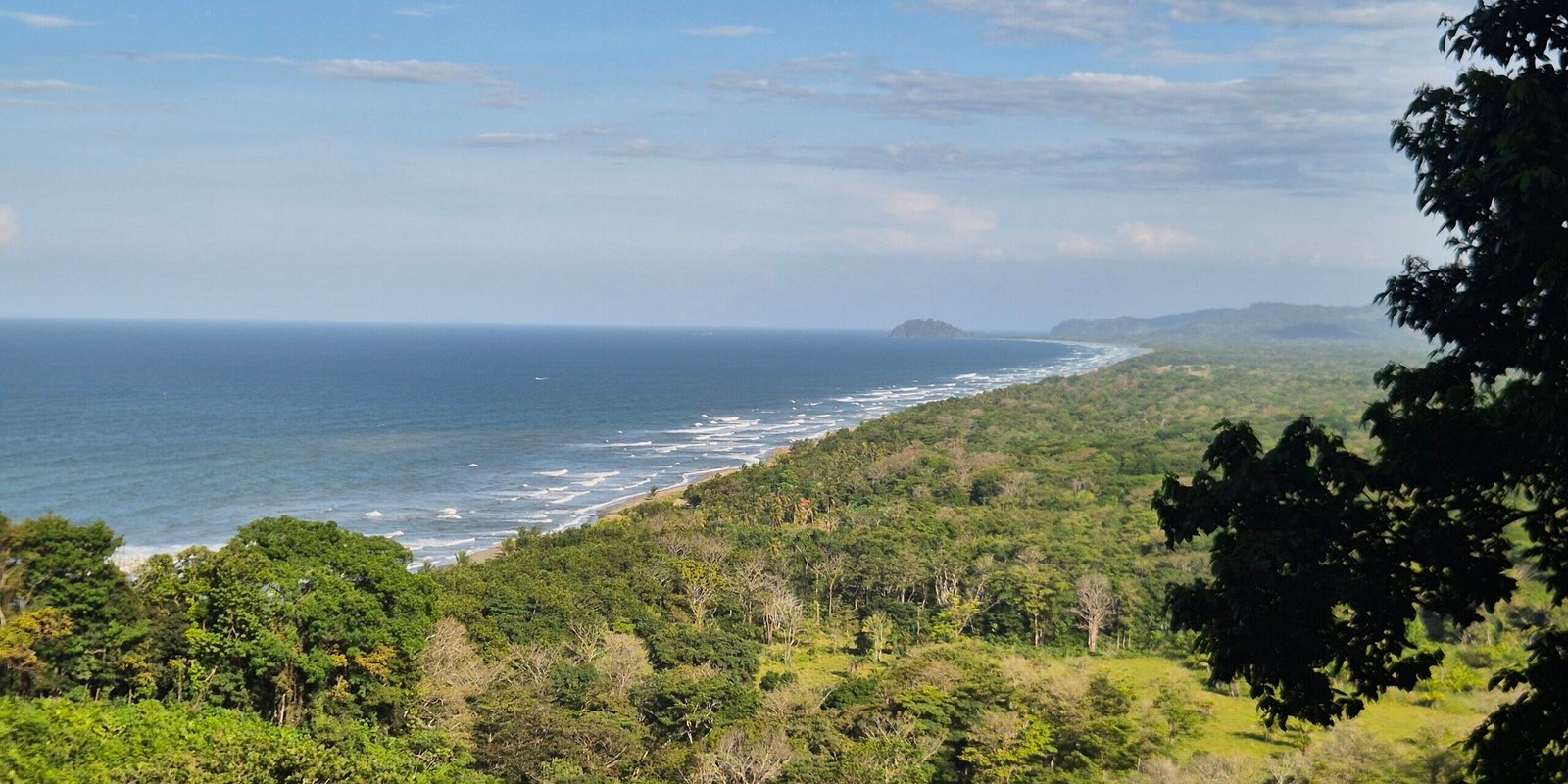
Our first stop on the Caribbean coast: we leave the Antioquia region for the Chocó. Having skipped the Pacific side (too far, too expensive…), we can’t wait to discover this remote territory on the border with Panama. Beaches, jungle, wildlife, hiking… there’s no shortage of things to do!
The Chocó
The Chocó is one of Colombia’s 32 departments, and the only one with both a Pacific and a Caribbean coast. Remote and bordering Panama, it’s a lush, green region that still bears the scars of the past. The Darién jungle was long (and probably still is) a hostile, inaccessible region where traffickers, migrants and paramilitary groups move around… In fact, there isn’t a single official road through this stretch. The area was neglected for years and remains one of the poorest in the country; on every international travel advisory map, it still flashes bright red: “avoid at all costs.”
Logistics
Apart from flying, the only way to reach the Chocó is by sea, from Turbo (~2 hrs) or Necoclí (~1 hr), and the price is the same (COP 75,000).
From Turbo, boats leave at 8 a.m., 9 a.m., and around noon for the last ones. Of course, today’s schedule won’t be tomorrow’s! Unless you spend the night in Turbo, you’ll need to take an evening bus from Medellín or Santa Fe to be sure to make it in time. There’s no way to catch the noon boat with the first bus of the day (around 4-5 a.m.).
The crossing can be rather… rough depending on the sea, and boats are often canceled in bad weather. We recommend insisting on putting your bags in the “hold,” and wrapping them in a garbage bag no matter what. We got off our first ride, from Turbo to Triganá, soaked from head to toe!
Several companies run boats between the different towns. Prices are the same, but we recommend contacting them ahead of time to find the one that covers your route and get the schedule. Booking is a must!
Budget
Because the region is so remote and has few tourist services, prices are higher than in the rest of the country. Still, if you look around, you can get by on a reasonable budget.
What really costs money is transportation (as everywhere in Colombia, when you get down to it). We already paid COP 140,000 from Santa Fe, and then a ridiculous amount to get to Rincón del Mar afterward. But getting around the Chocó itself is also very expensive: COP 75,000 from Turbo/Necoclí to Triganá, COP 45,000 from Triganá to Acandí and COP 120,000 to get back from Sapzurro to Necoclí/Turbo! On top of that, there are sometimes “port taxes” or fees for the weight of your backpack (over 22 lb)…
Once there, the Treegana Hostel has very reasonable rates, although things are a bit pricier on the Capurganá and Sapzurro side…
If you have a tent, it’s a good compromise. Sure, the region is one of the rainiest (the rainiest?) in Colombia, but you’ll always find a spot to pitch it for a slightly more affordable price (COP 25,000-30,000 per person).
As for food, you’ll find only the very basics (a bit more in Capurganá), sometimes by knocking on doors, and at higher prices than elsewhere. Oh well, we won’t splurge, and it’ll often be pasta. At worst, bring a few sauces with you to liven things up.
Restaurants are expensive too (~COP 40,000), but most of them serve quality set meals.
Finally, the excursions (some of them run by the Treegana Hostel) seemed very reasonably priced to us.
All in all:
- Ground transportation: Medellín to Turbo (COP 70,000 per person) + Necoclí to San Onofre (COP 160,000 per person) = COP 460,000
- Boats: Turbo to Triganá (COP 75,000 per person) + Triganá to Acandí (COP 45,000 per person) + Playona to Acandí (COP 35,000 per person) + Sapzurro back to Necoclí (COP 120,000 per person) = COP 550,000
- Lodging: 3 nights camping in Triganá (COP 25,000 per person per night) + 1 night camping in Aguacate (COP 20,000 per person) + 2 nights in a dorm in Sapzurro (COP 50,000 per person per night) + 1 night camping in Sapzurro (COP 30,000 per person) = COP 450,000
- Activities: giant trees (COP 37,500 per person) + Playona turtles (COP 140,000 per person) = COP 355,000
- Restaurants: Treegana Hostel (COP 100,000) + San Francisco (COP 100,000) + Aguacate (COP 60,000) + Sapzurro (COP 100,000) = COP 360,000
- Other: groceries = COP 89,000
- Miscellaneous: Sasardi reserve (COP 10,000 per person) + Capurganá-Sapzurro trail (COP 5,000 per person) + La Miel entry (COP 4,000 per person) = COP 38,000
Total: COP 2,302,000
On average, we spent €550 for the two of us over 9 days in the Caribbean Chocó.
Triganá
In Santa Fe, we look into buses to Turbo. We were hoping to leave early and go straight on to the noon boat, but no luck: the first bus of the day won’t get us there in time. So we book the midnight bus and end up waiting on the sidewalk in front of the terminal in the dark, while the party is in full swing in the bars around us. It had been a long time since we’d been up at that hour…
Naturally, with the heat in Santa Fe, we get on the bus in shorts and T-shirts. Bad call: inside, the AC is cranked all the way up, like a throwback to the last ice age. All the locals brought their blankets, of course. But why? Why do they do this?
We arrive in the stifling humidity of Turbo literally frozen to the bone (and running late). We grab the first taxi to the boat terminal. Once there, we’re relieved of COP 75,000 per person for the ride to Triganá, plus COP 7,000 for each backpack…
The weather is gorgeous, so we figure the crossing should be fairly calm. All the locals are already strangely huddled in the middle of the boat. They refuse to scoot over so we can sit next to each other. We finally find room at the very back, in the last row. An old man asks if someone could give him a seat in the back; the captain asks around several times, but everyone ignores him with the same disdain. So this is the legendary Colombian friendliness… John gets fed up with the general attitude and gives up his seat. Best decision of the week: the last row turns into a scene of nonstop tidal waves, and Camille comes out drenched.
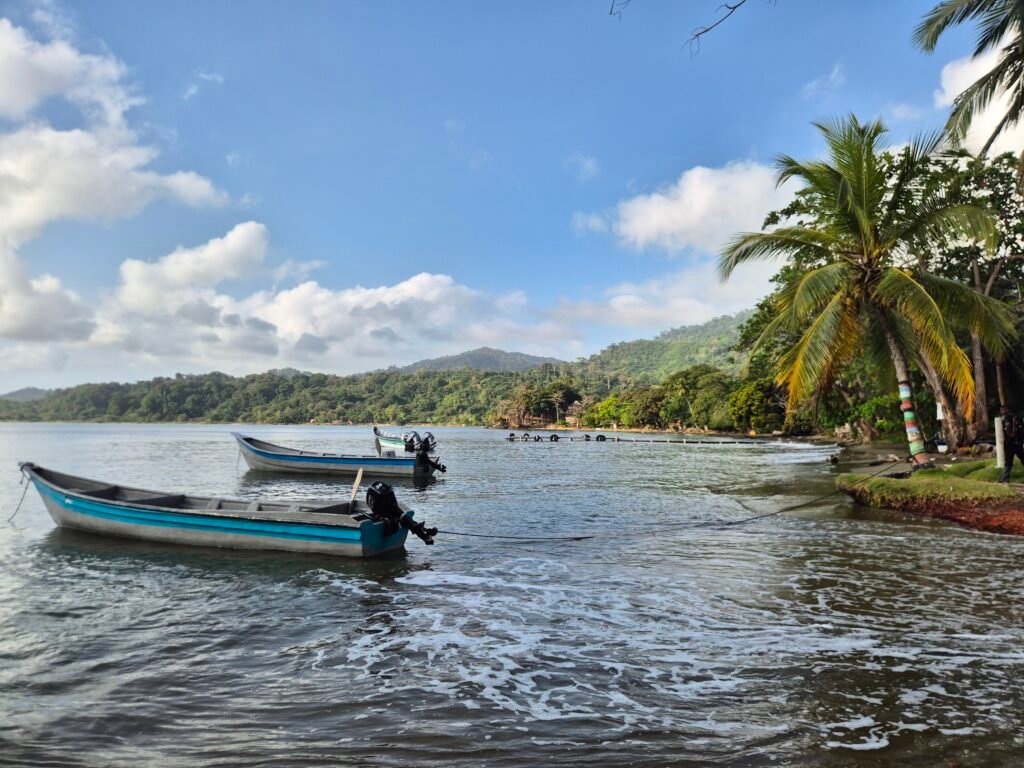
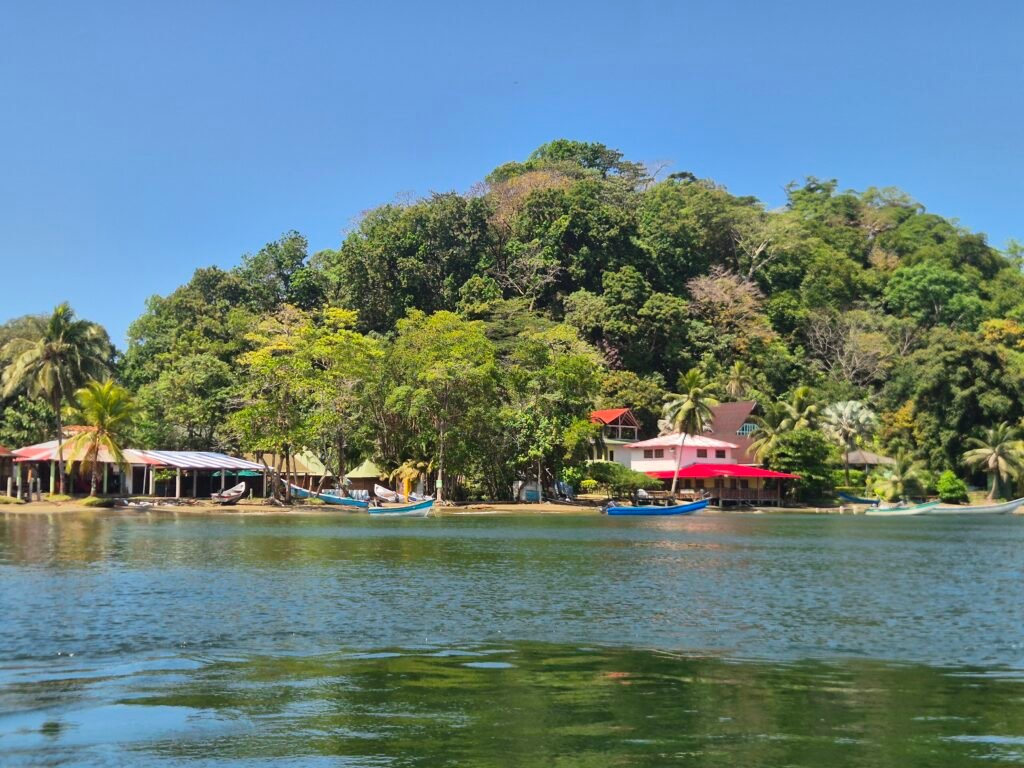
After 2 hours of getting hit by waves from every direction, we land in the charming (and deserted) cove of Triganá. We take a path inland (there aren’t many other options) to the hostel, about a 15-minute walk away.
Treegana Hostel
We cross a few dry meadows dotted with isolated houses, under a scorching sun. At the end of the path, we discover the Treegana Hostel, a charming rustic haven in the middle of an extravagant jungle. We get a warm welcome, too, with a fresh fruit juice.
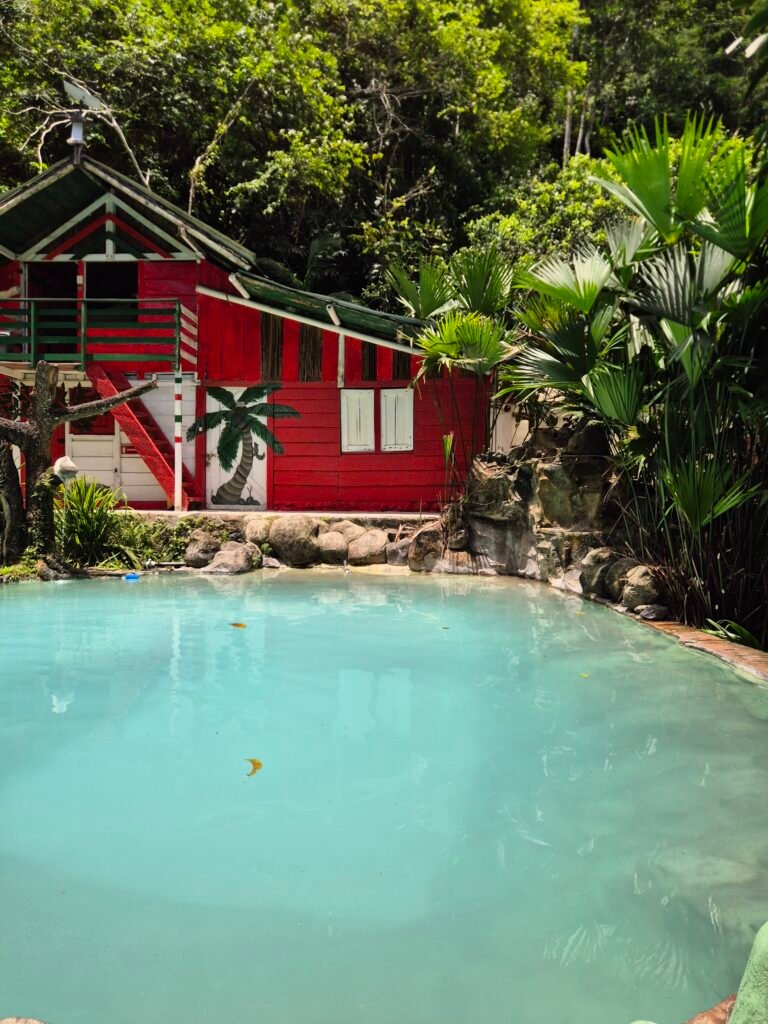
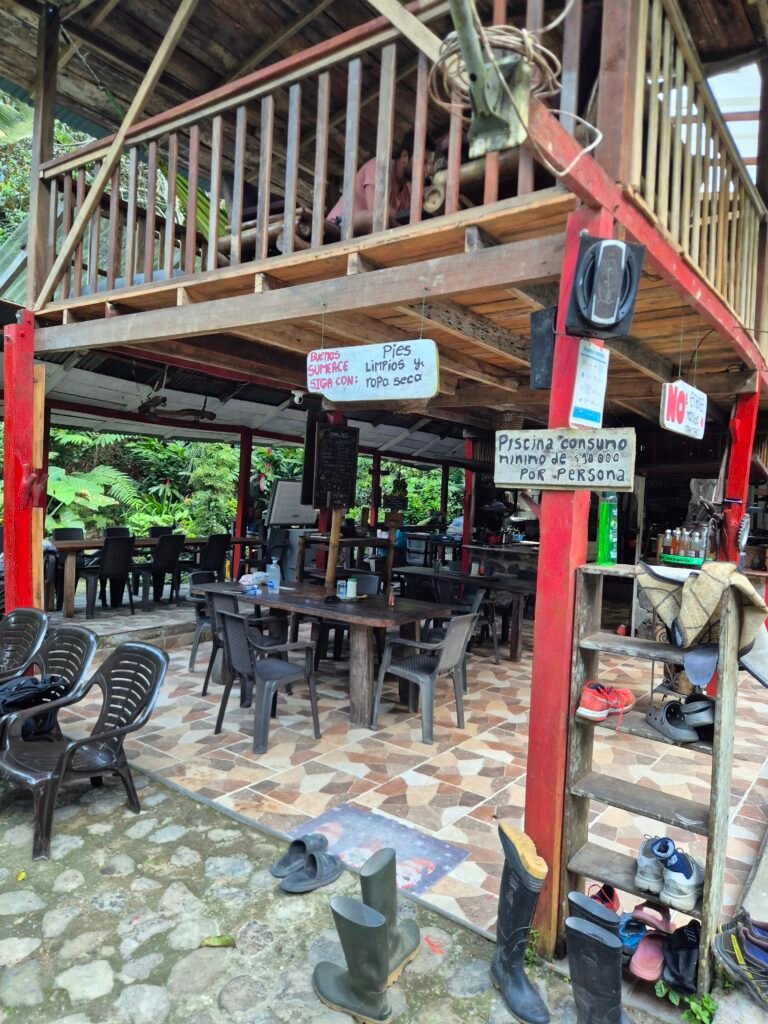
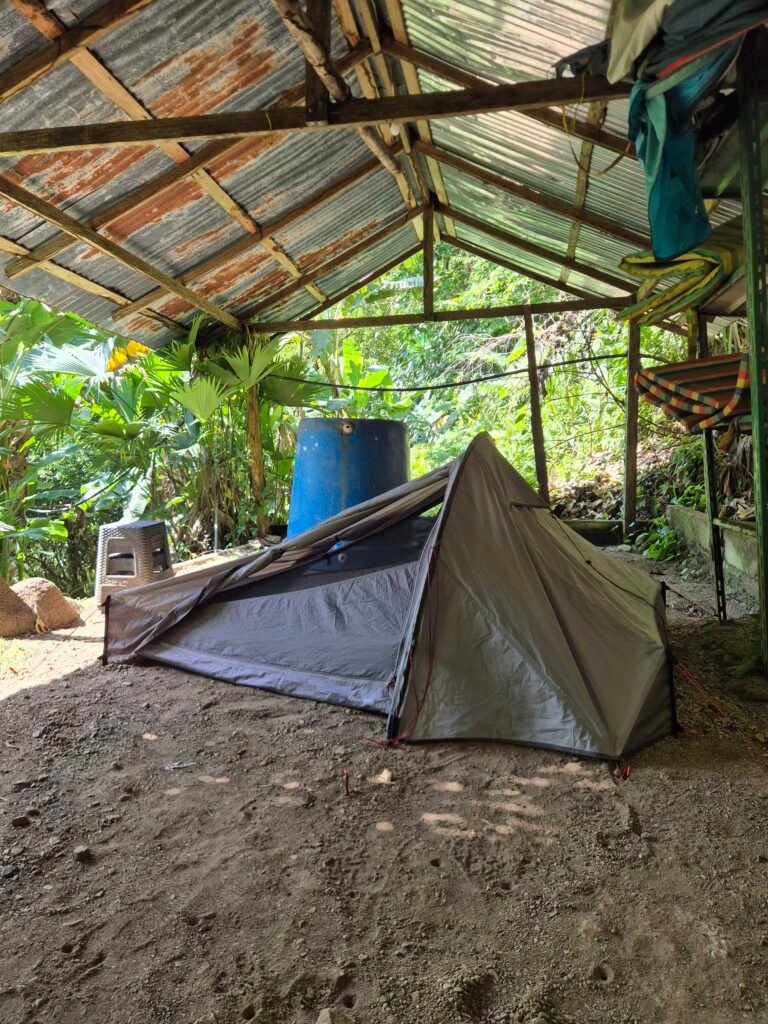
A night costs COP 40,000 per person in a dorm or, in our case, COP 25,000 per person camping with your own tent (or hammock). That includes the facilities: wifi, a kitchenette, a pool… The camping area is a bit rocky, but it’s sheltered, with power outlets, a shower and restrooms.
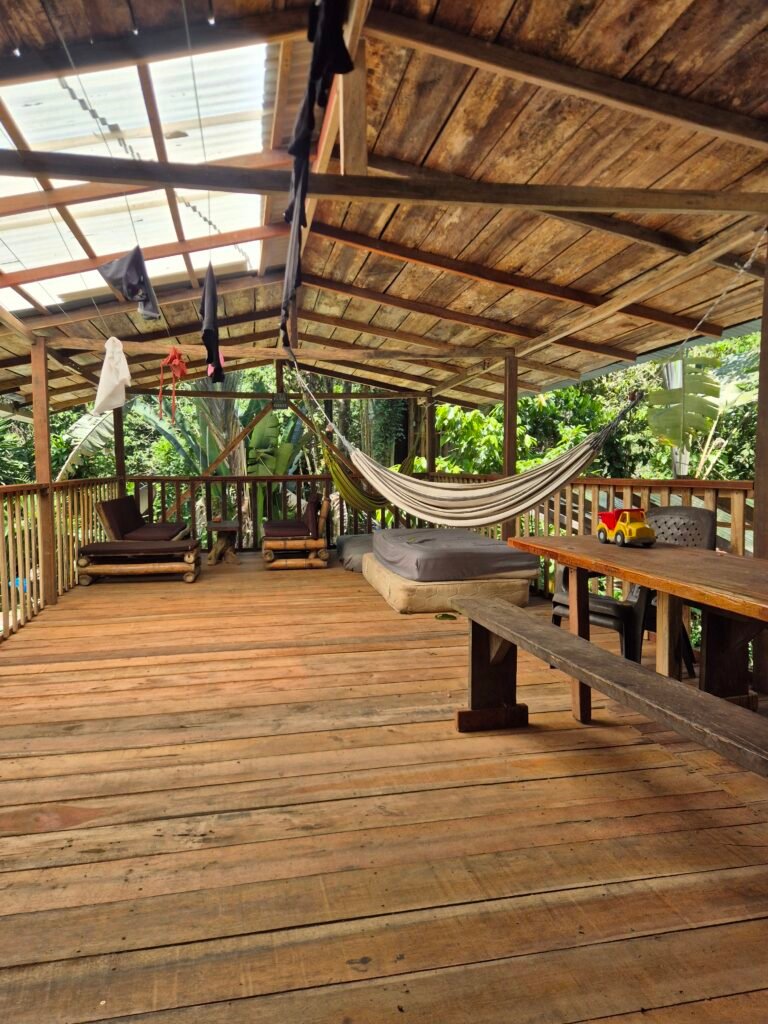
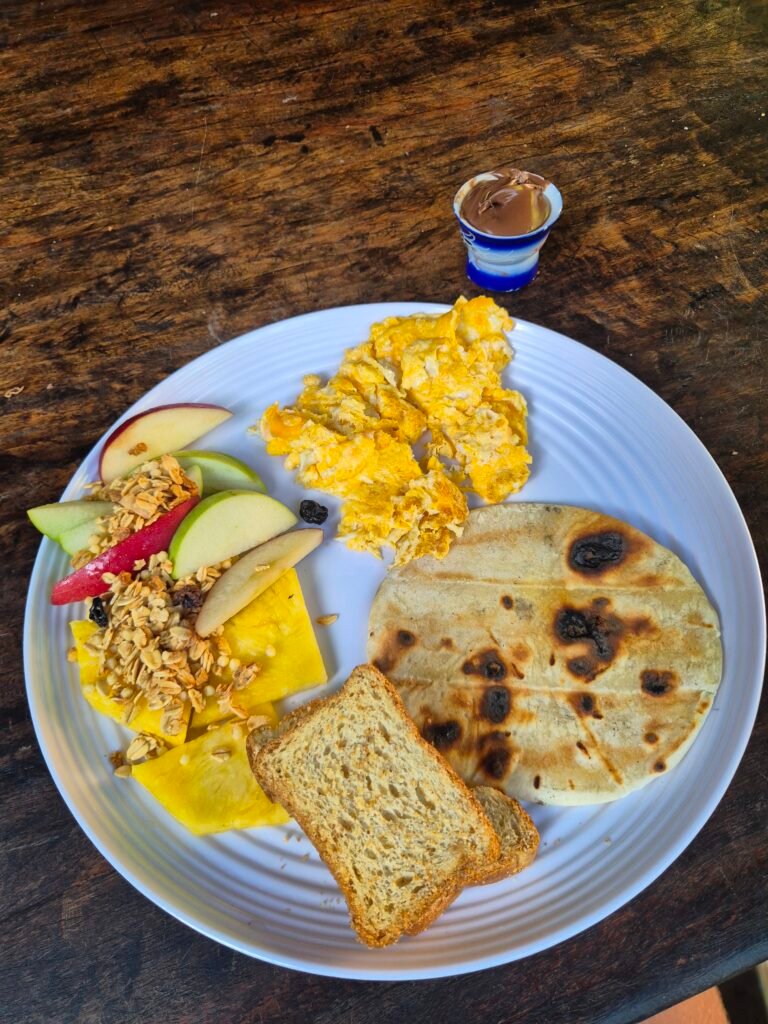
You can eat on site: breakfast is COP 20,000 and other meals COP 30,000. Even though we cook most of the time, we still have one breakfast and one dinner, and both are really nice.
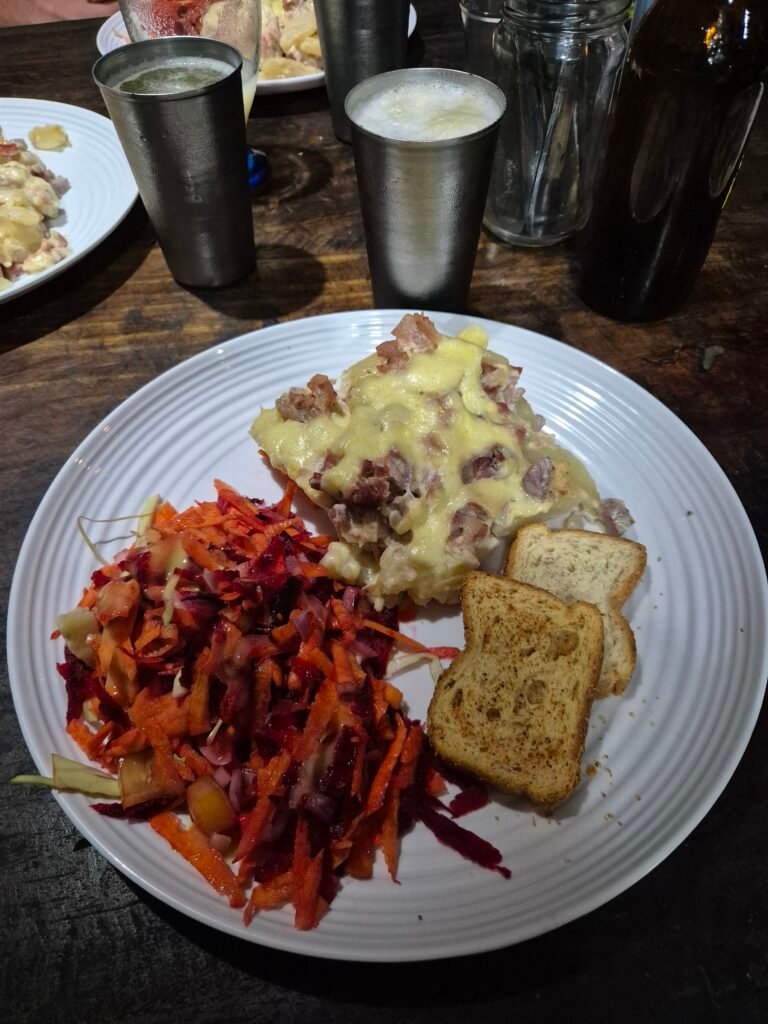
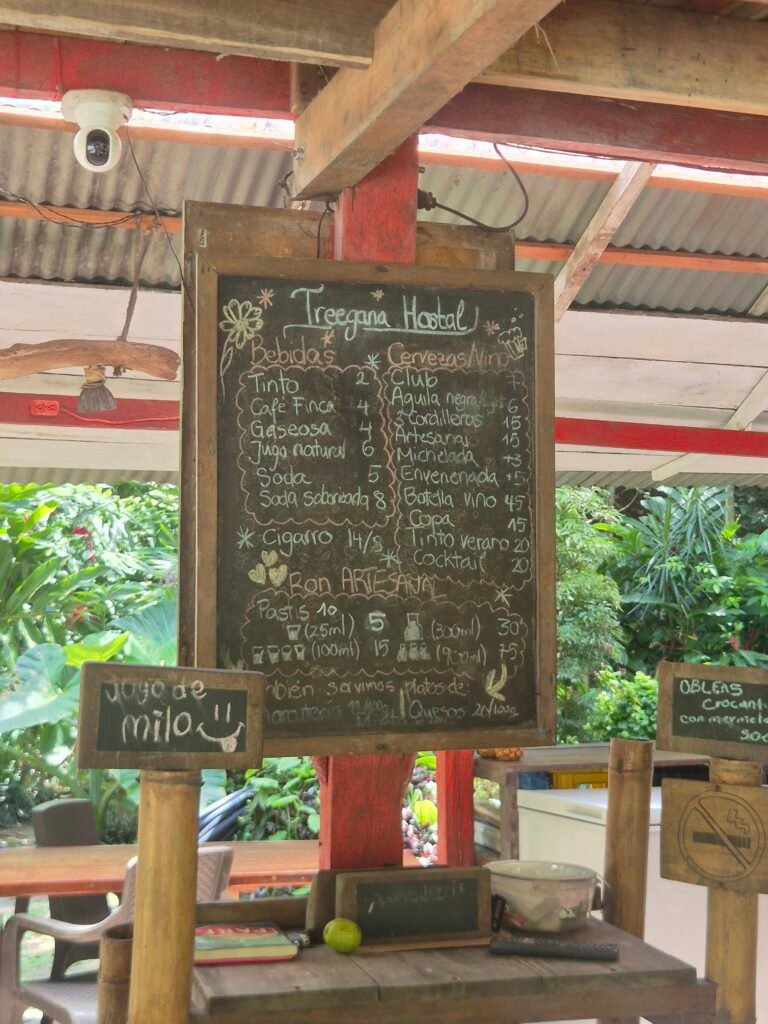
Arnaud, the (French) owner of the Treegana Hostel, also makes lots of flavored rums and homemade pastis. They also serve cheese and charcuterie boards (probably made by French expats in Colombia). All at very reasonable prices!
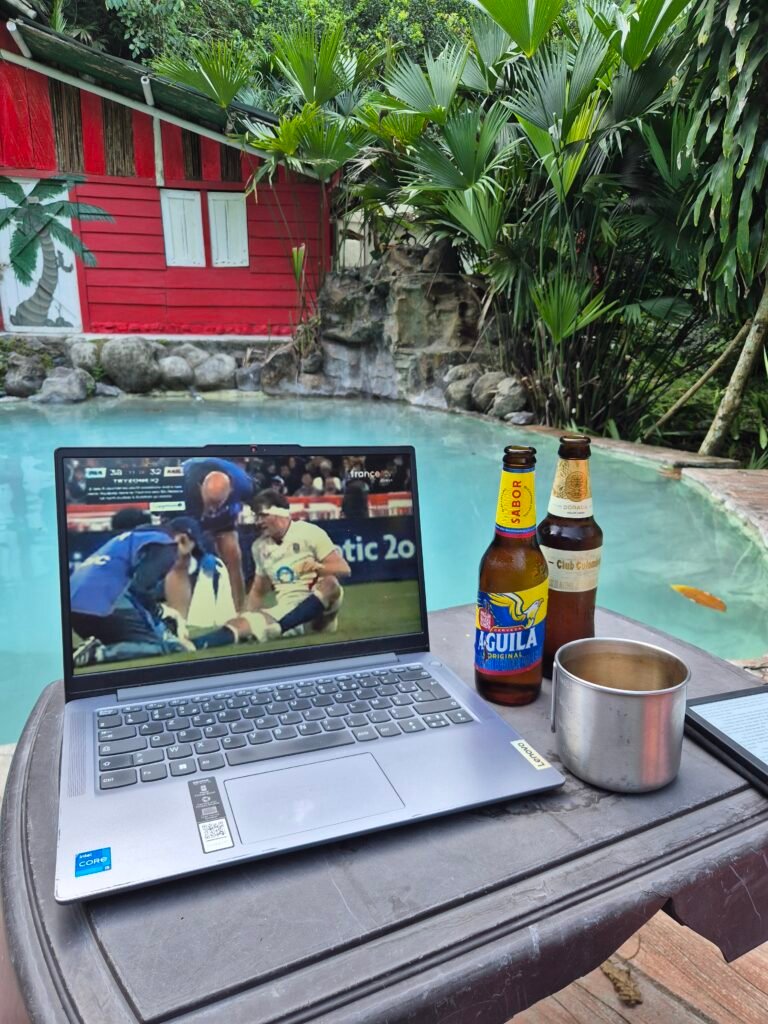
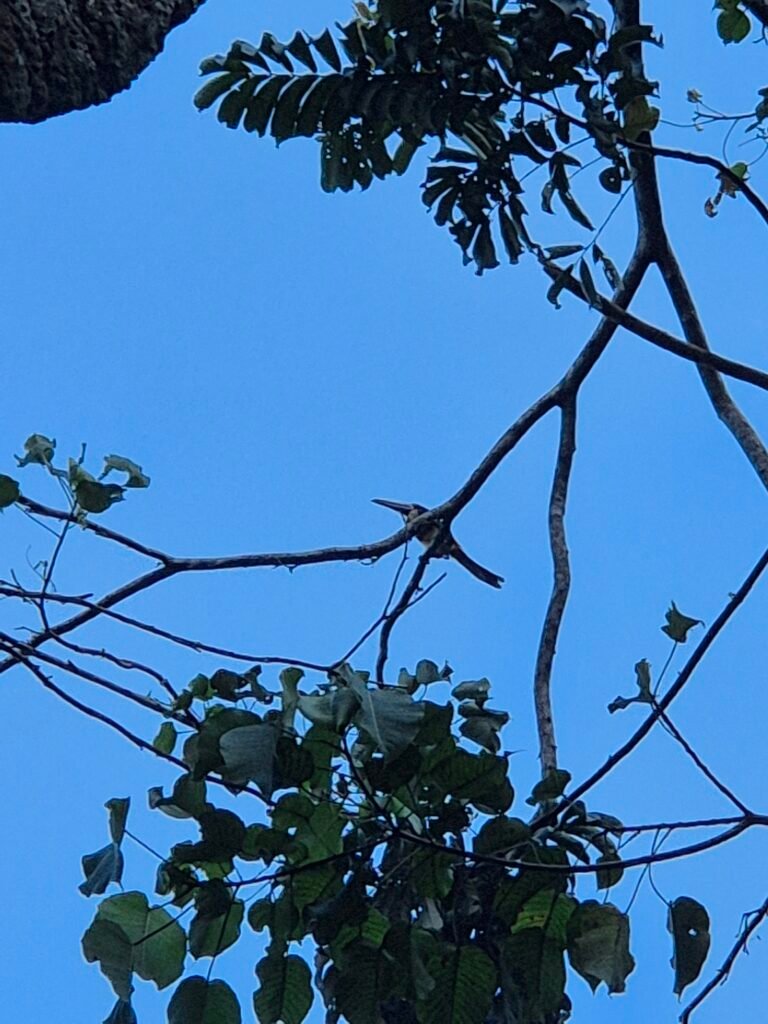
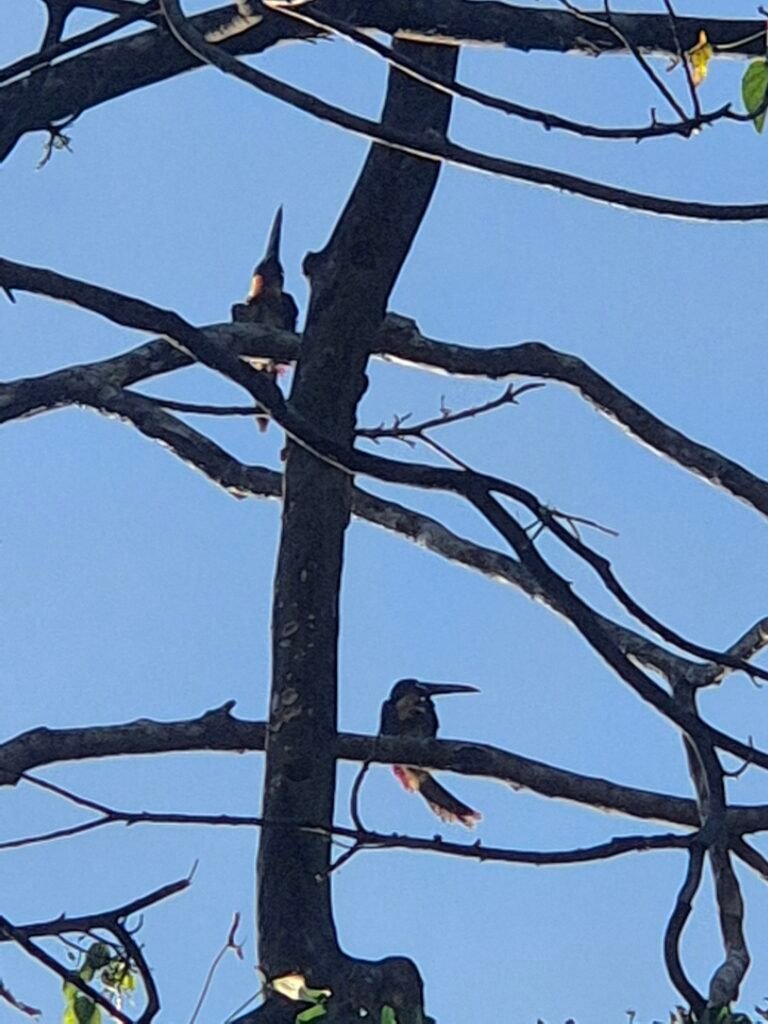
We spend 3 nights here, exploring the surroundings and enjoying the cool pool and the calm of the place, perfect for resting or even meditating. From our lounge chair, we spot plenty of toucans, iguanas and monkeys (howlers…), while the croaking of toads lulls us to sleep at night.
We meet a French couple, Emma and Andrew, who are heading on to Panama afterward. We end up spending a good part of our stay with them.
Giant trees
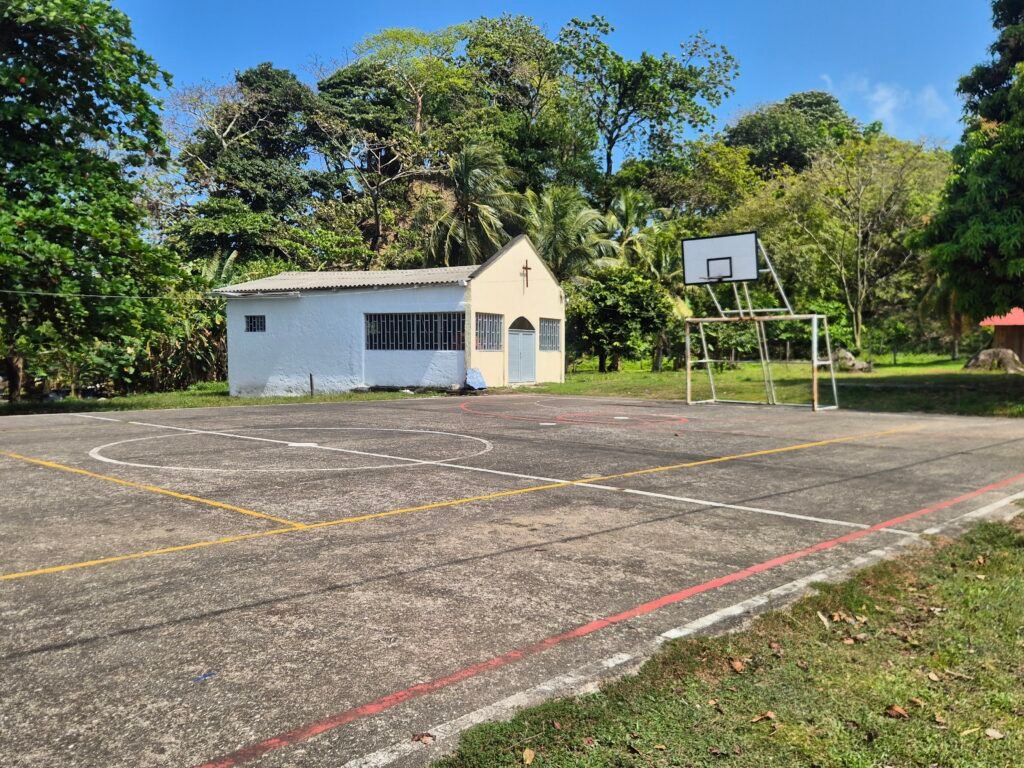
For our first day, we decide to share a guide with Emma and Andrew for the giant trees tour. The trail itself is easy to follow, but a guide is apparently mandatory. Let’s just say it helps support local tourism, and prices stay very reasonable: COP 37,000 per person for the long outing (~6-7 hrs).
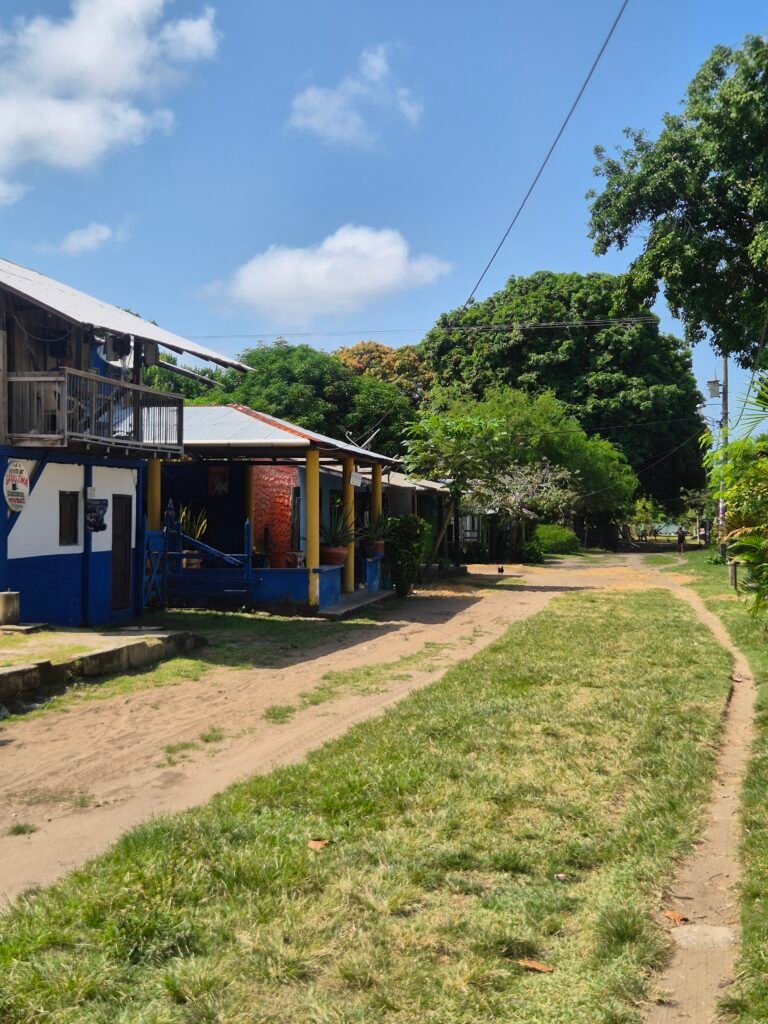
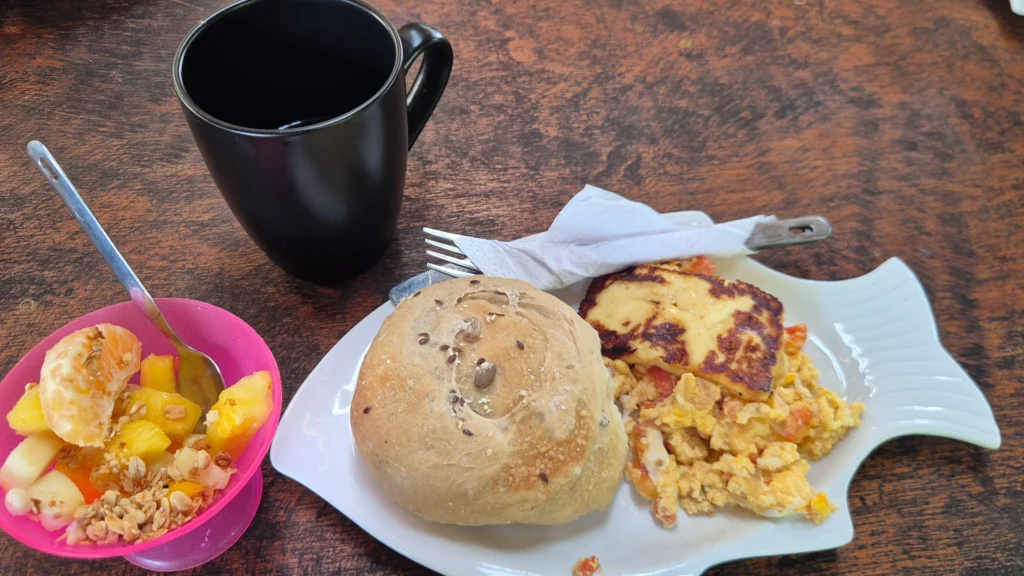
Along the same lines, we have breakfast and lunch (extra) at a small restaurant in the village of San Francisco, on the way. We pay COP 100,000 for 2 breakfasts and 2 good vegetarian meals, including some great homemade bread.
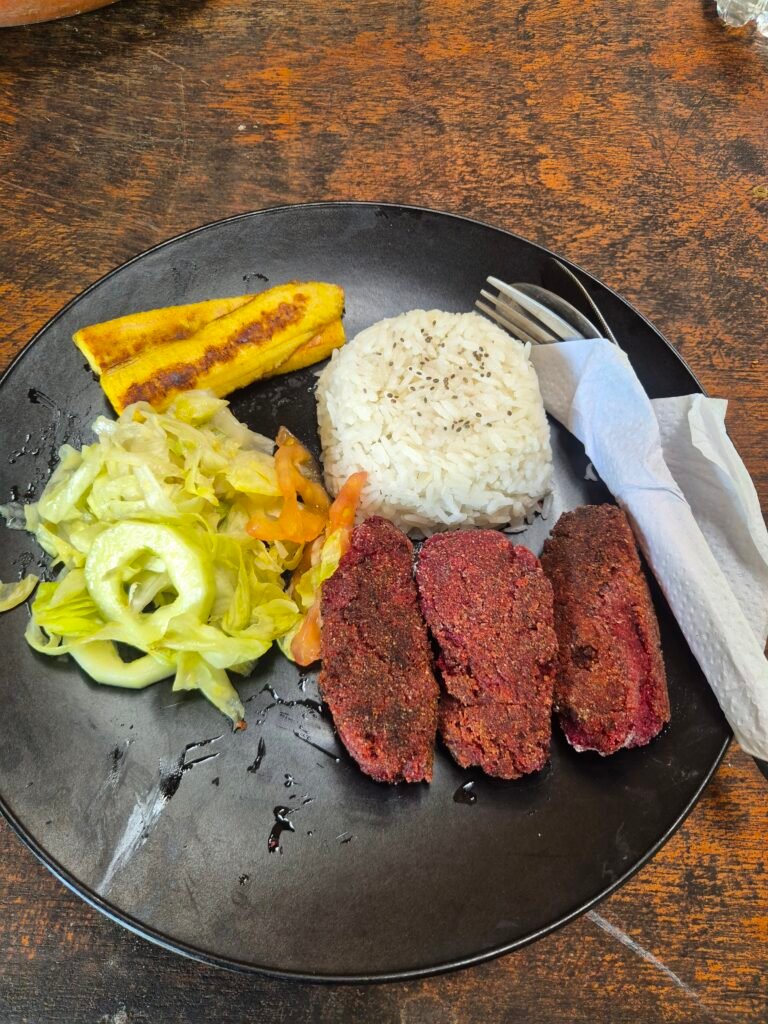
We set off at 7 a.m. and will have breakfast on the way. Our guide lives just a few steps away. He’s barely in his twenties, but we quickly realize he has an incredible eye: he spots a sloth at the top of a tree about 160 feet away, an eagle, monkeys… while all we can see is a pile of branches.
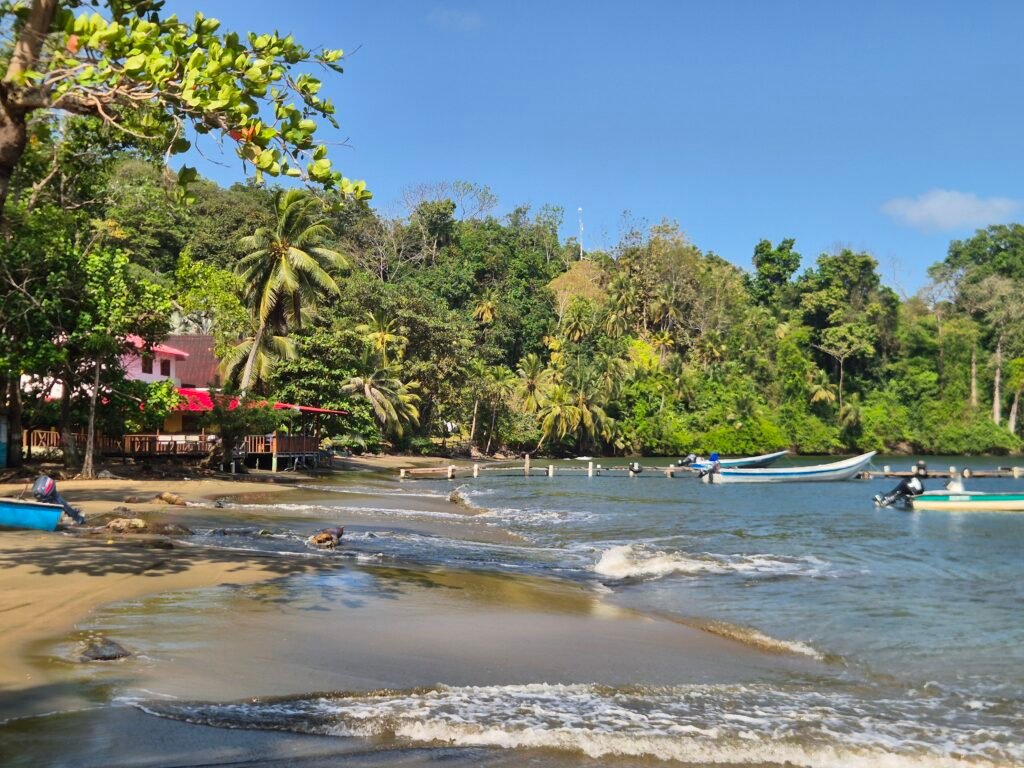
We head to Triganá Bay. Just before we get there, he spots a caiman in the stream, just a few feet from the path. We’d never have imagined there were any hanging around here… As we walk along the beach, we see all sorts of animals: sloths, parakeets, iguanas…
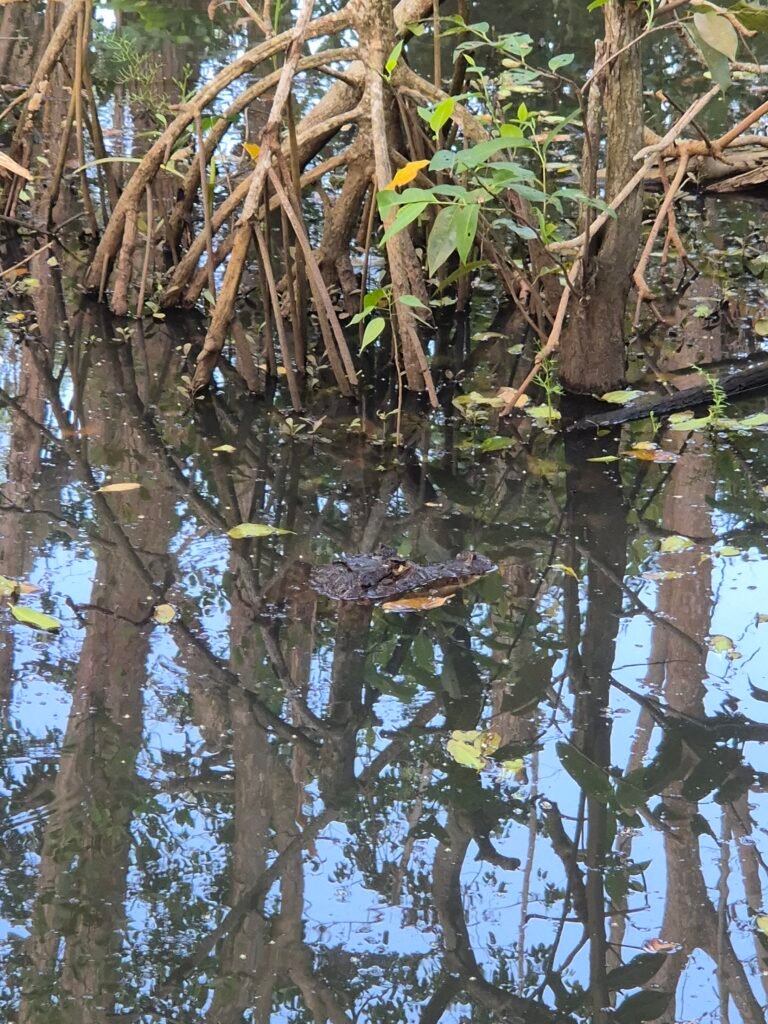
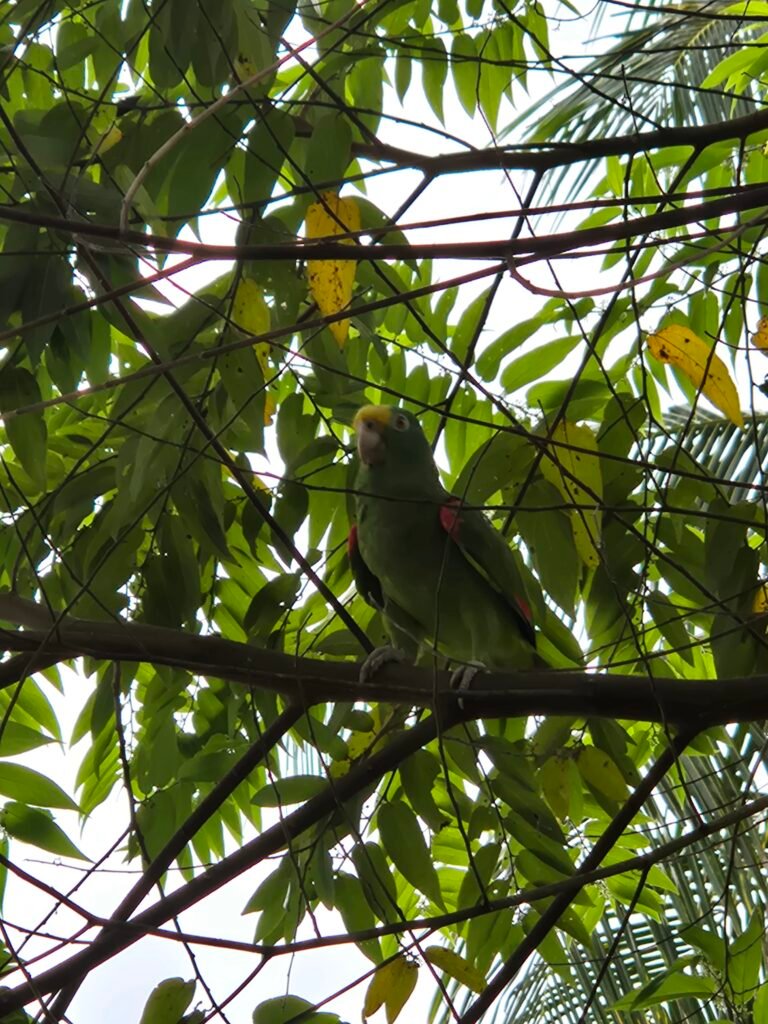
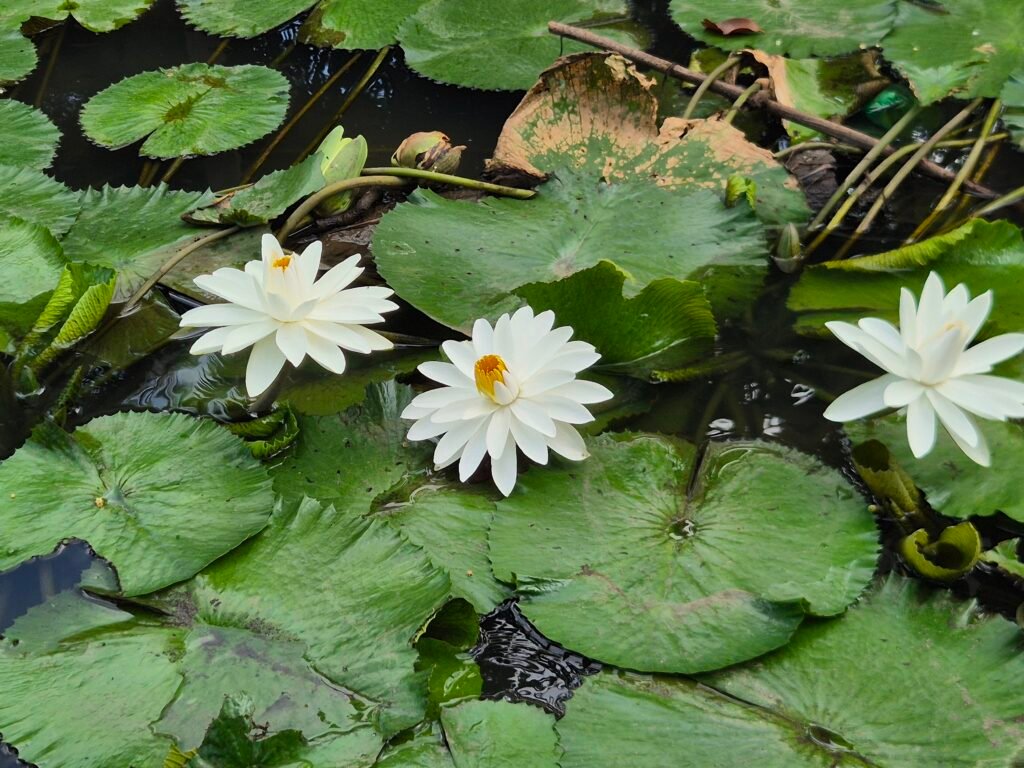
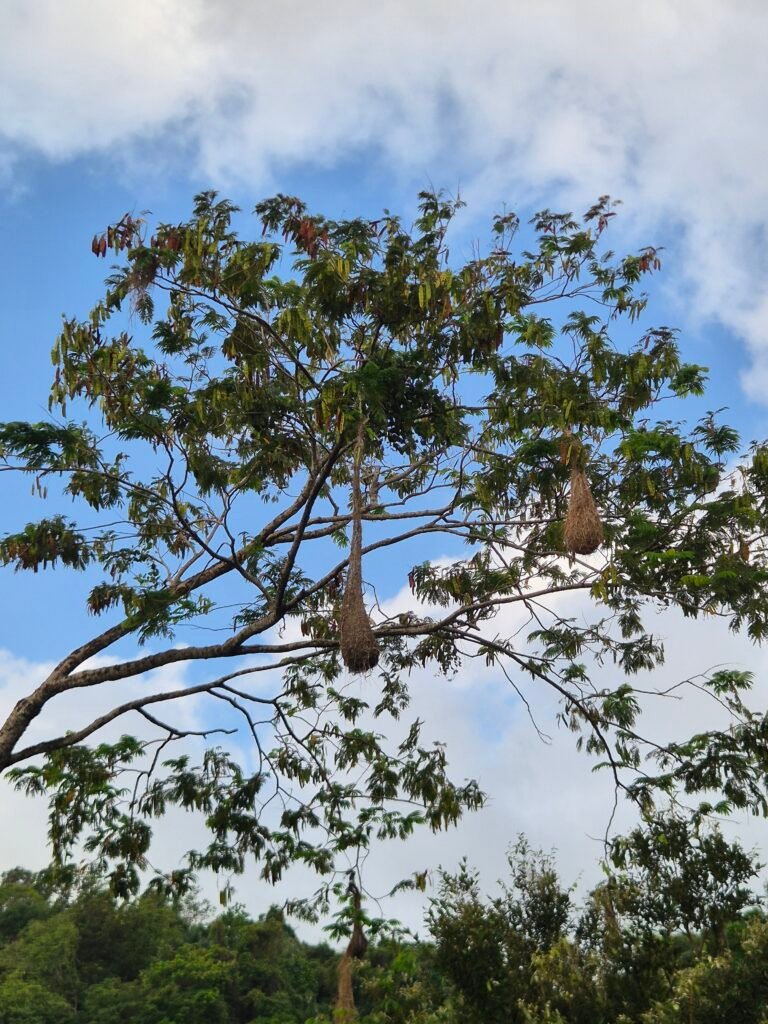
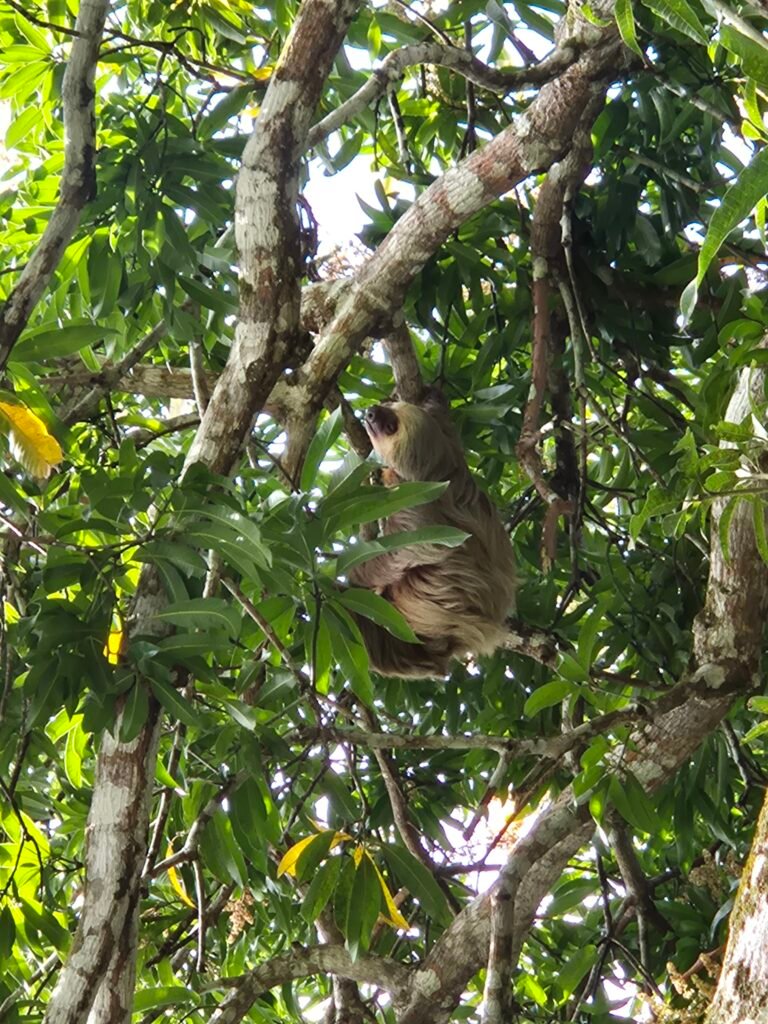
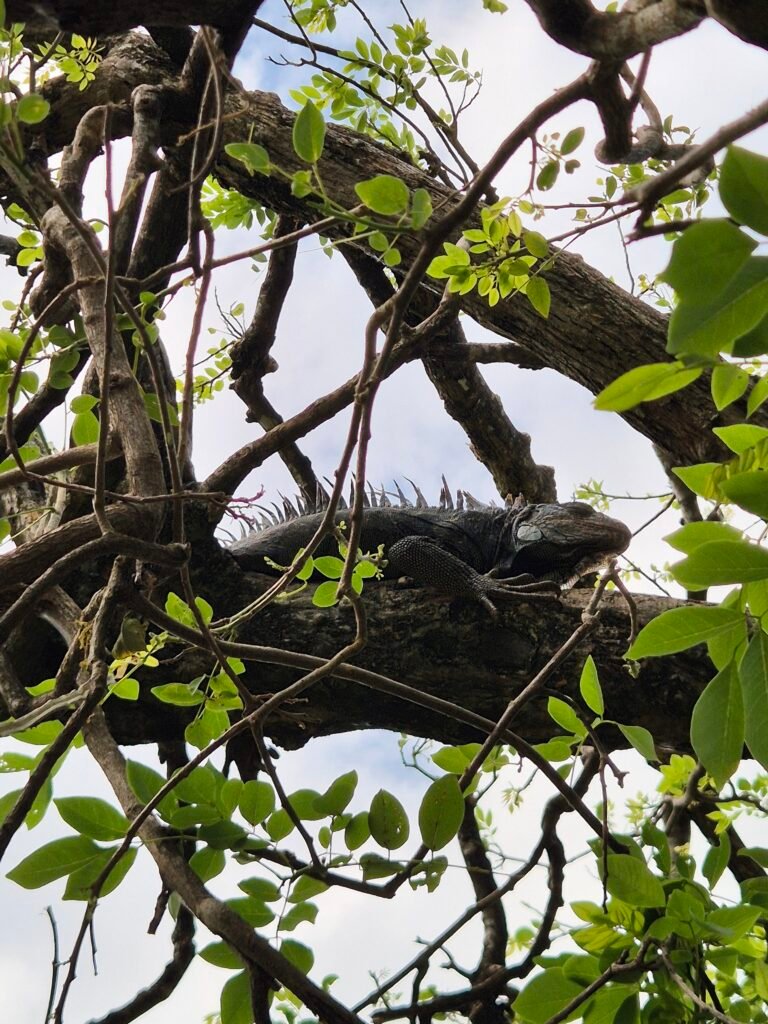
The bay is gorgeous. There are quite a few hotels, and yet there’s not a soul around! It’s heavenly quiet.
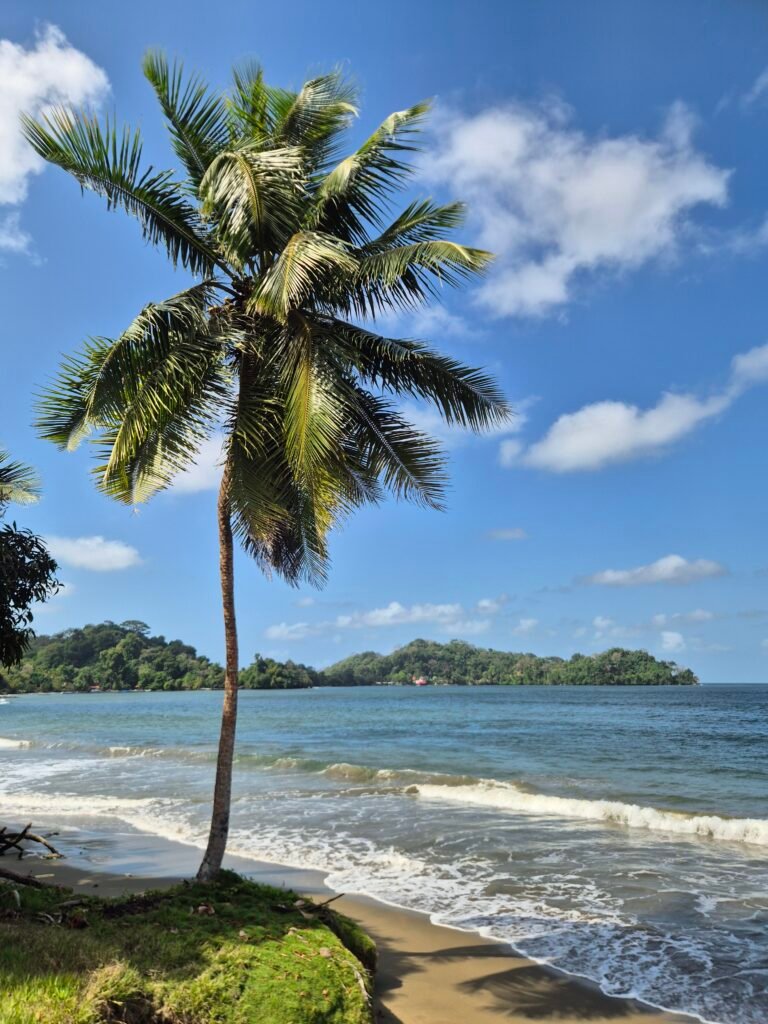
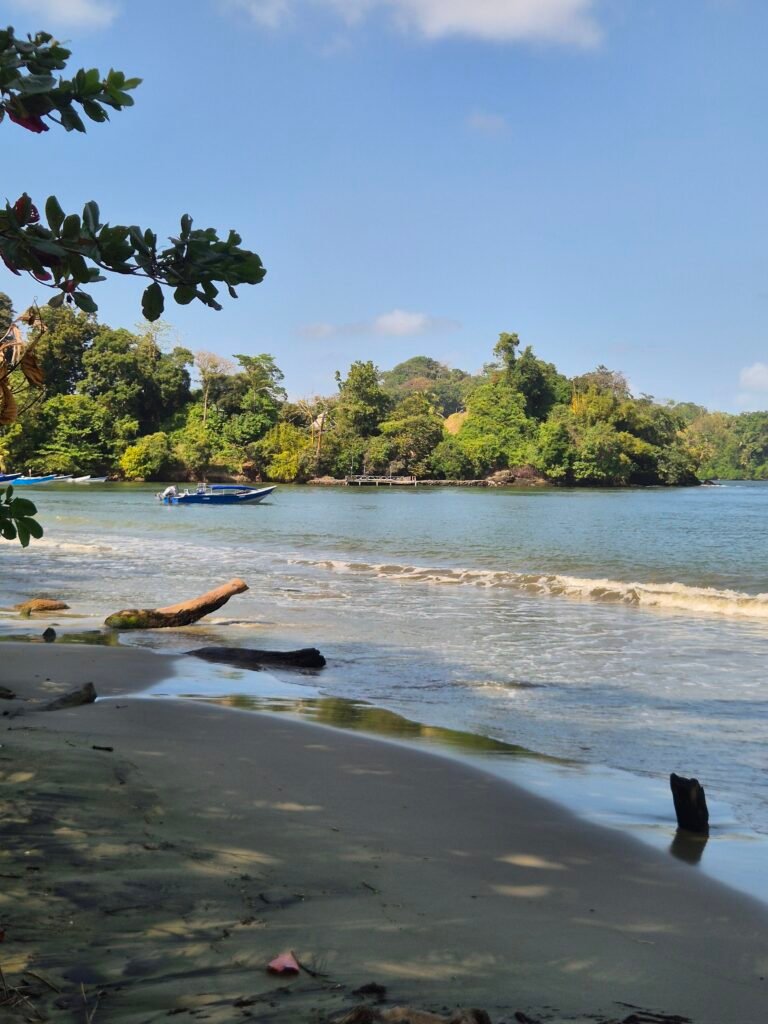
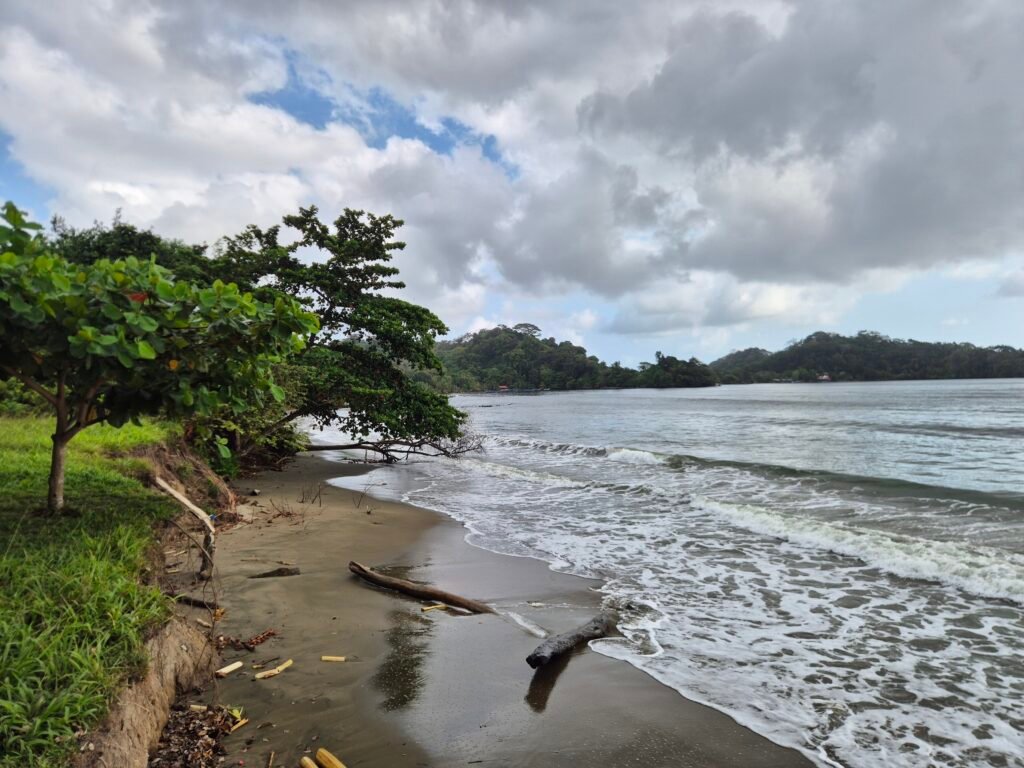
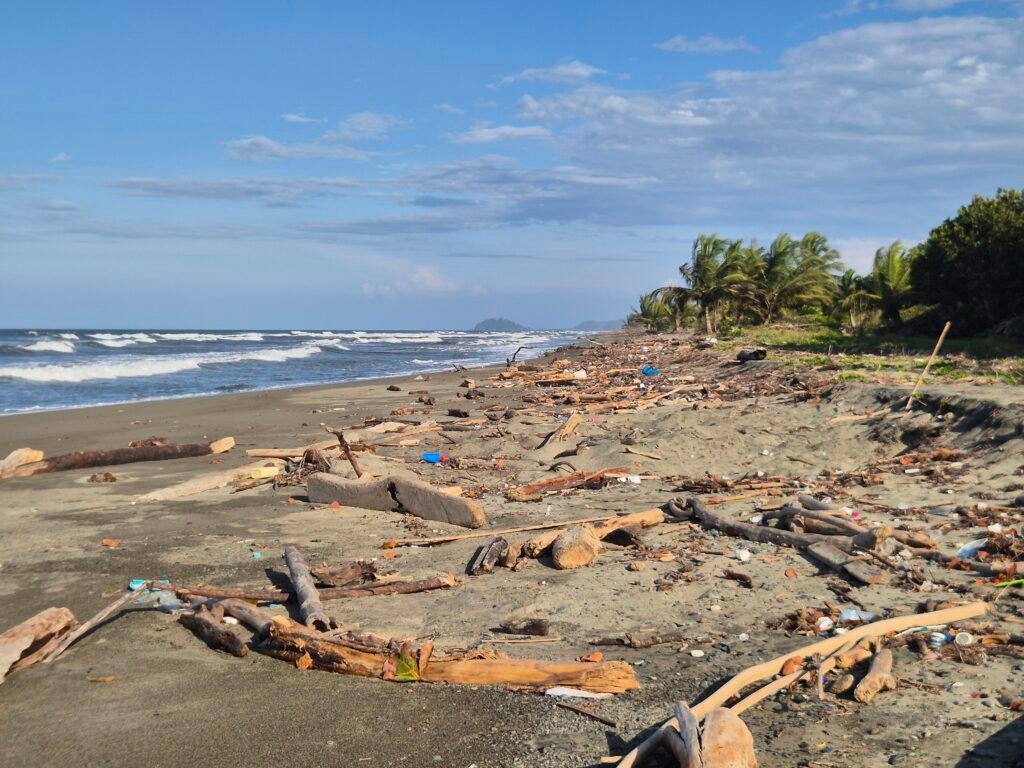
Before San Francisco, we notice how much trash has piled up on the beaches. They clean them every year, but it’s an endless task. Thousands of flip-flops and plastic bottle caps lie washed up on the sand.
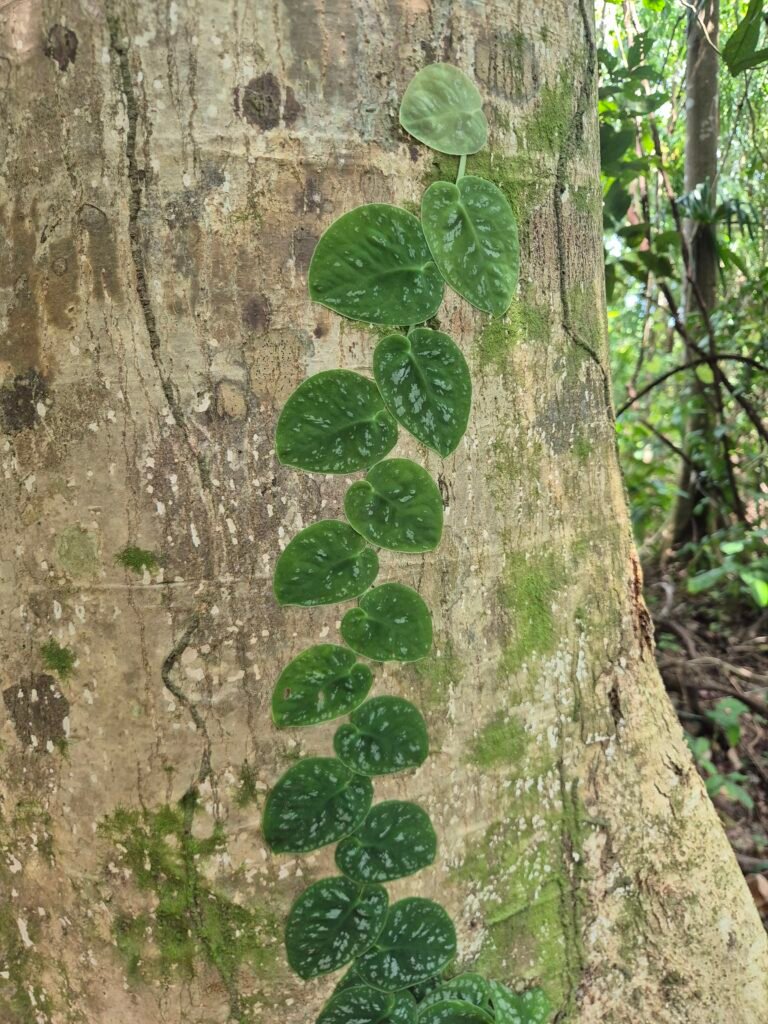
After our breakfast break, we head for the giant trees. The trail is well maintained and wide enough. The vegetation is dense, and we come across a troop of black howler monkeys, which we watch for a few minutes. Our guide shows us a few trees and plants… and explains how locals use them; many are still used as medicinal plants.
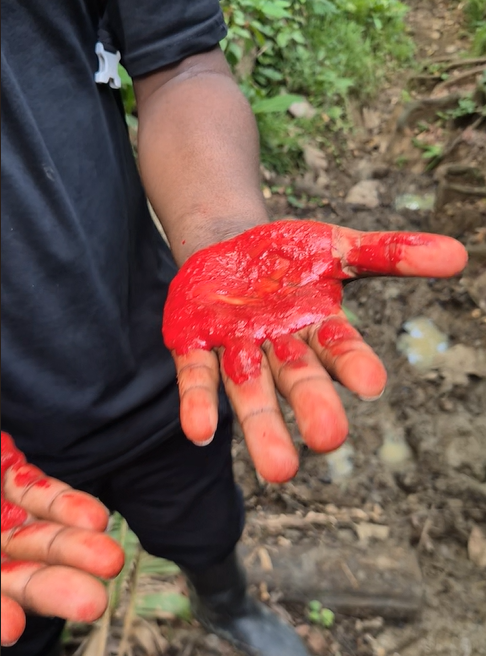
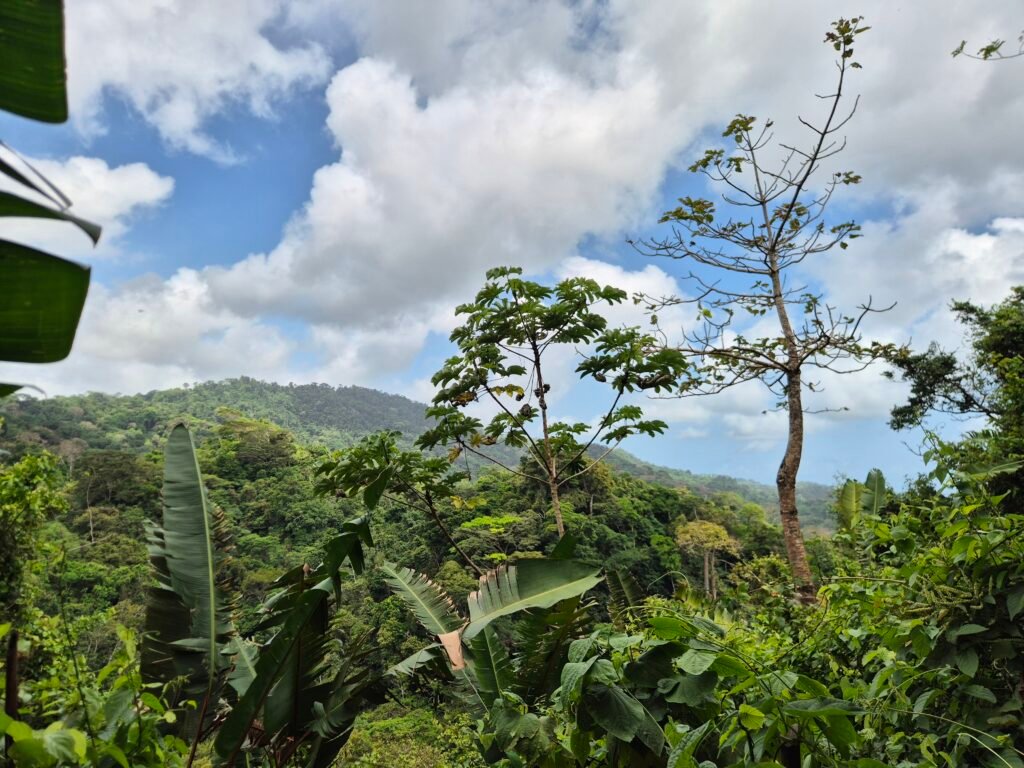
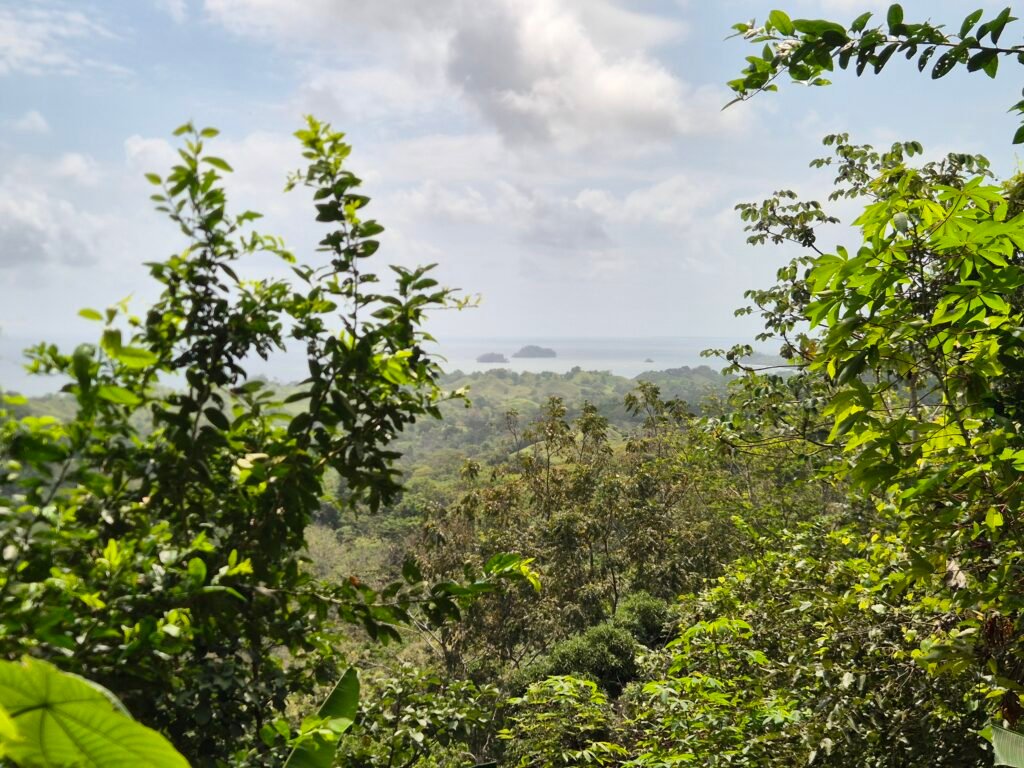
Rubber boots are welcome on some muddy stretches and river crossings, but they’re mostly for safety: there are apparently a few snakes around. After a good climb, we enjoy a few open views over the surroundings and, in the distance, the ocean.
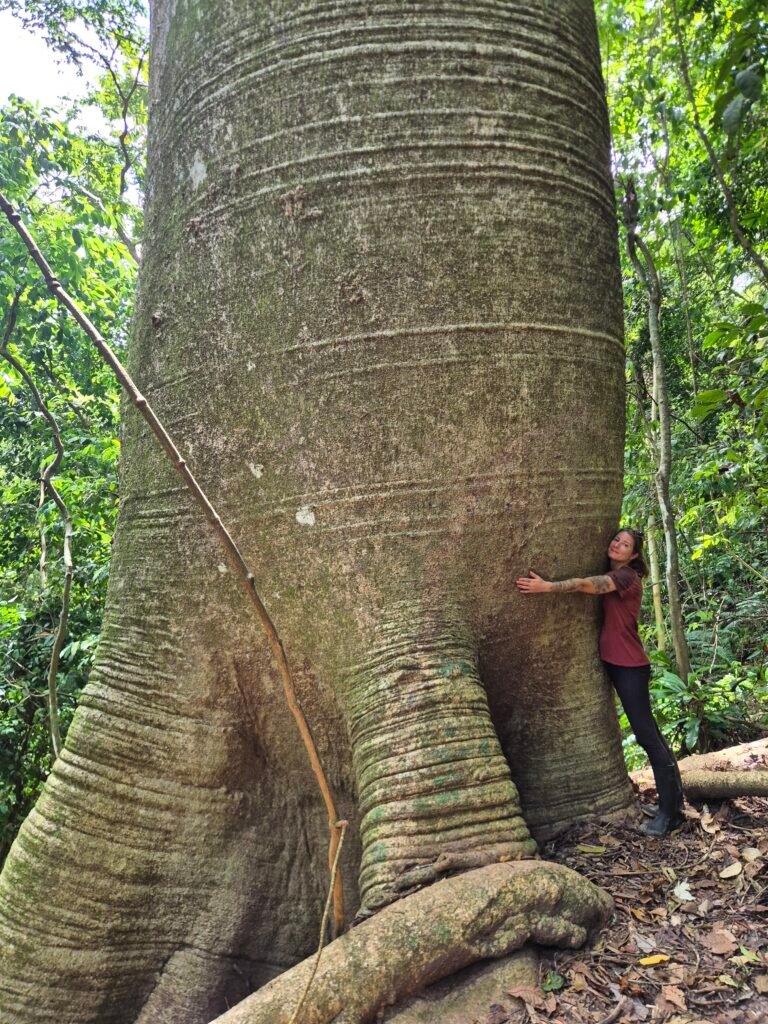
At last, we reach the famous giant trees, an endemic variety from the baobab family, like their illustrious African cousins! Their trunks are enormous, and you can barely make out the top of the tree. What beasts!
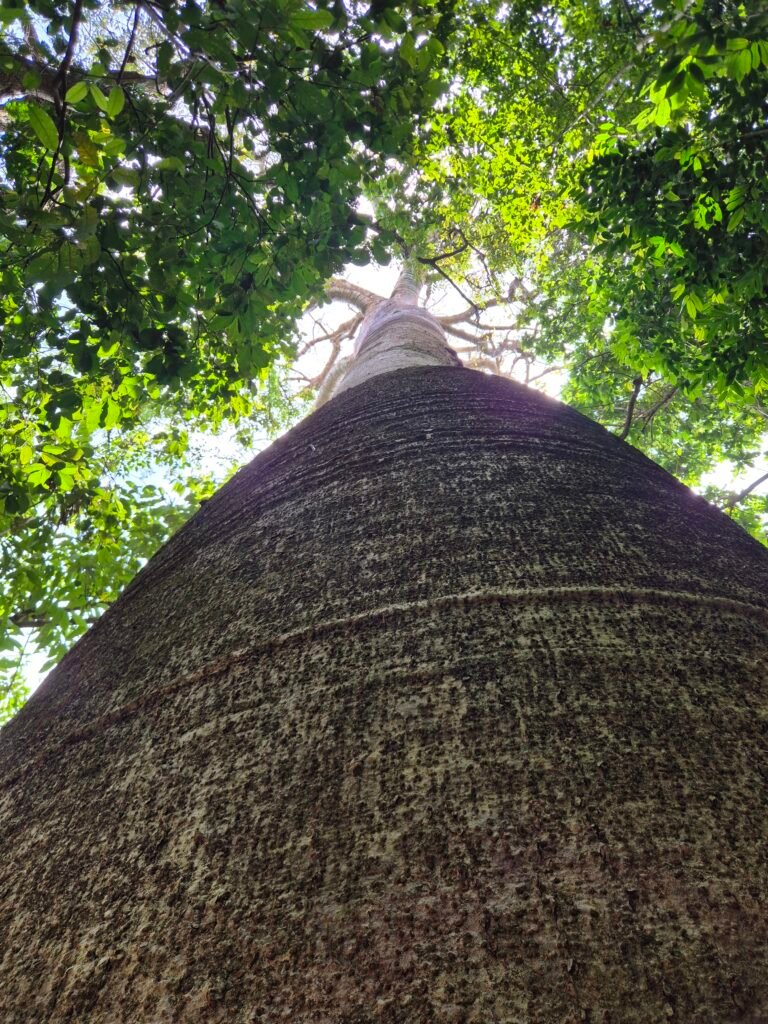
It’s an out-and-back, so we stop in San Francisco again for lunch before heading back to Triganá in the afternoon to cool off in the pool.
Sasardi reserve
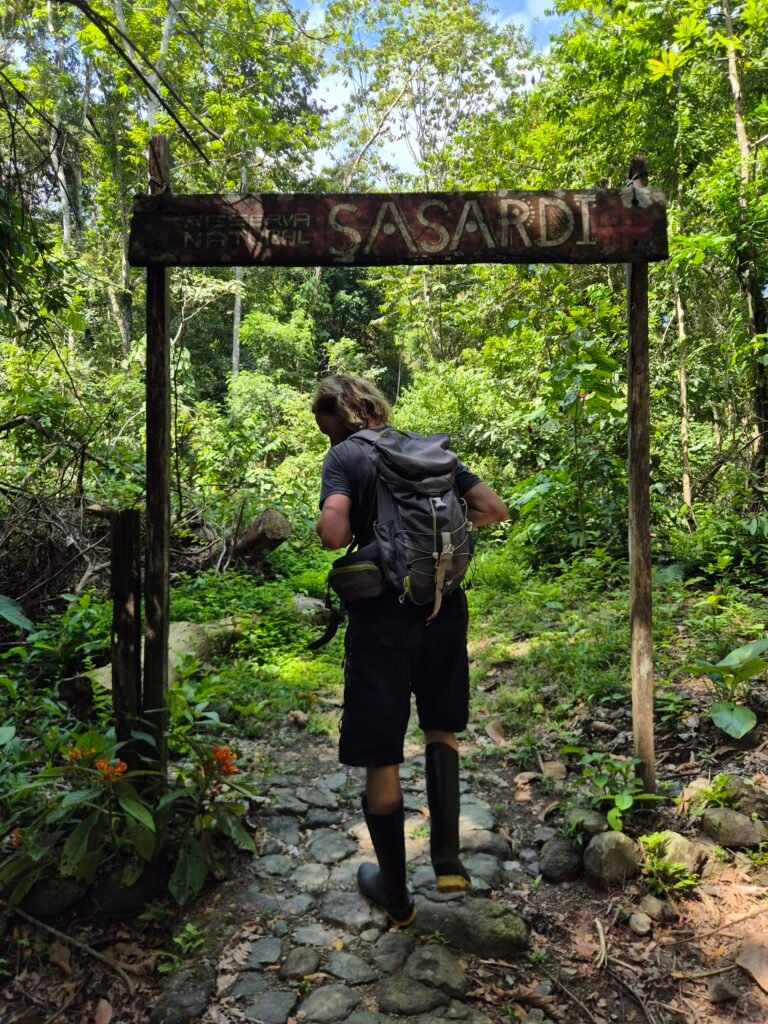
The Sasardi nature reserve is a local initiative that has been protecting 150 acres of the Darién forest for about thirty years. Entry costs COP 10,000 per person.
You can do the hike on your own without a guide, since Arnaud provides a very clear route description. The trailhead, which is also the start of the multi-day organized trek to the Panama border, is right at the hostel. There’s sometimes a faint trail along the river, but the easiest (and most fun) option is to walk right up the riverbed. There isn’t much water, and the hostel generously lends out rubber boots (mainly for safety). We hop from rock to rock, wade across a few times and climb a few rocky “walls.” Progress is slow, but there’s nothing difficult.
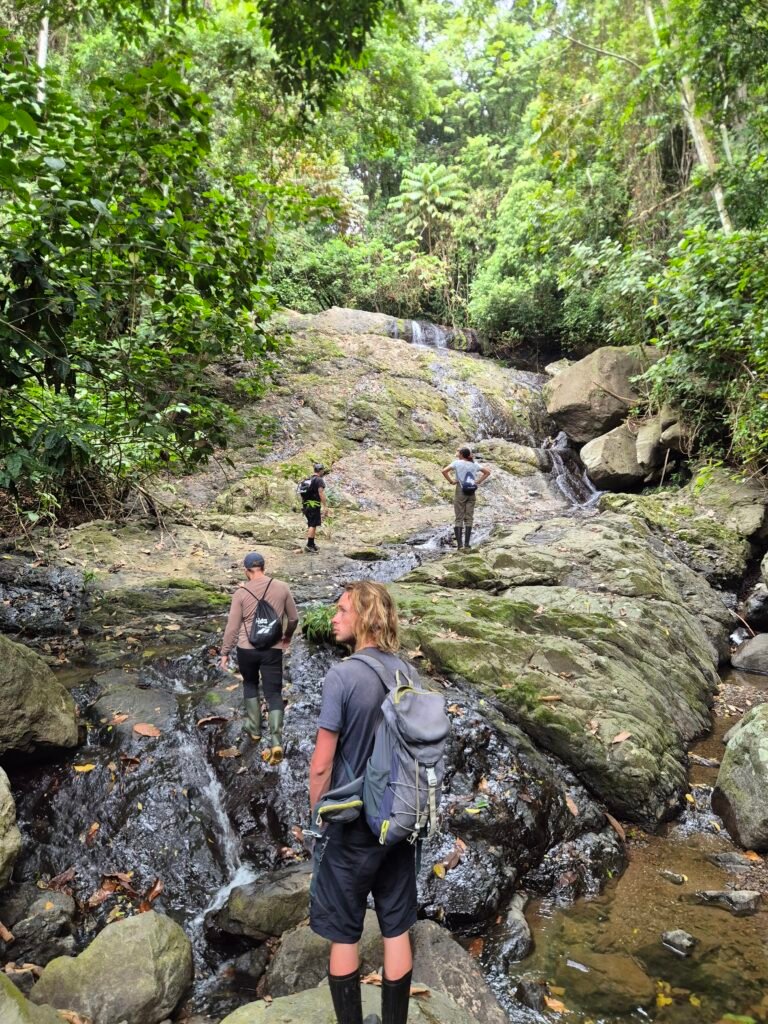
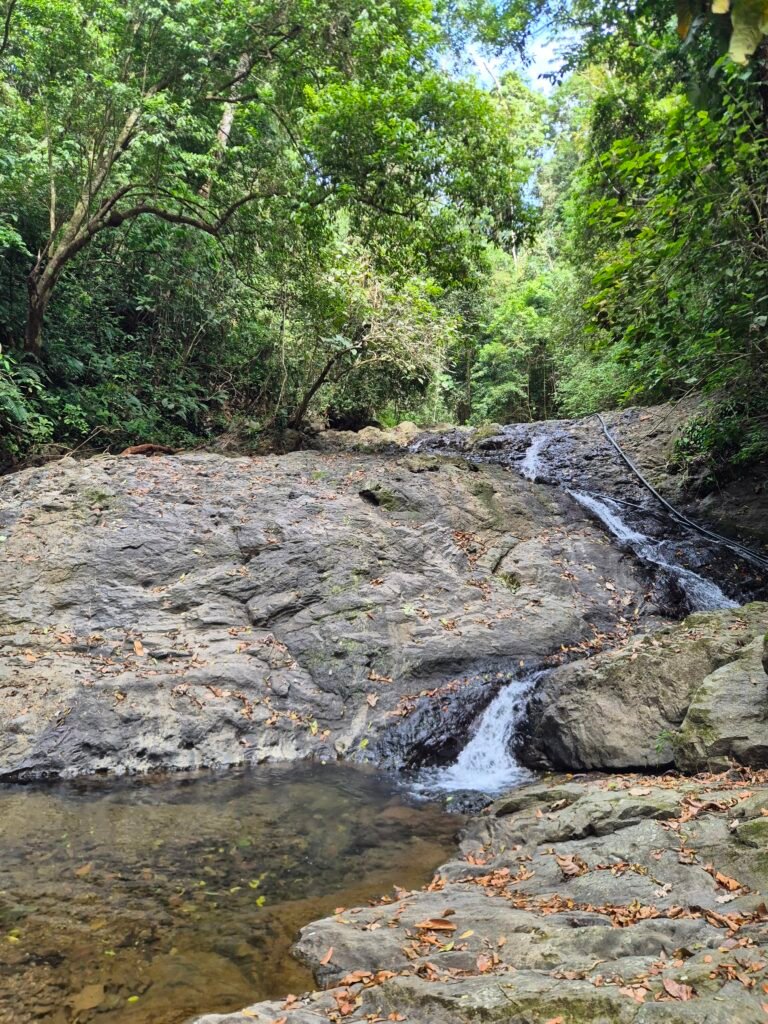
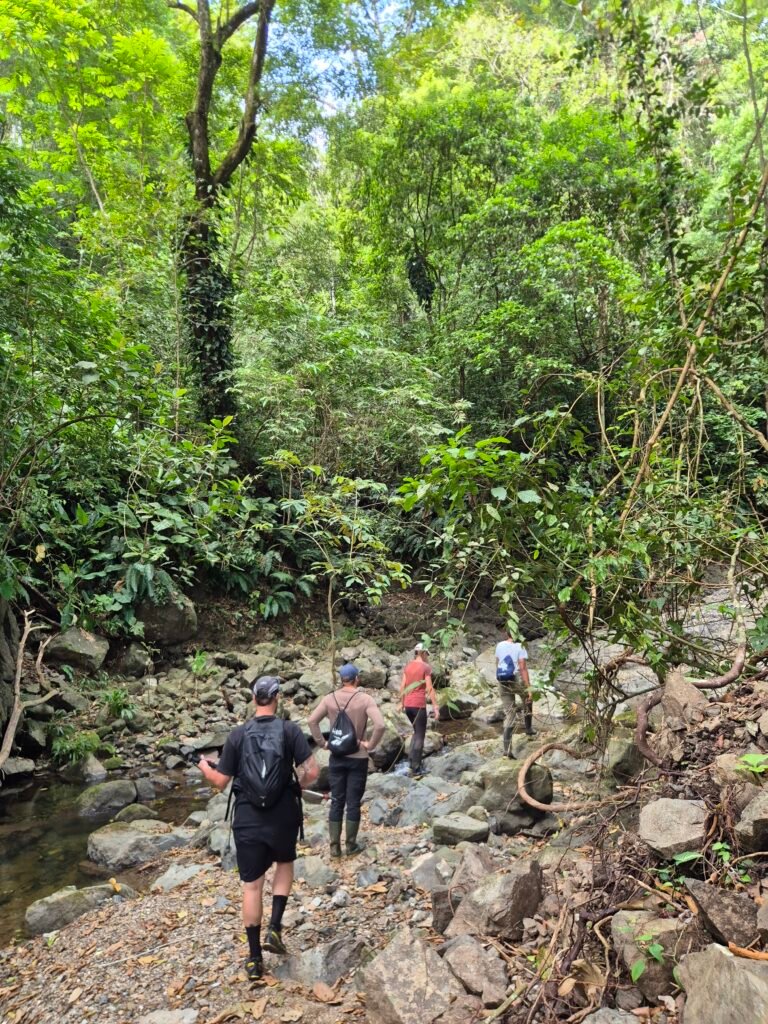
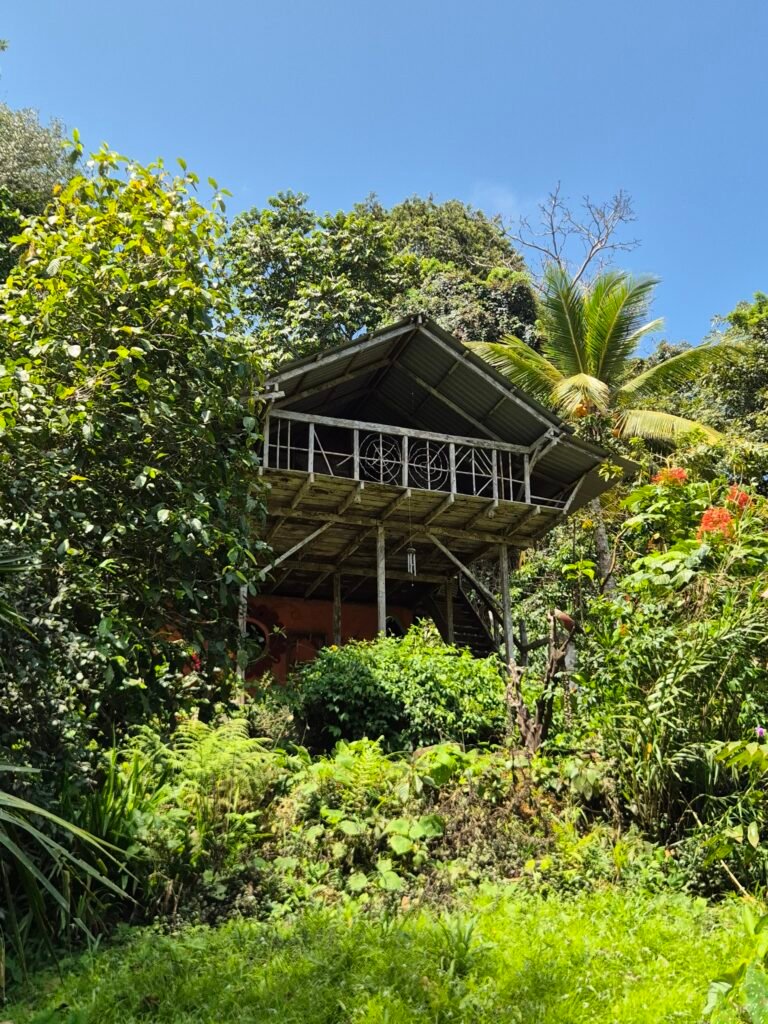
We finally reach the entrance to the reserve, where we find some nice cabins with an outdoor kitchen and a platform. It must be possible to spend the night there, but there’s no sign of anyone.
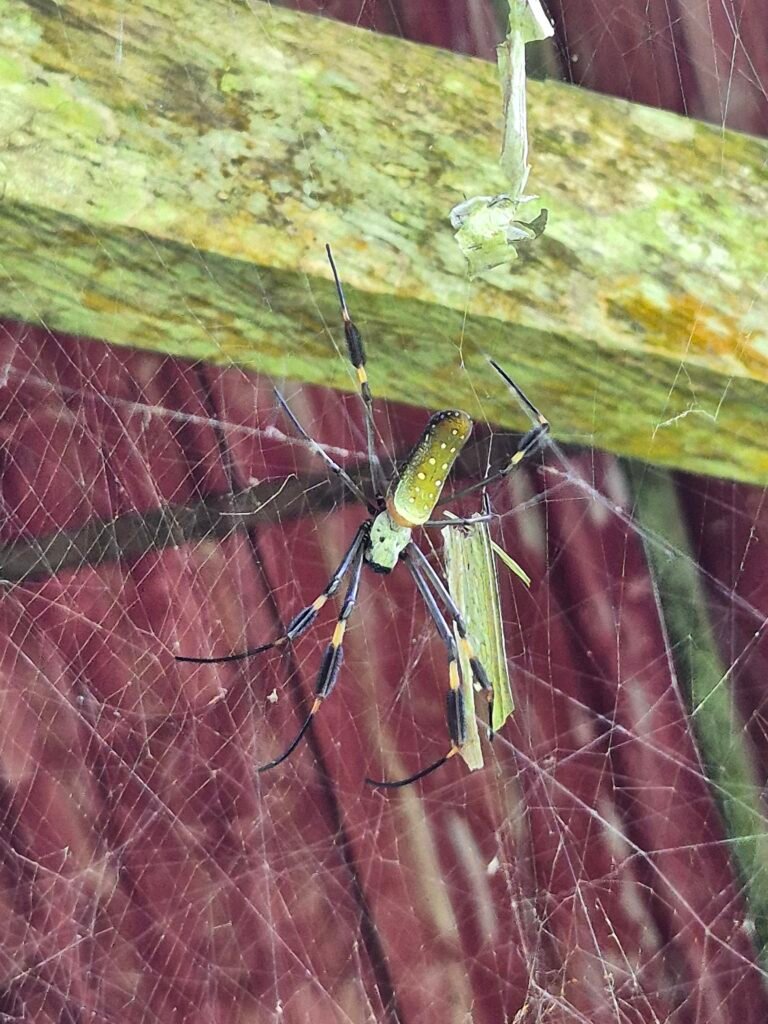
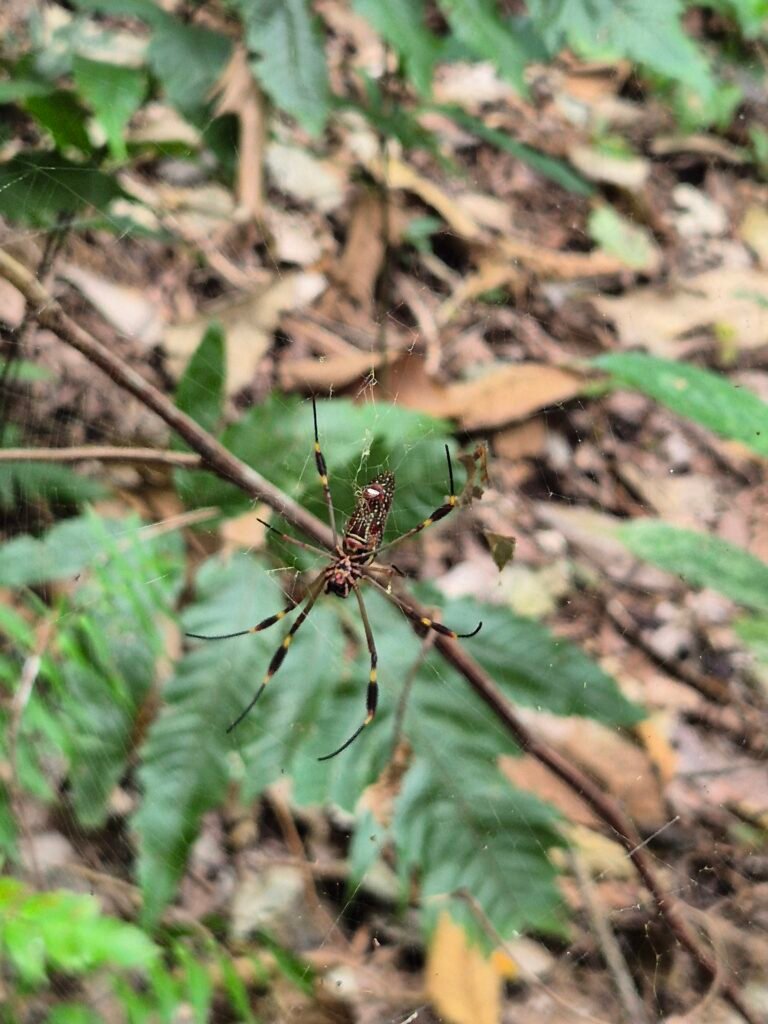
We retrace our steps and head back into the river. We make our way through a lush jungle, past a multitude of insects (giant butterflies, spiders…), beautiful colorful frogs that are probably best avoided, and a few birds, including an imposing king vulture. Not exactly graceful, but impressive! In the background, the terrifying calls of howler monkeys echo through the forest. We spot the discreet cairn marking where the trail leaves the stream, but we keep going up the creek until we stumble upon the gang of monkeys making all the racket. When they see us, the howling stops, and we stare at each other for a few minutes.
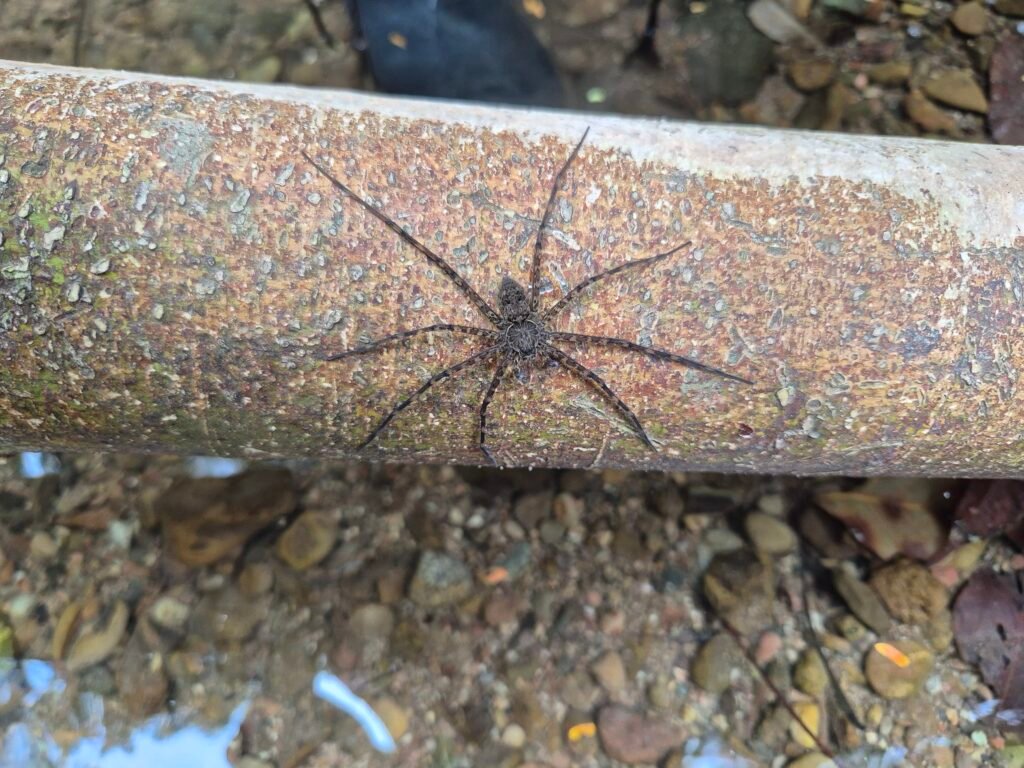
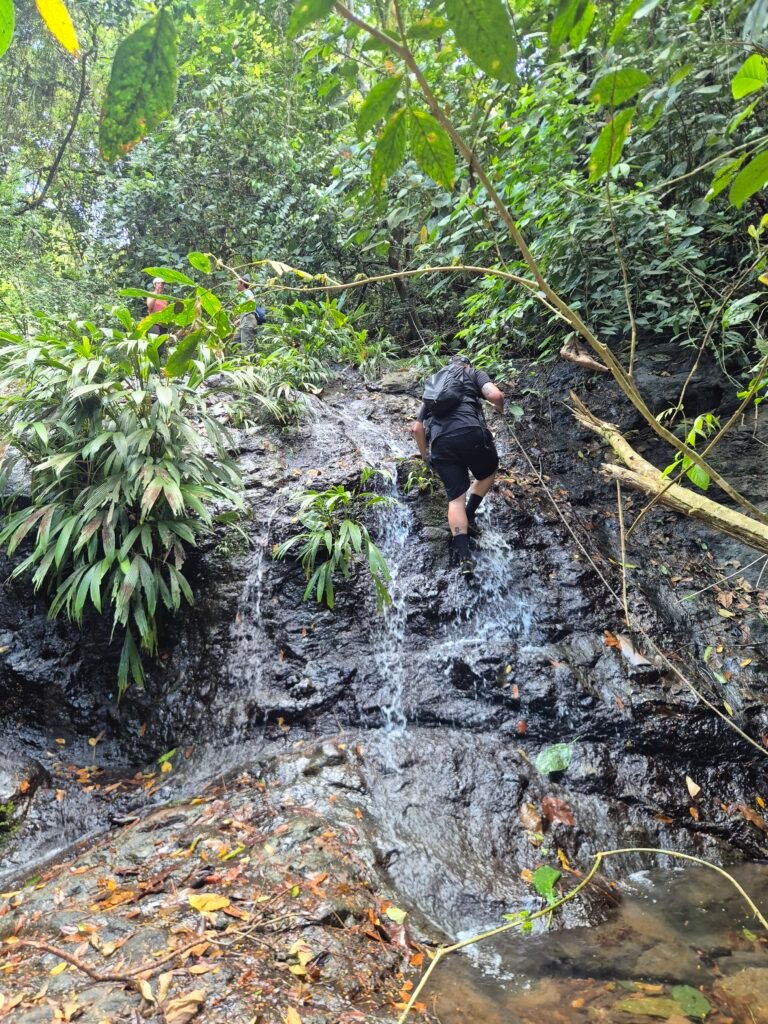
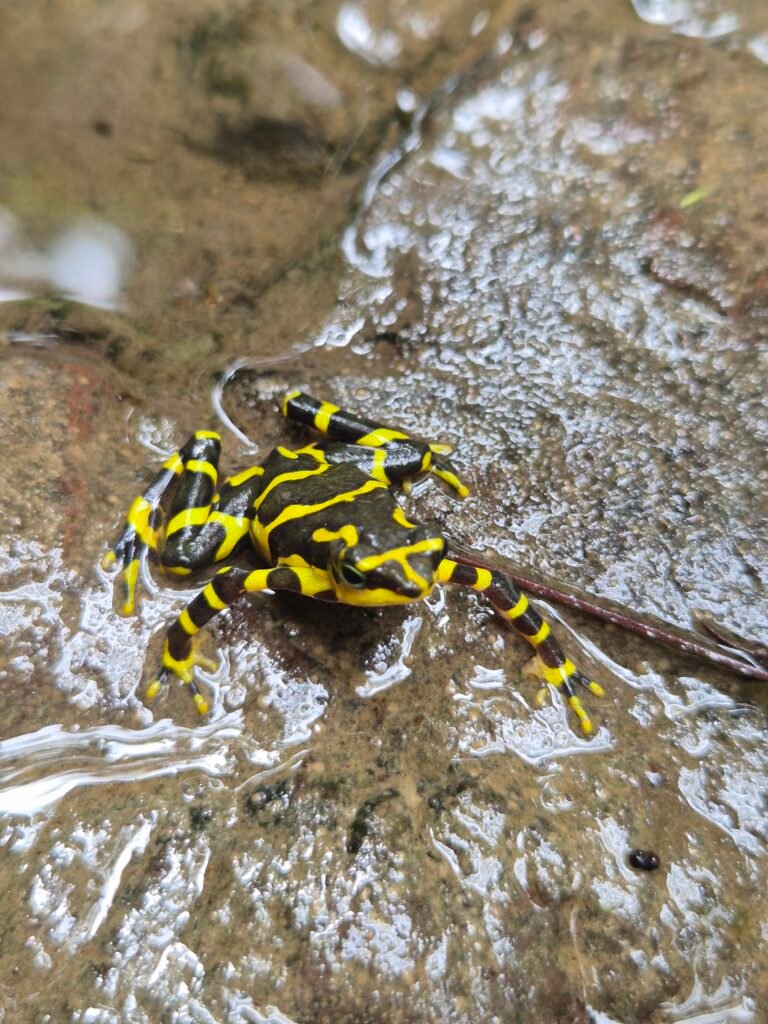
We go back to what looks like the start of a trail, straight up the slope. It leads us to a cattle path, which comes out a bit farther on onto vast, steep pastures, with the blue of the ocean in the background.
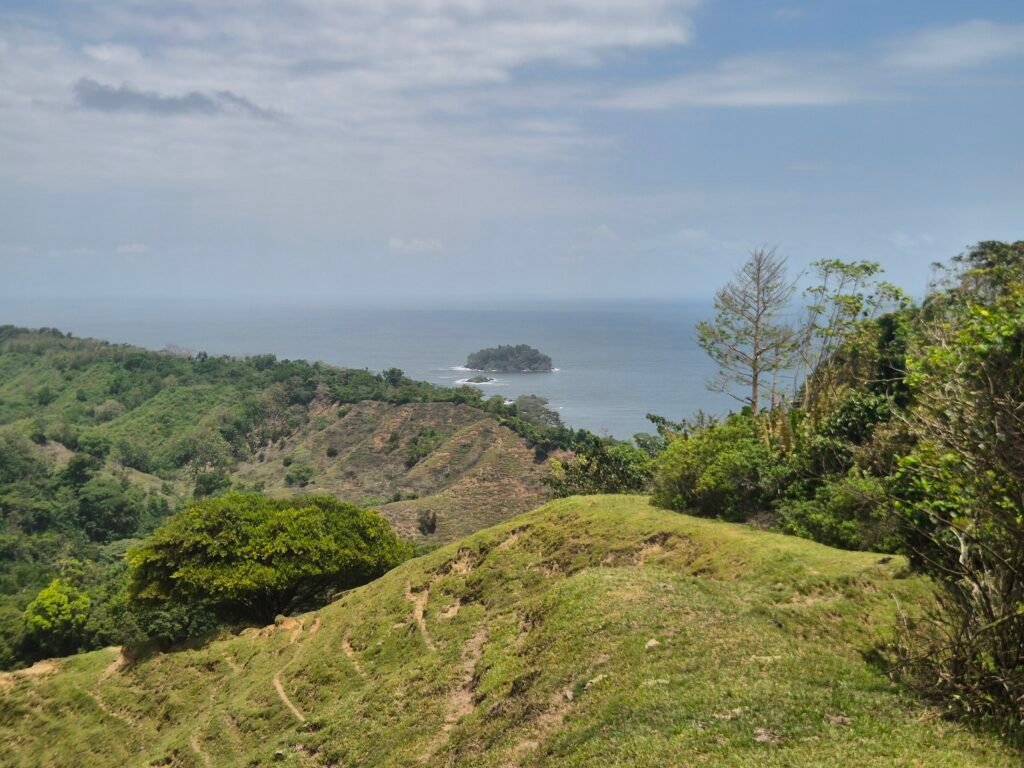
We head down toward the coast. The trail isn’t always clear, but we manage as best we can on a steep slope where the sun shows us no mercy. Just as we’re hoping to enjoy a rare patch of shade, we get attacked several times by tiny wasps. We walked straight into an ambush!
Once at the bottom, we take a break at a farm. As Arnaud suggested, we enjoy a nice cold lemonade while giving a little something back to the few locals who live in the area. When it’s time to pay, they only ask for COP 12,000 for 5 large lemonades. Our Belgian friend kindly slips them a 20 to say thanks.
We set off again, this time along the coast, where there’s more shade. We enjoy a few pretty views in this coastal jungle. The trail is easy to follow from here on.
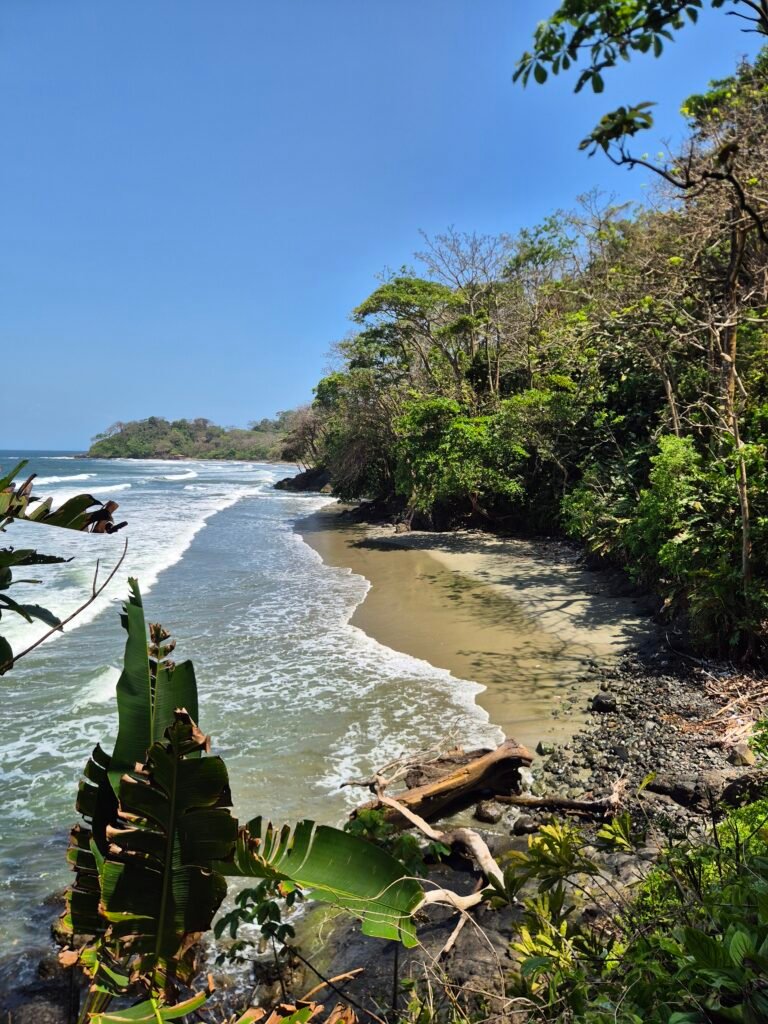
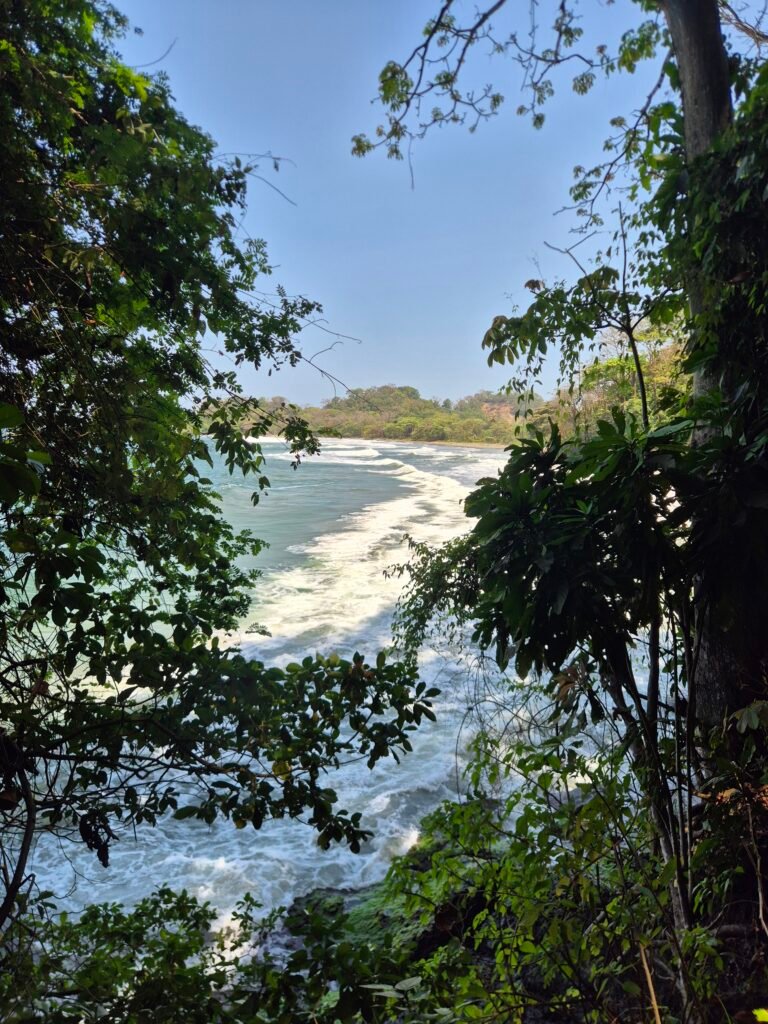
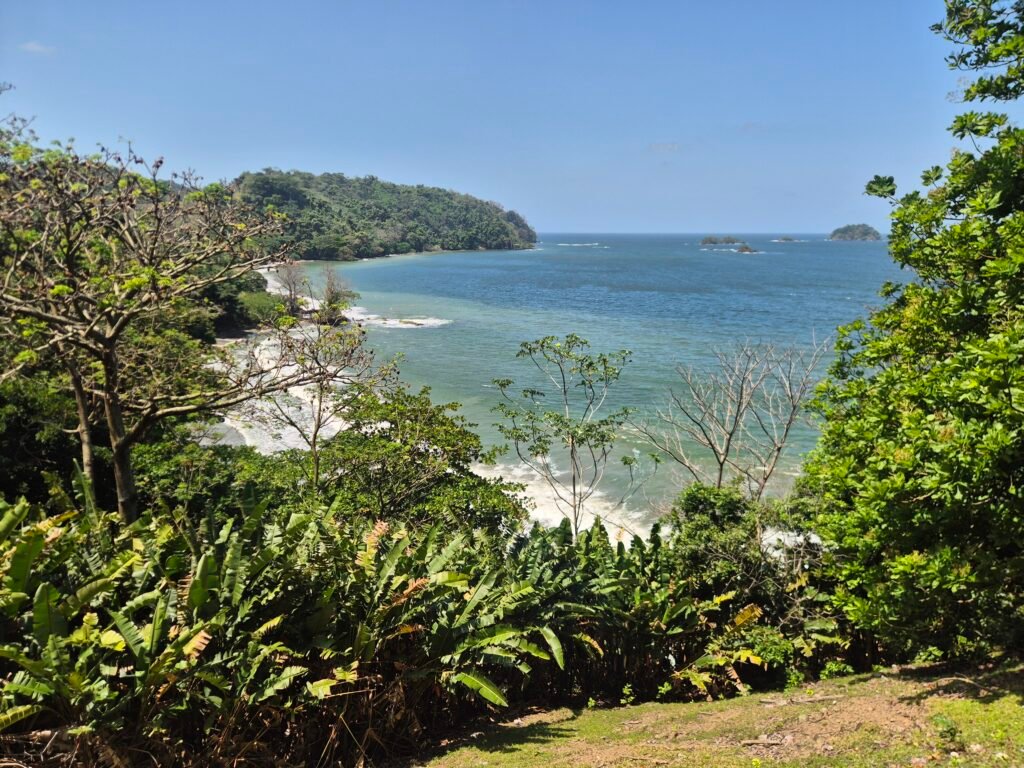
When we reach Sardi beach, we see a huge amount of trash and washed-up logs. You have no idea how many flip-flops wash up here… You could sell them as mismatched pairs and open a Desigual-style shop!
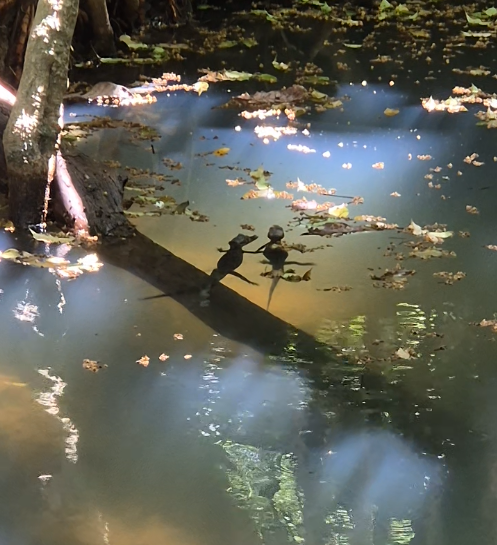
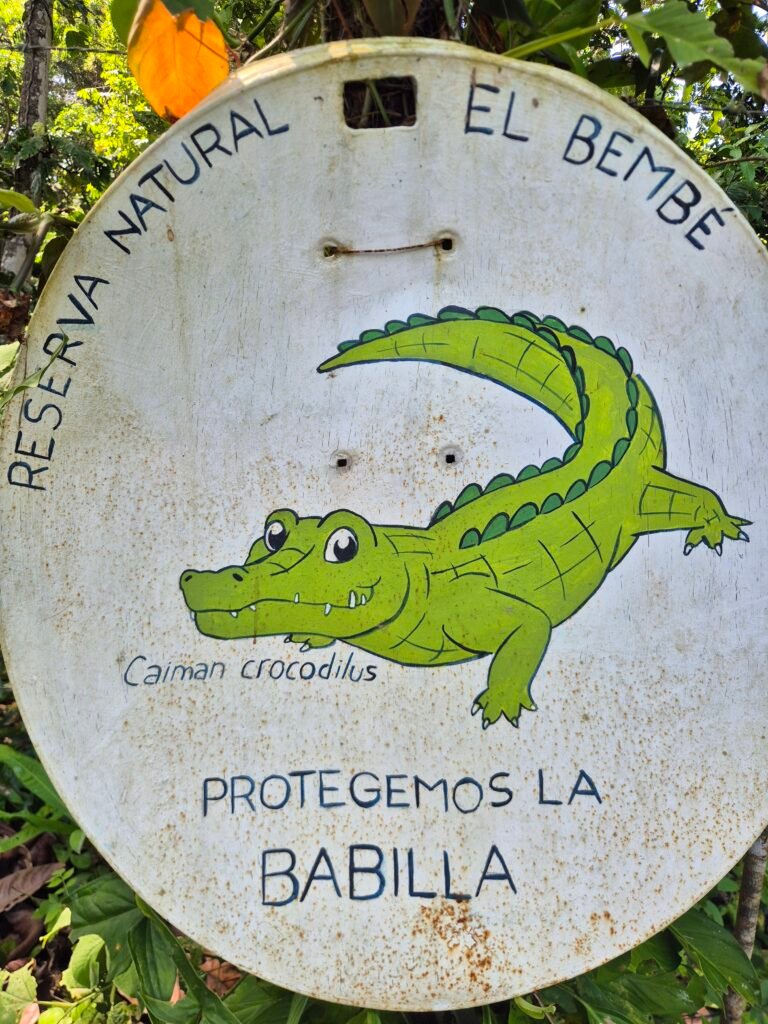
As we finish the last stretch back to the hostel, through the El Bembé reserve, we come across a pond where a few baby caimans are sunbathing.
Playona
Leatherback turtles nesting
There’s no real road connecting Triganá/San Francisco to the other towns. In practice, there is a trail (not on the maps), but you’re not really allowed to take it without a guide. Through the Treegana Hostel, you can do the trek to Sapzurro and the Panama border with a guide and logistics included, or simply do the first stage to Playona to see the leatherback turtles and continue on your own. We ask about prices, but it’s beyond our budget, so we politely decline.
Every year, starting in February, the huge (really huge) leatherback turtles come ashore on Playona beach, south of Acandí, to lay their eggs. These giant turtles, the largest in the world, come down from the cool waters off Canada. Nesting is generally considered to become regular from March onward, but it’s never an exact science, and it’s always best to check beforehand. From May, the hatchlings start emerging (2 months after the eggs are laid). So, for a short window (~May to June), you can see both nesting and hatching on the same night!
Trip report
In the end, we take a boat from Triganá to Acandí around 1:30 p.m. with the company Maar Travel, which lets us enjoy a quiet morning. This morning, Camille seems lost in thought.
We ask the boat crew if they can drop us off at Playona on the way, but no, that’s not possible. Worth a try!
The ride is less rough than the one from Turbo, and we come out almost dry. The village of Acandí isn’t very charming, with its potholed streets, but the people are smiling and welcoming. For a moment, they think we got off at the wrong stop; clearly, they don’t see tourists every day.
We only come across 2 little shops, where we’ll have to try to stock up the next day, and we still manage to find something like a pharmacy for Camille.
To get to Playona, which is more of a spot on the map than anything else, there are several options: boat taxi, moto-taxi (COP 100,000?) or on foot. We obviously go with the last one and just take a cargo motorbike to the river (COP 30,000), which we cross by tarabita, a basket hanging from a cable (COP 2,000 per person).
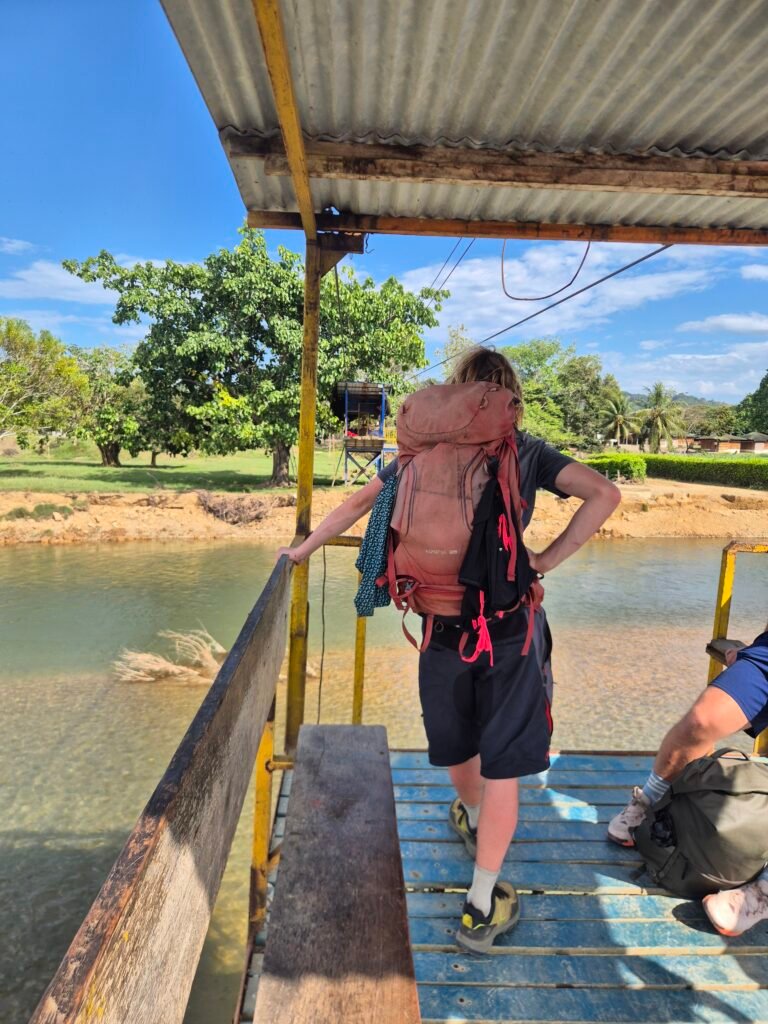
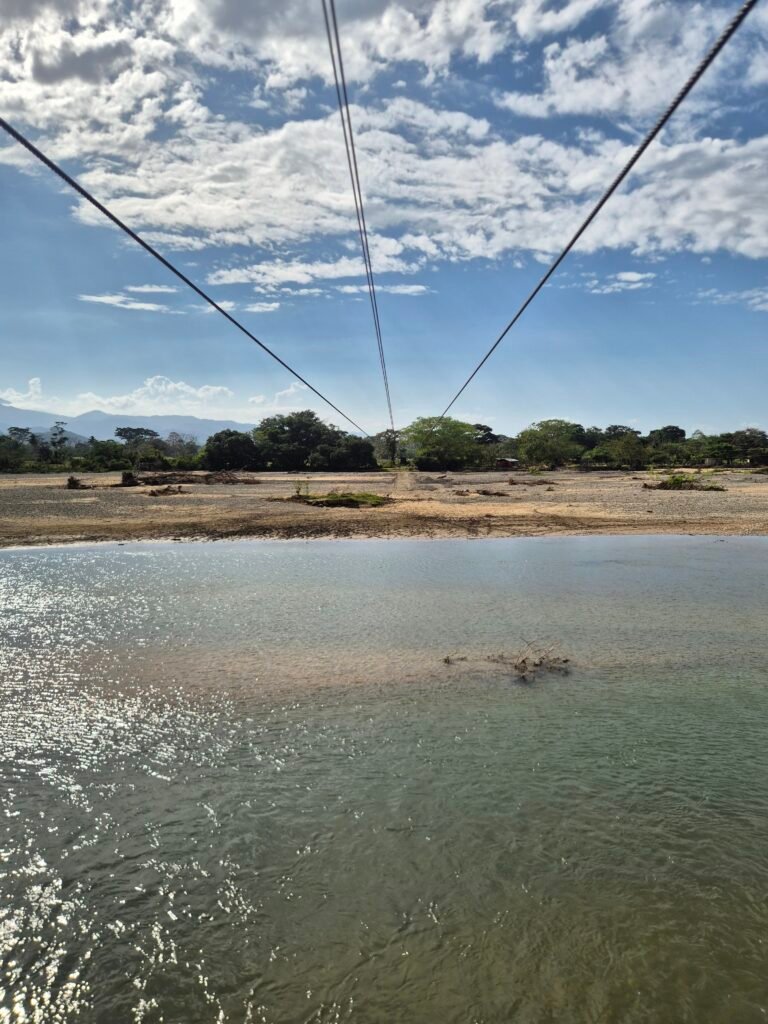
We still have a few miles to go to our destination for the day, the hostel/posada La Mona. We see several magnificent (and elusive) toucans along this stretch. The climb to the pass under a blazing sun is exhausting, even though there’s hardly any elevation gain. Past the pass, and a herd of enormous cows with unknown intentions, we head down the other side of the hill. In front of us is an end-of-the-world landscape. Playona beach stretches as far as the eye can see, lined by the impenetrable Chocó jungle.
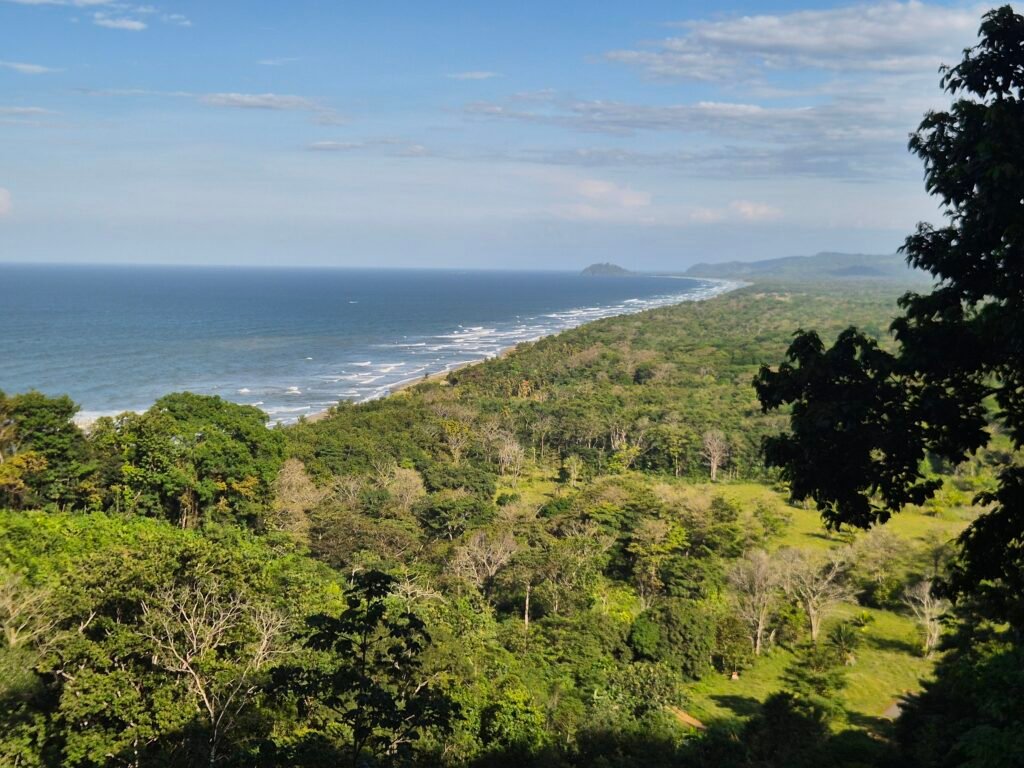
Back at sea level, we reach the beach, which we have to walk up to the posada. There’s a lot, a lot of stuff washed up. Wood, of course, sometimes huge logs, but also plastic, shoes… and everything that should never end up on a beach. It saddens us; we picture the leatherbacks having to fight their way through this dump in the dark. All of that just to give life. It’s a strange jumble of feelings: sadness, anger, admiration…
Halfway there, we pass a fenced enclosure, possibly where the eggs are kept once they’ve been collected, to protect them from potential predators. To protect the species, the eggs are no longer left on the beach: they’re removed right away and put somewhere safe.
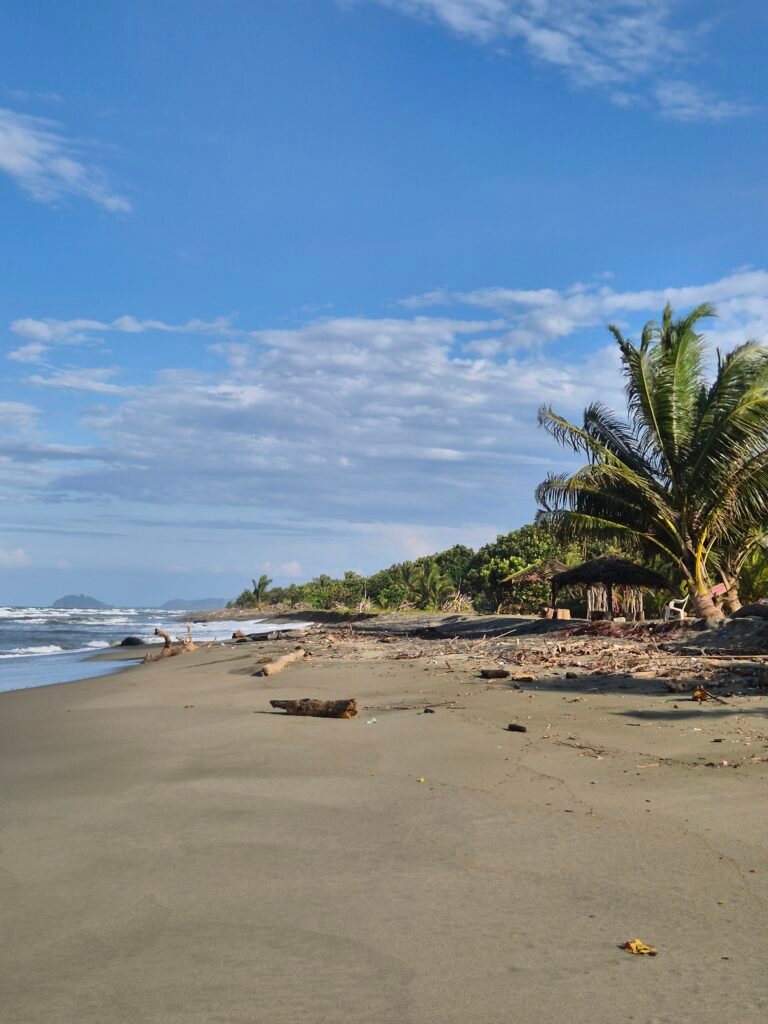
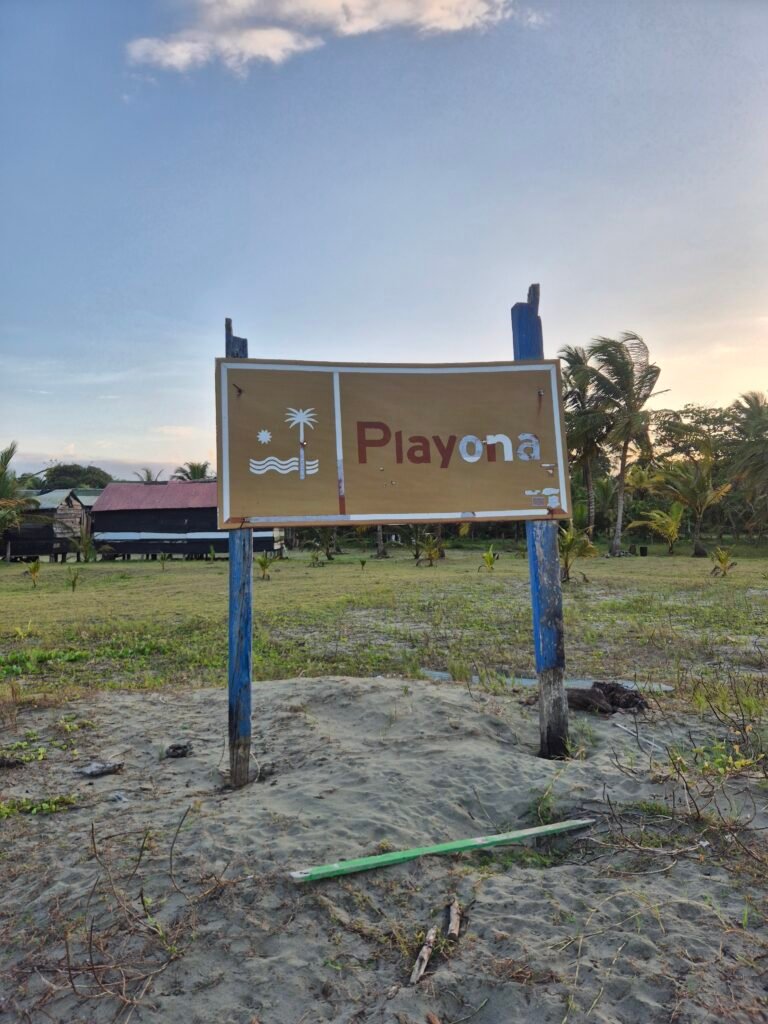
At last, after a long trudge through the sand, we come across a funny sign for Playona and the eco-tourism posada La Mona. It’s run by Sandra and her family. Naturally, we wonder what on earth brought them here back in the day, and how long ago…
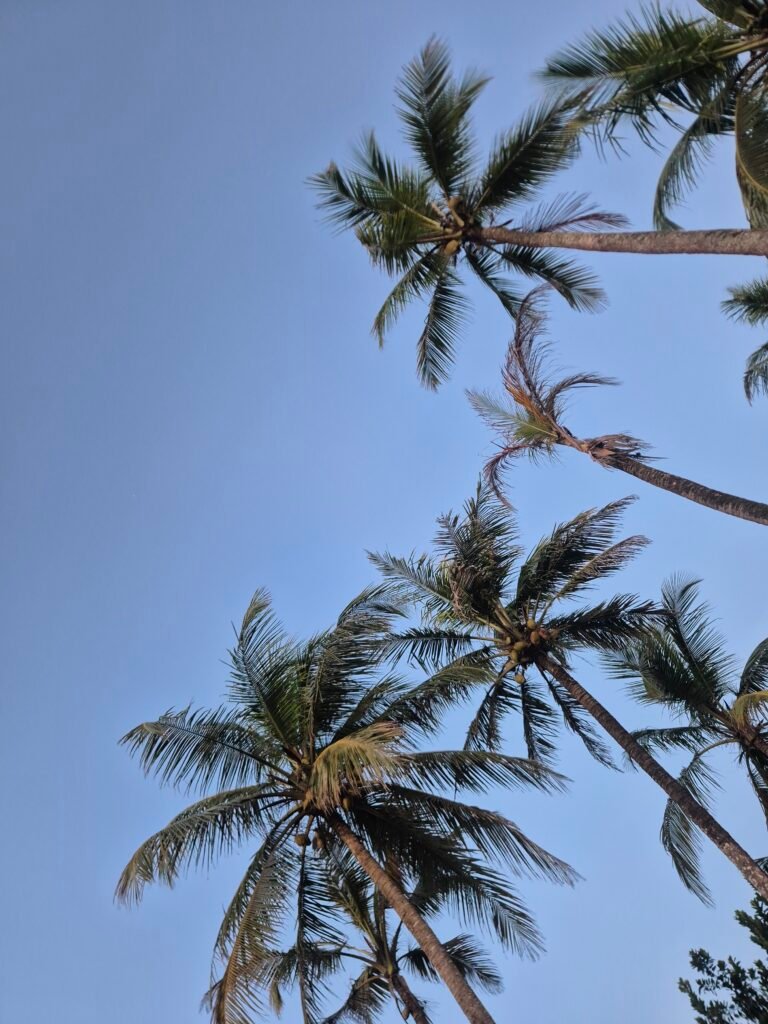
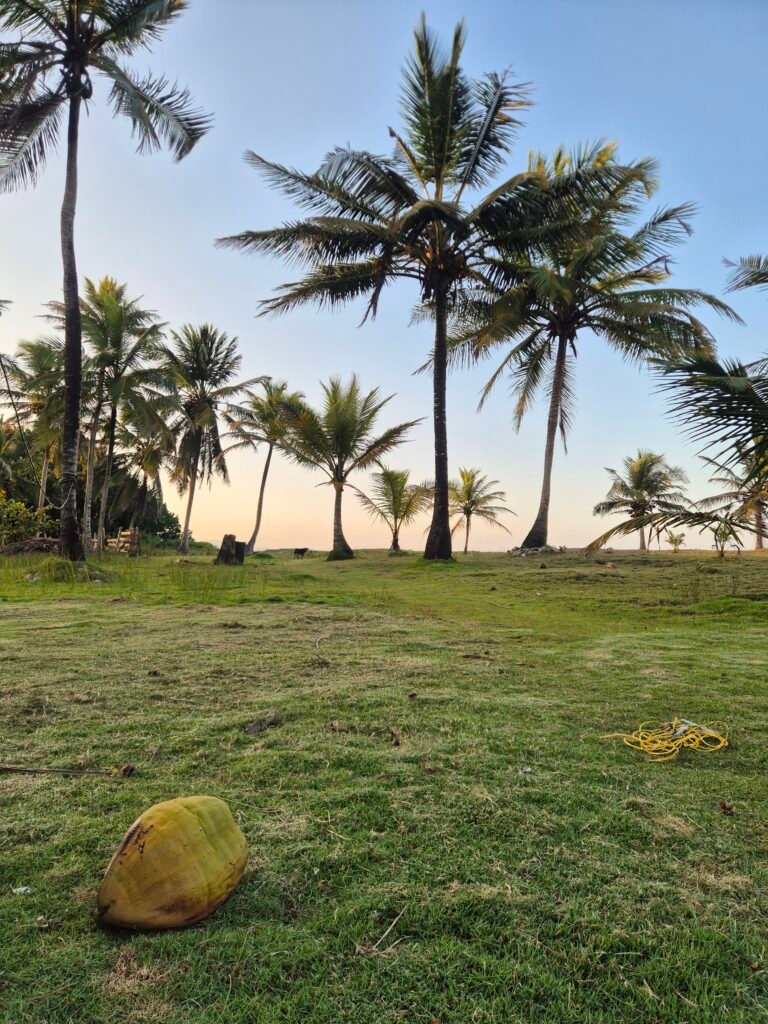
The place is rustic and soothing. There’s a special atmosphere here. Time seems to have stopped, or never to have started at all. We settle in for a moment; comfort is basic in this cabin, a big, half-open heap of planks.
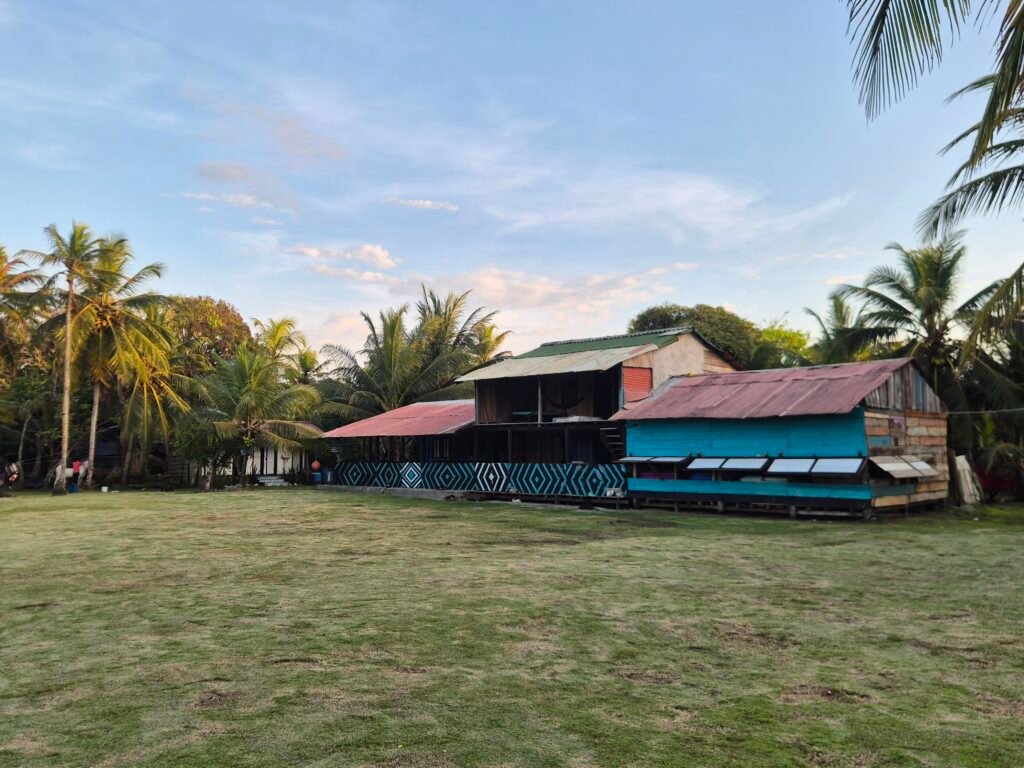
We wander around the property, where the salty air mixes with the smell of the pigs, and the rustling of the tall palm trees blends with the clucking of the poultry. While Camille goes off to answer a call of nature more urgent than usual, John carries on along the beach to a washed-up log, where he’s soon joined.
Sixteen months ago, we started this trip in Patagonia and made our way to Ushuaia, the city at the end of the world, with the slightly crazy dream of traveling up the whole South American continent and the Andes.
And here we are. Here, on this desolate beach, just a few hills from the border with Panama and Central America, two unforgettable chapters intertwine.
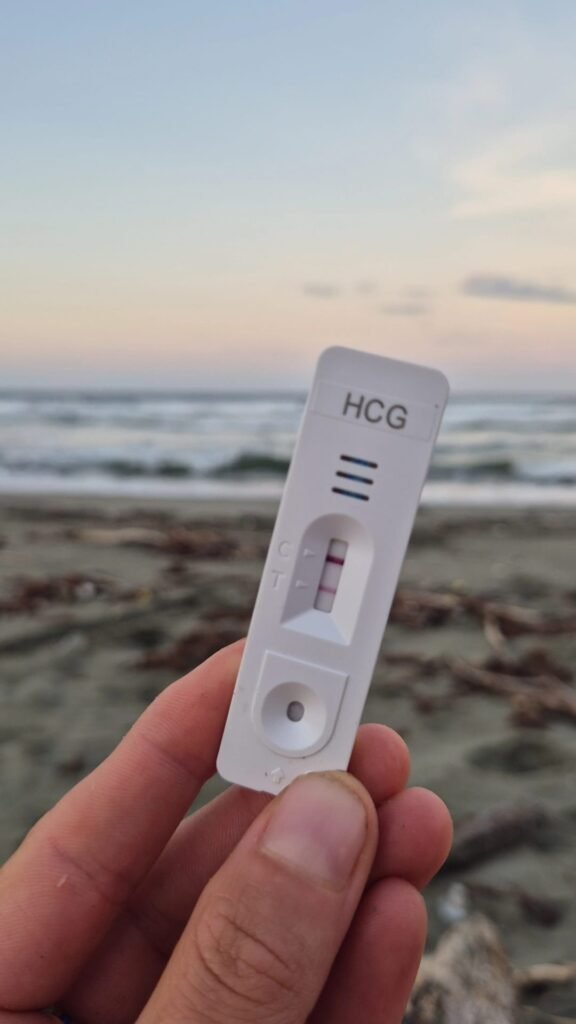
Camille holds it in the palm of her hand. Two lines, so faint.
So it’s right here, at the end of the continent, at the end of this epic journey, in the dazzling glow of dusk, that a new adventure begins. For three.
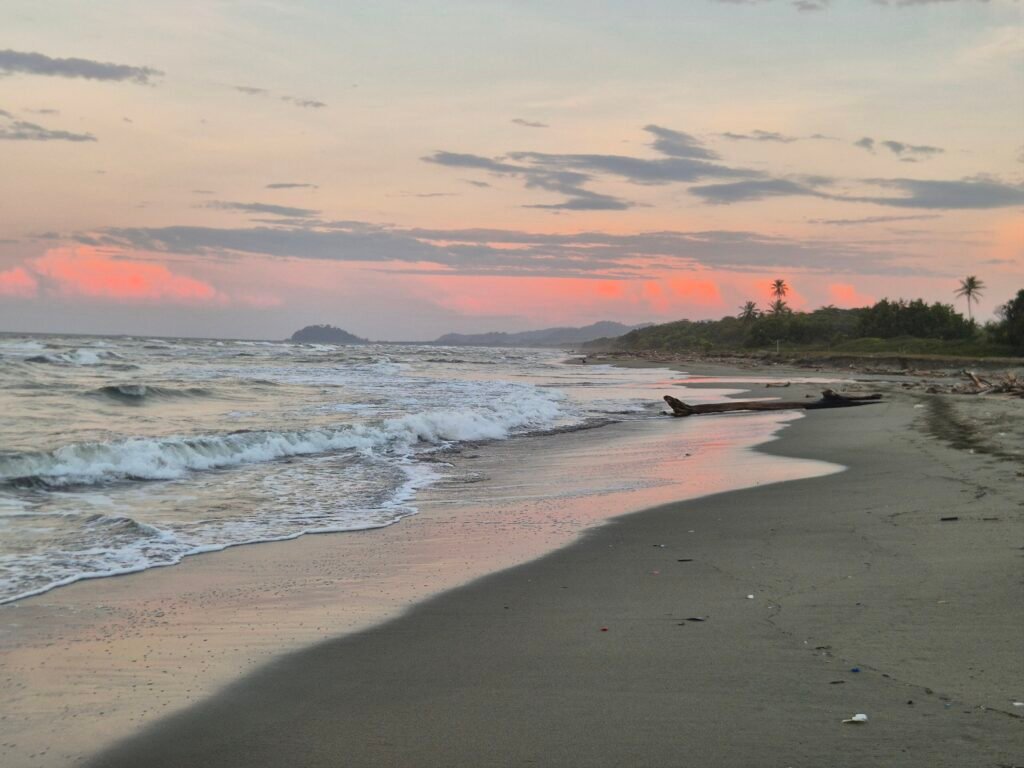
After a long while daydreaming, we head back to the posada. Sandra’s father explains the plan for the evening. Once dinner is over, we’ll wait until 3 a.m. to start walking the beach in search of leatherback turtles. You have to use a red light and never point it at them, so as not to disturb them or interfere with the nesting process.
Nesting can last more than 2 hours, which gives us time to spot a turtle and watch the whole thing. With all the branches piling up, they sometimes struggle to move forward and wear themselves out. That’s why the family tries to clean the beach and burn the trash as much as possible. You can also volunteer with Sandra’s family to help out.
So we wait, chatting and playing cards. At last, it’s time to head out onto the beach. Finding a turtle, especially at the beginning or end of the season, is never guaranteed. At this time of year, only a few turtles come up onto the beach each night. What if there weren’t any tonight? Doubt creeps in as we search. Still nothing in sight. The minutes go by, the miles roll on.
Walking along the beach is hard going. It’s pitch dark, and we only have one or two headlamps on red light. There are branches lying everywhere, and we’re walking in the sand. Several times, our shoes nearly get caught by a wave.
Finally! To our relief (and amazement), we find a gigantic turtle! It’s hard to make out anything in the darkness. Every now and then, our guide briefly switches on a light, always red, behind her. She’s digging the hole where she’ll lay her precious cargo. She repeats the same movement tirelessly. Right, left, right… powerfully scooping out the sand with her huge flippers.
Time goes by and the tide slowly comes in. She seems to have miscalculated: the water starts reaching the hole and filling it back up with sand. Eventually, she gives up on her spot and moves farther away to dig another hole… We set off along the beach again to try to find another turtle further along in the process and spare ourselves another good hour of digging. Luckily, we find a second one after walking up the beach for a long while. Her hole is already well underway, and we cheer her on silently, hoping she’ll make it, afraid the tide will play another nasty trick on us.
She keeps going even though her hole is already very deep. To us, it looks just fine, and we almost want to tell her she can stop there, but no, she keeps digging for a long time. Finally, she stops and gets into position to lay her precious eggs! Volunteers collect them one by one and sort them: the perfectly sized eggs on one side, the others set apart. That way, they’ll count the number of properly sized eggs and bury them in the protected area we saw earlier in the day. They’ll then cover them with the smaller eggs, which will protect them and give the hatchlings more space (and air) the day they emerge.
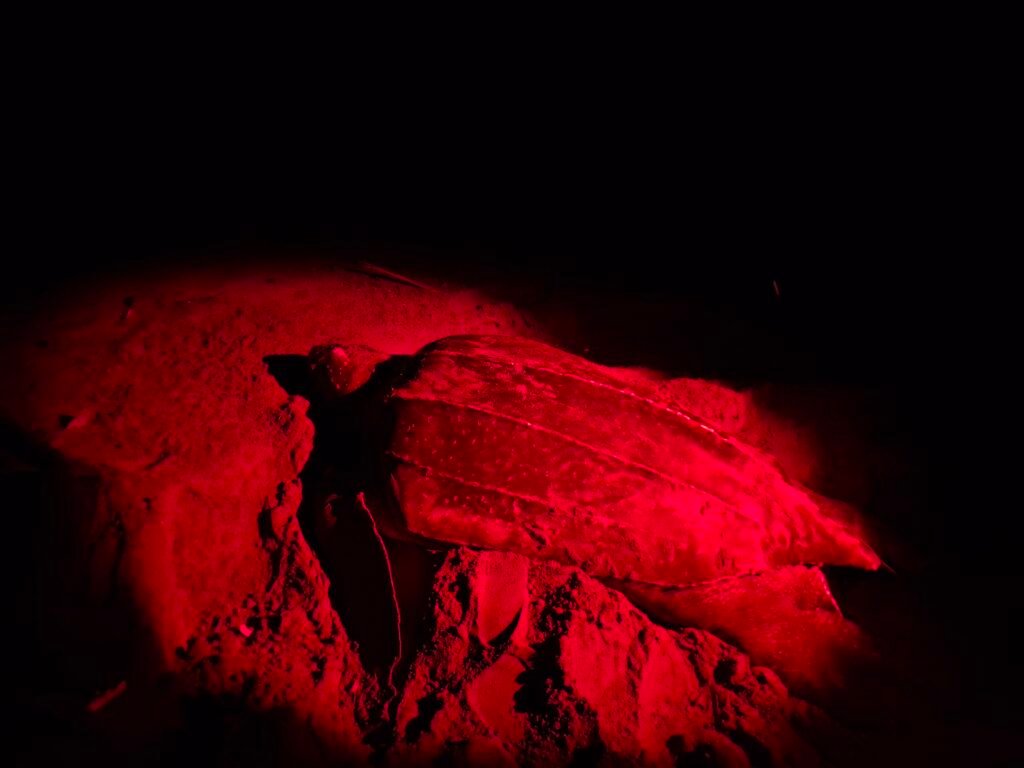
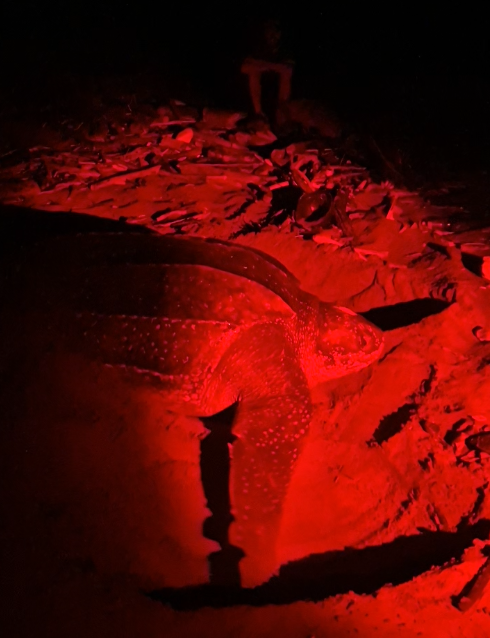
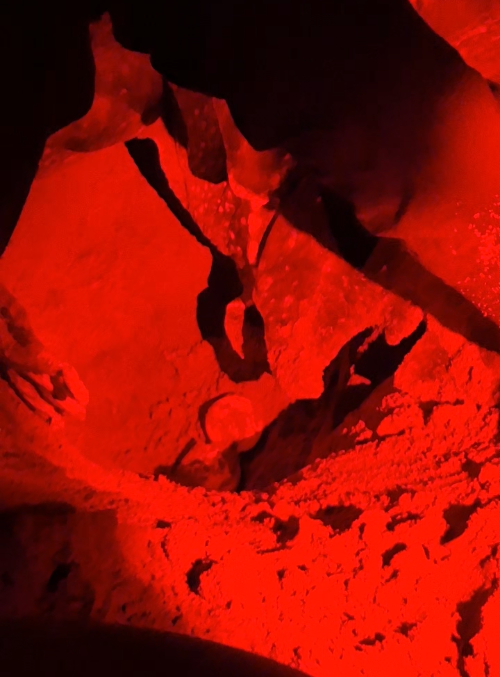
Once she’s done laying, the turtle fills in her hole without realizing the eggs are gone, and heads back to the sea. In the end, we see 3 in total, but nothing is ever certain. The next night, another group doesn’t find any and goes back out later in the night (~4 a.m.) to see the very end of a nesting.
Of course, we were really disappointed to learn that we wouldn’t see any hatchlings at this time of year. That said, watching leatherback turtles nest in this remote setting will stay with us forever.
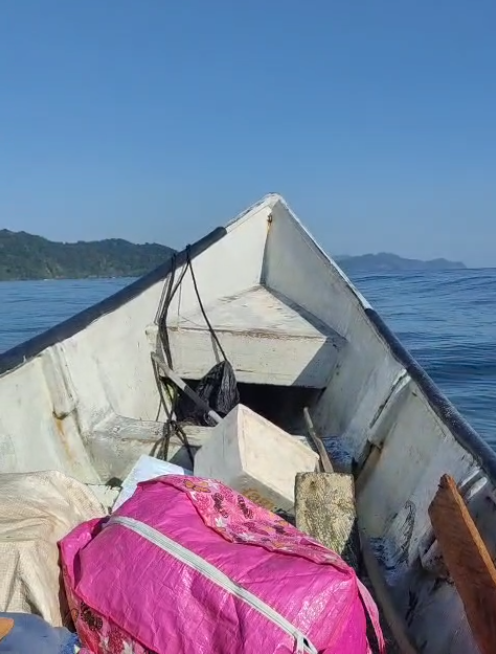
The next morning, after breakfast, Sandra’s father takes us back to Acandí by boat for COP 35,000 per person.
Despite a bumpy start from the beach, we arrive safely (and dry!) a few minutes later.
We say goodbye to Emma and Andrew, who are going straight to Sapzurro. As for us, we’ll do the rest of the way on foot.
Price: COP 140,000 per person (+ COP 35,000 per person for the boat back)
Acandí to Sapzurro trek
The Chocó is a remote territory where boats are the main way to get around. Overland routes are rare, and even fewer show up in modern map data. From Acandí, John would like to walk up the coast to the Panama border. There seems to be an OSM track, but we can’t find any information about it! While there definitely is a trail along the coast between Borbua and Capurganá, the only question mark is the first stretch from Acandí.
When we manage to find a second GPS track that joins Pinorroa after Playa Soledad, and the satellite images seem to confirm it exists, we decide to go for it anyway, checking with locals along the way.
Day 1: Acandí to Bahía Aguacate
Back from Playona, we leave our companions of the week for a while to set off on what may be the last real adventure of the trip. After a few minutes wandering around Acandí in search of precious supplies, we start following the road to Capurganá, then go through a gate and cross the Acandí River for the first time. We try in several places, but the water is much higher than expected, almost up to our waists. We finally find a better spot to cross. We’ll cross the river 2 more times, and it’s never too high or too strong.
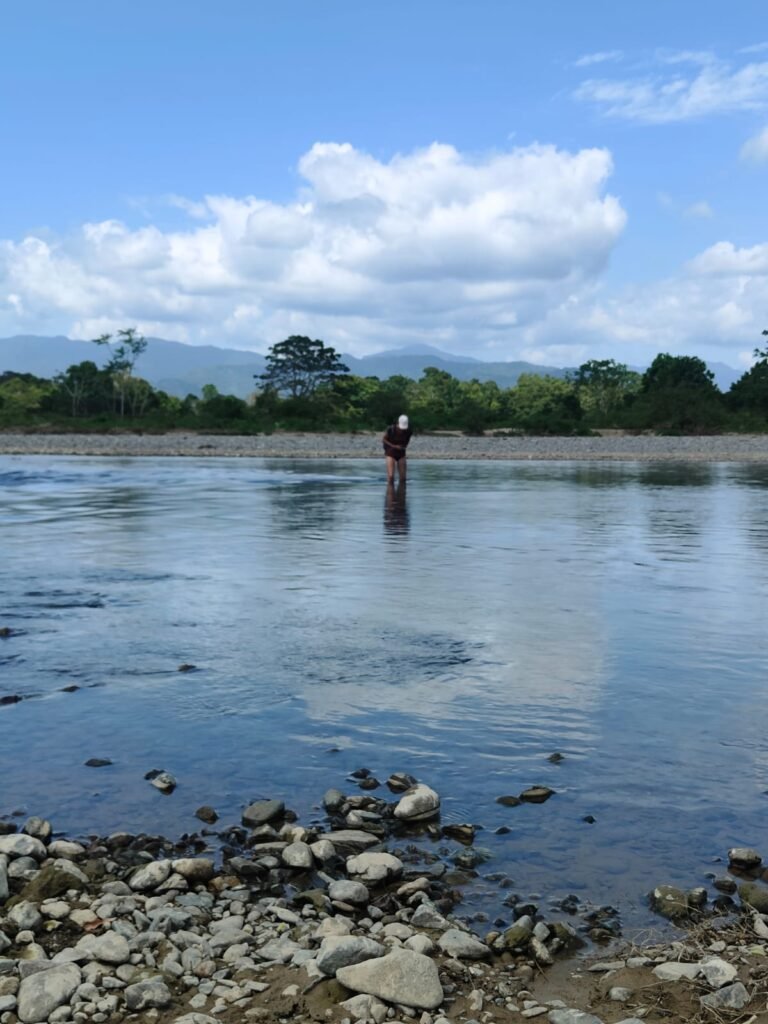
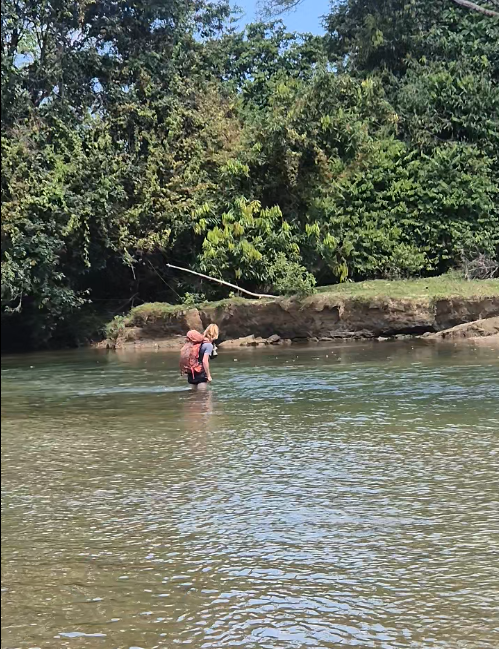
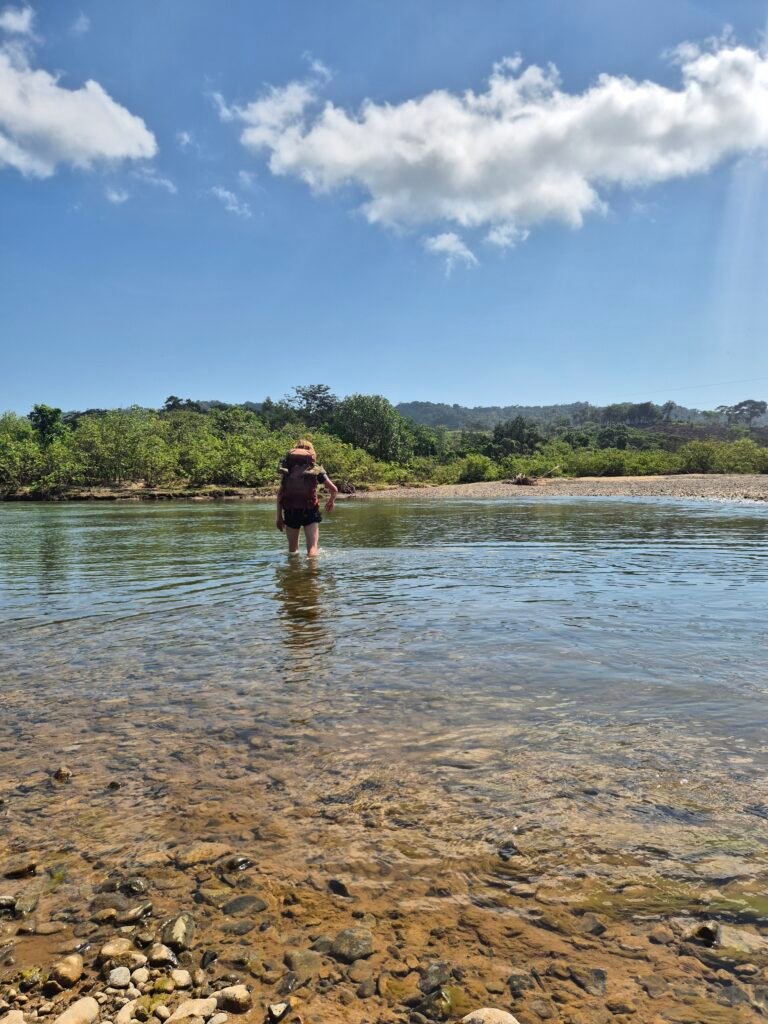
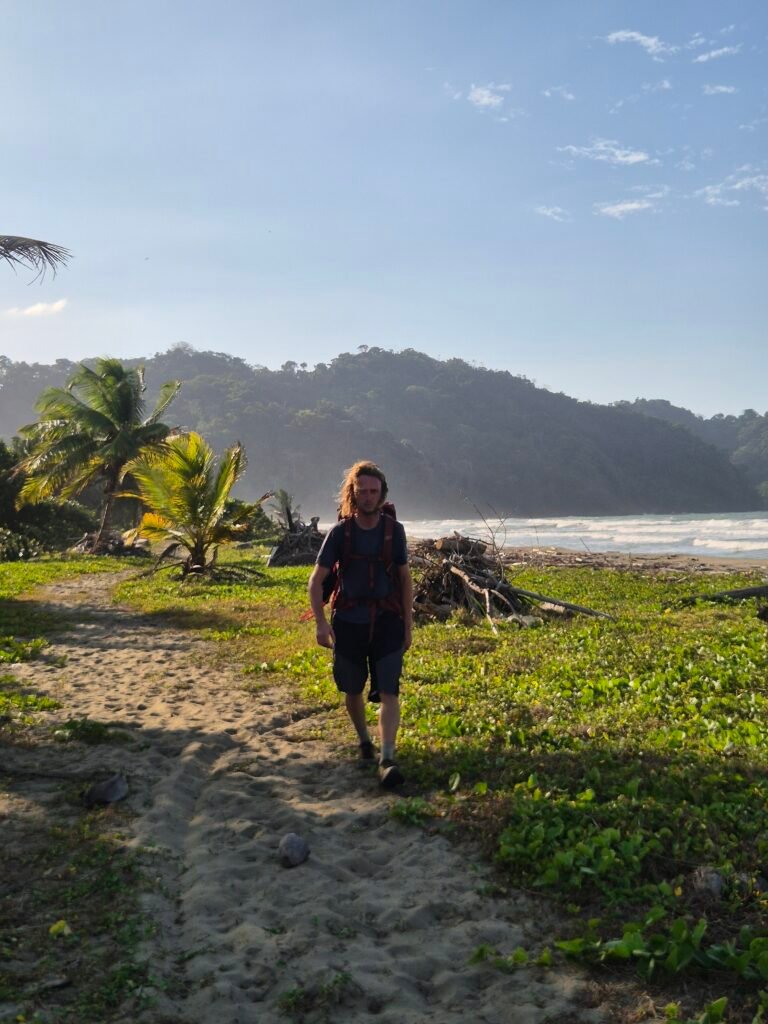
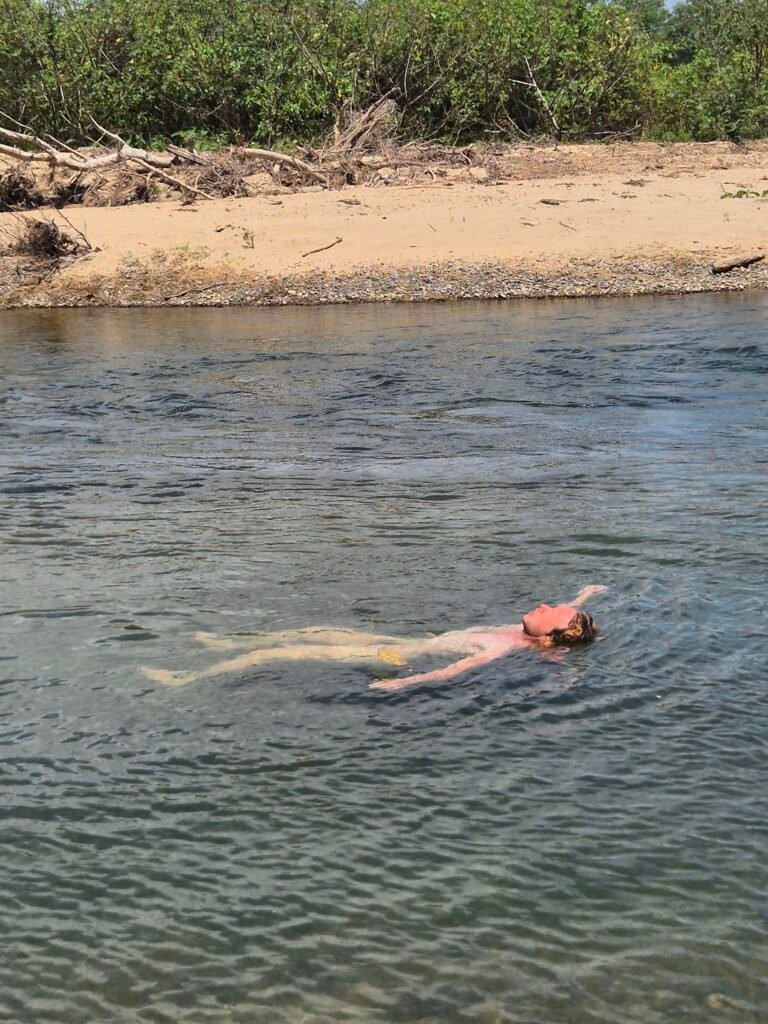
We follow a few cattle tracks. It isn’t always very clear, but we easily stay on course by following the river. A few toucans dart past us. The heat, combined with the Chocó’s humidity, is overwhelming. We treat ourselves to a much-needed cool-off break in the river.
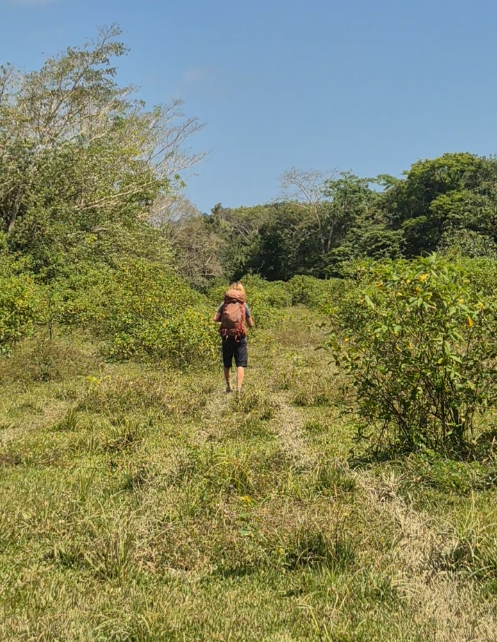
After the third river crossing and a rather menacing herd of cows, finding our way gets trickier. We cross a patch of woods before finding a narrow track that isn’t always cleared but is a bit easier to follow. We then come out onto big meadows, going through a few gates in the fences.
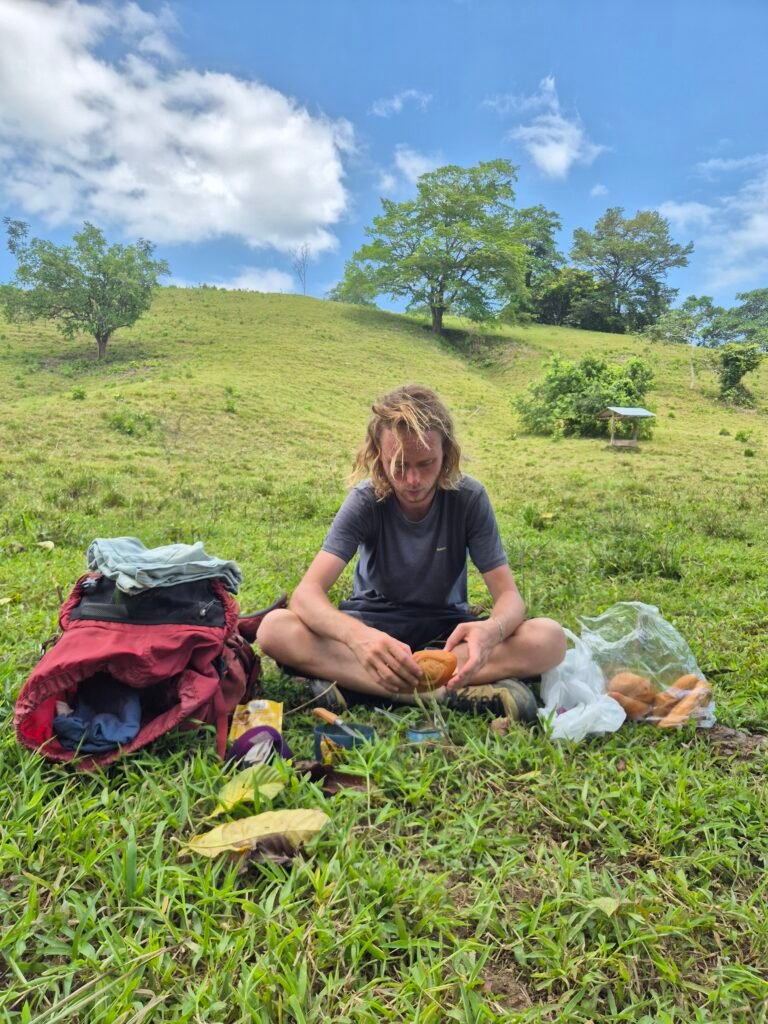
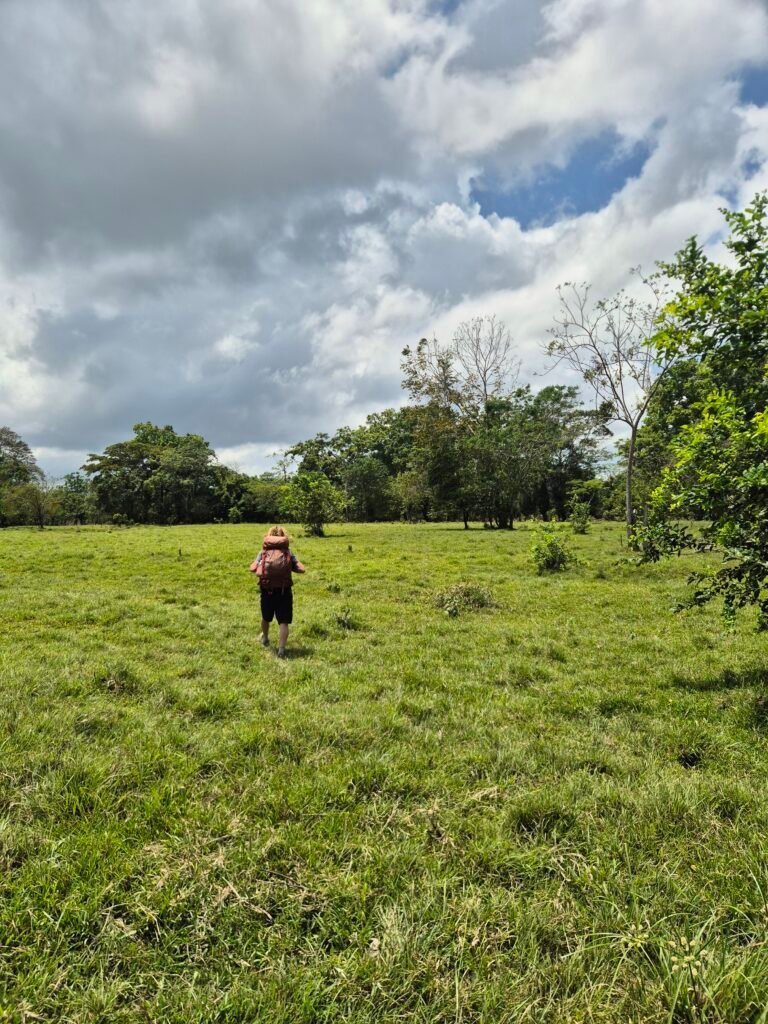
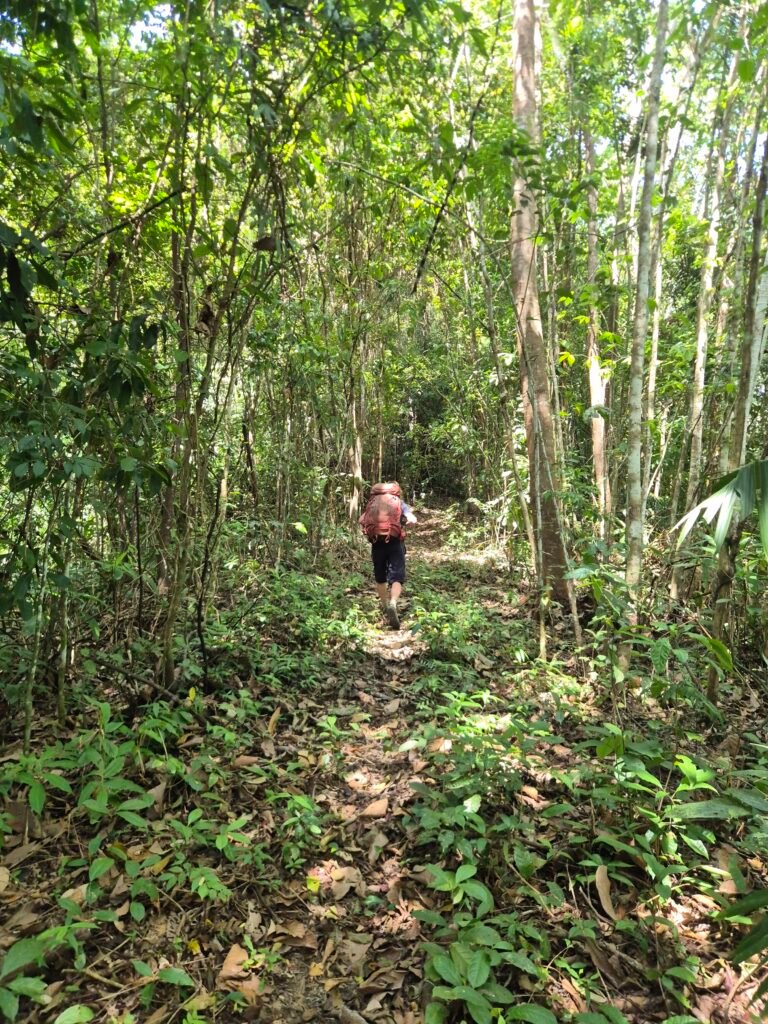
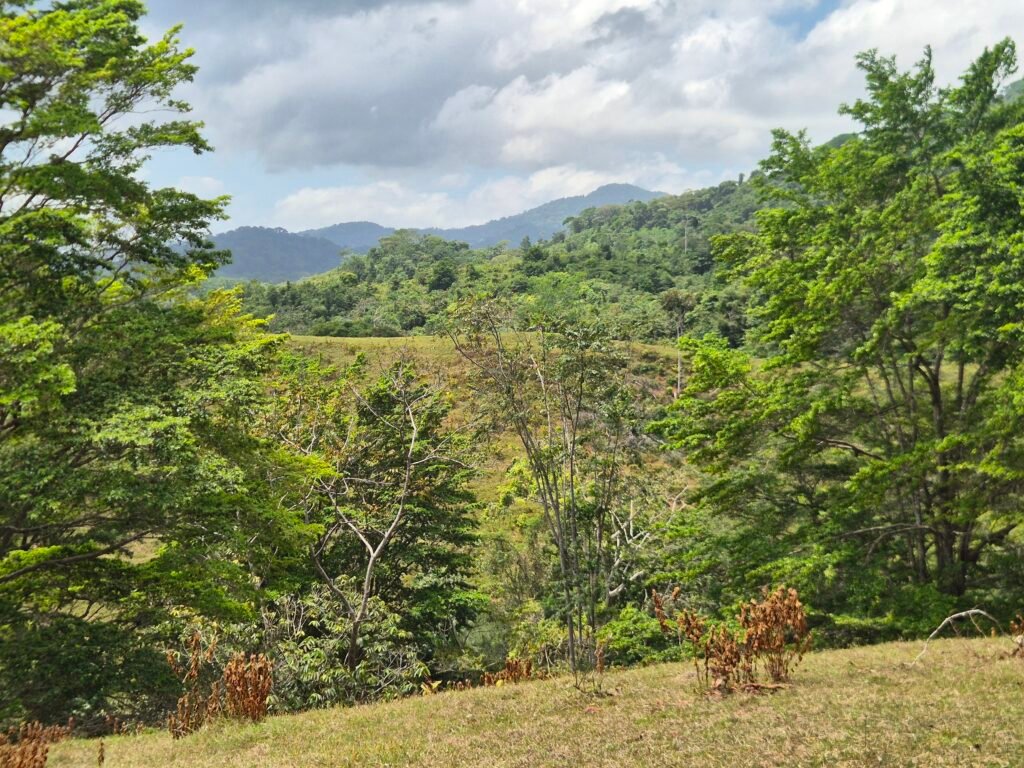
We turn off toward the coast, and the path gradually climbs. It’s much more wooded now, but the heat is still stifling. We walk into giant spiderwebs every 10 feet.
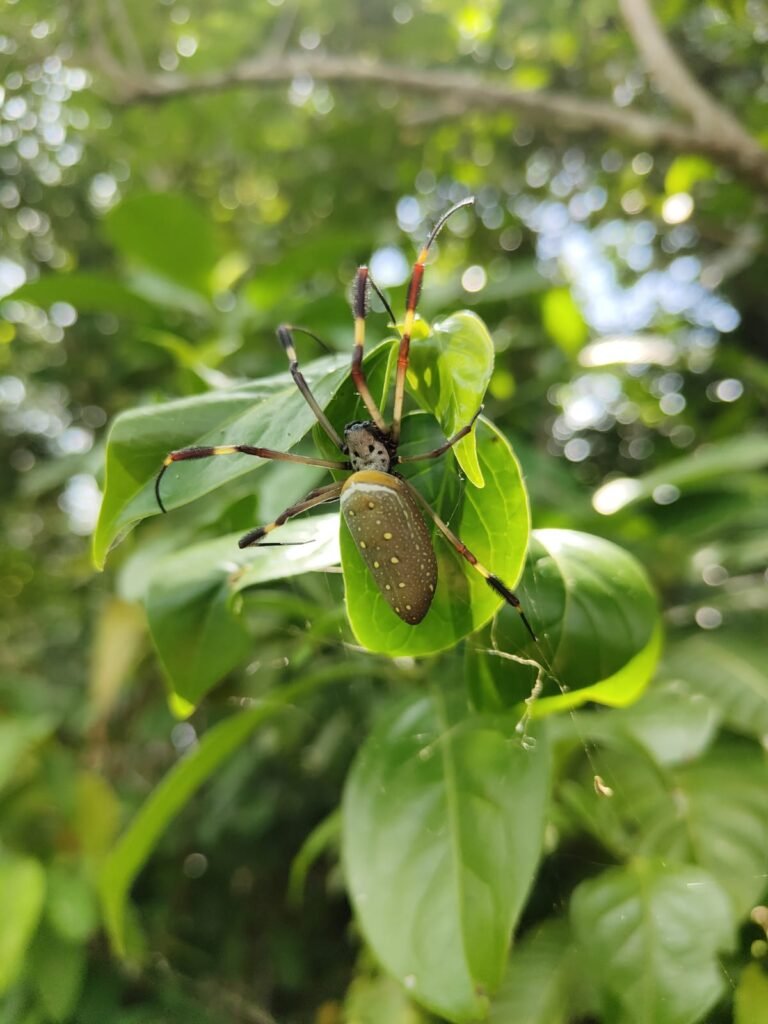
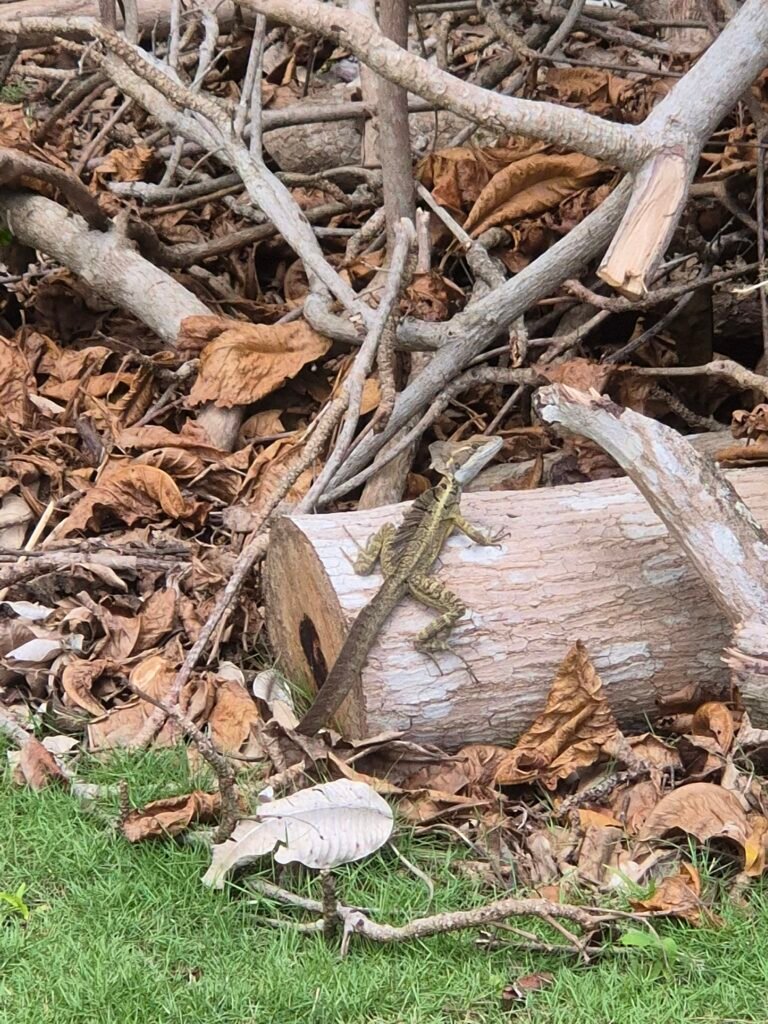
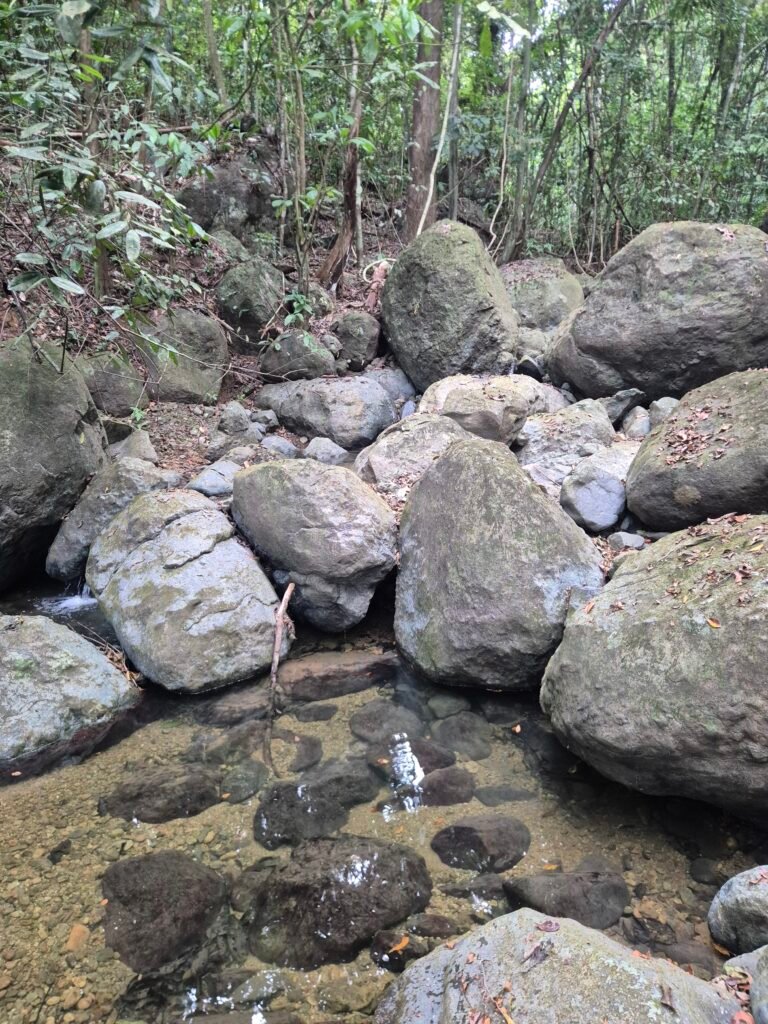
After the pass, another cool-off break in a stream with a few small pools. Shrimp nibble at John’s feet. A free “fish pedicure.” Slightly less funny when they go after more intimate parts.
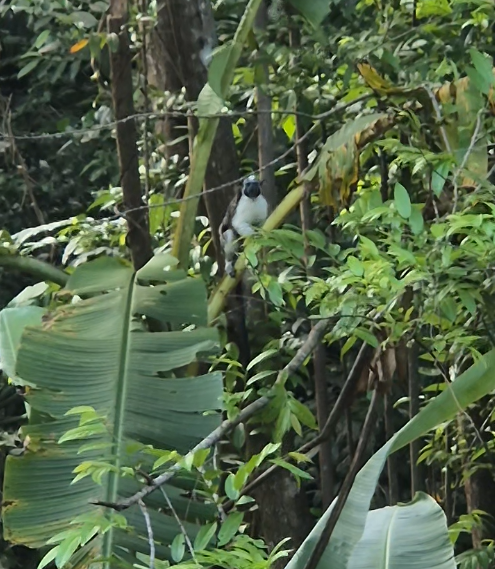
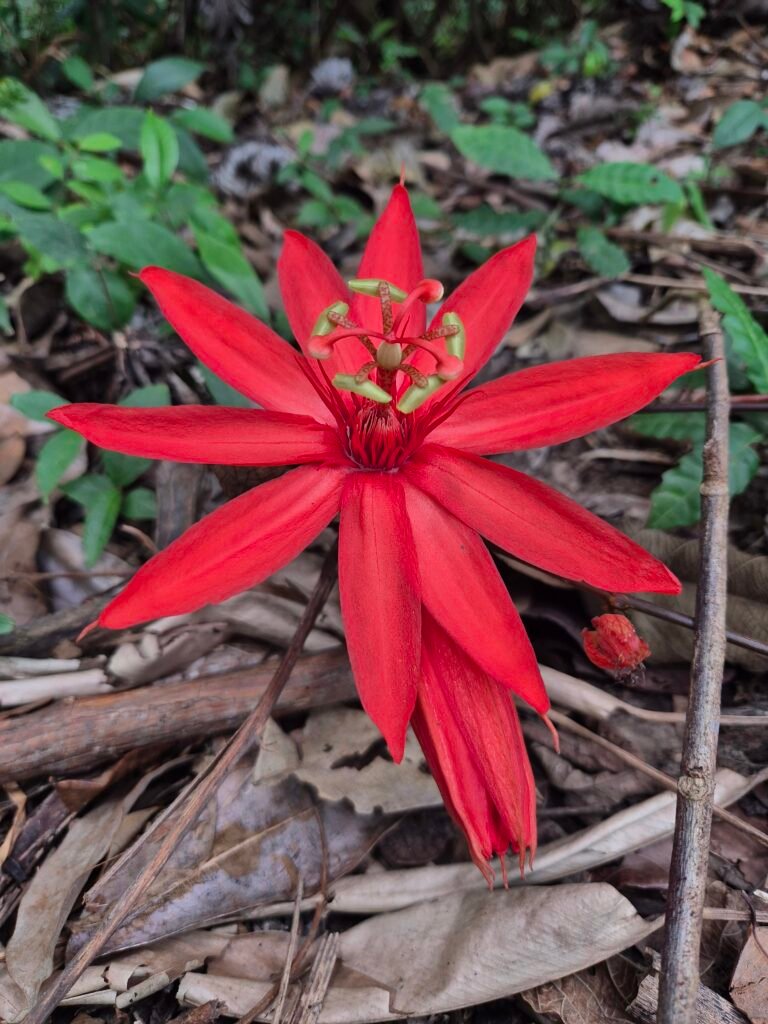
At last, we reach the coast! It’s a bit of a relief, and a guarantee of a well-marked trail for the rest of the day. We pass a few houses, some of them lived in. But who could possibly live here, at the end of the world?
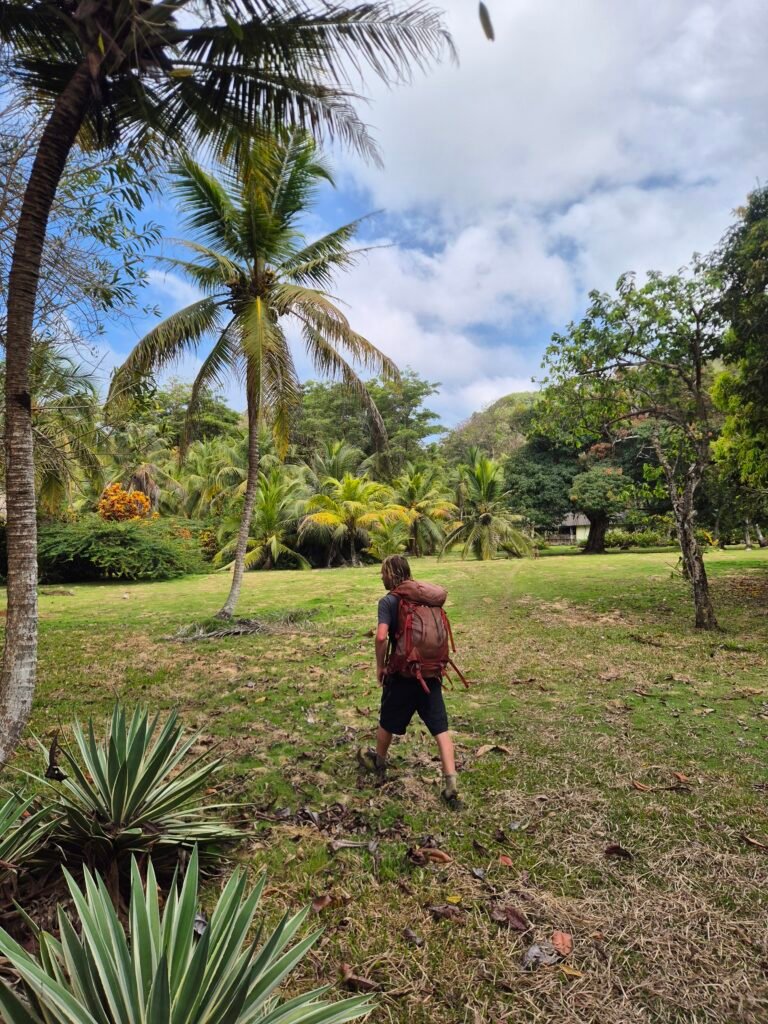
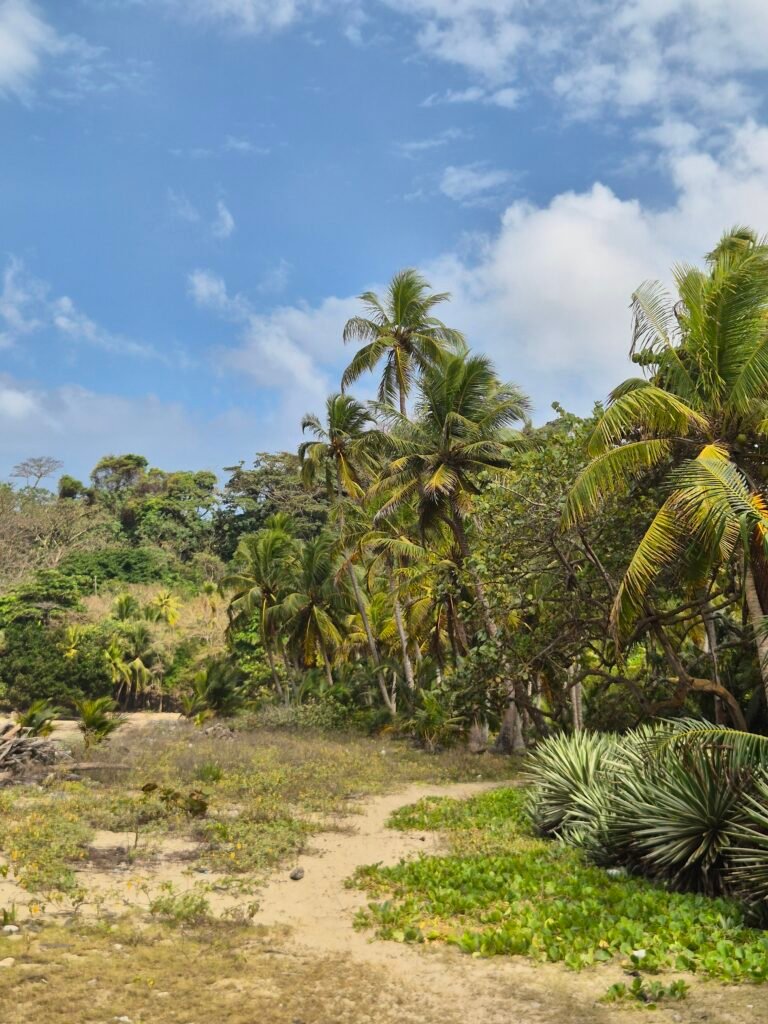
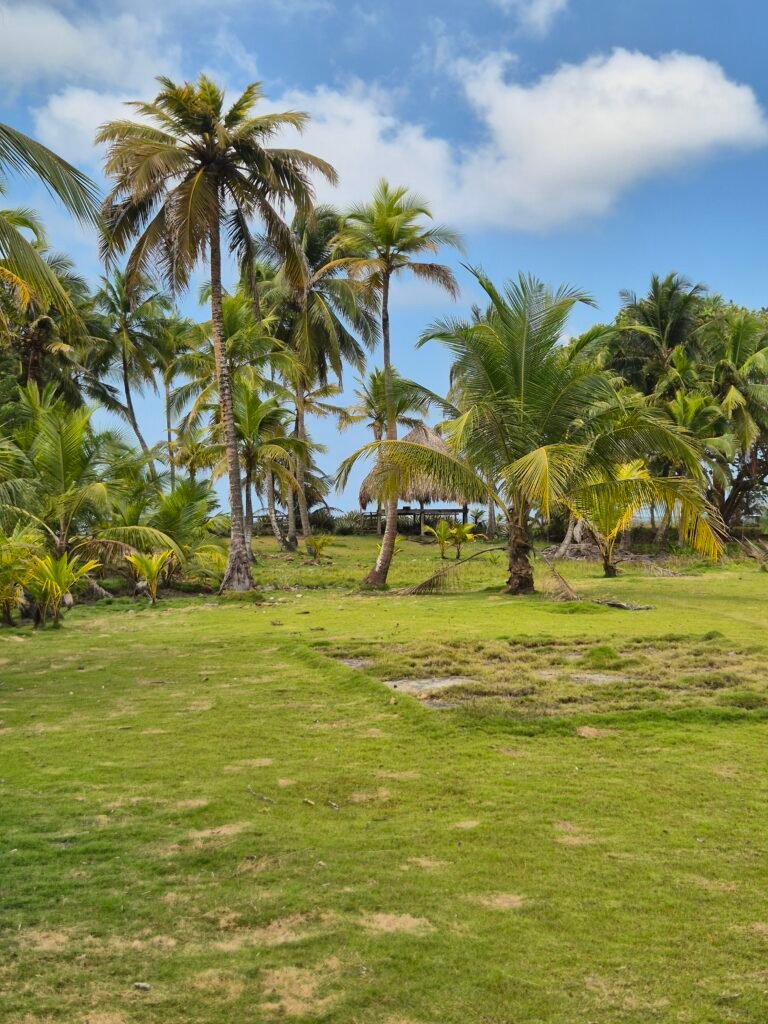
John first bangs his knee on a rock, then takes quite a tumble! More scared than hurt, but this isn’t the best place to get injured.
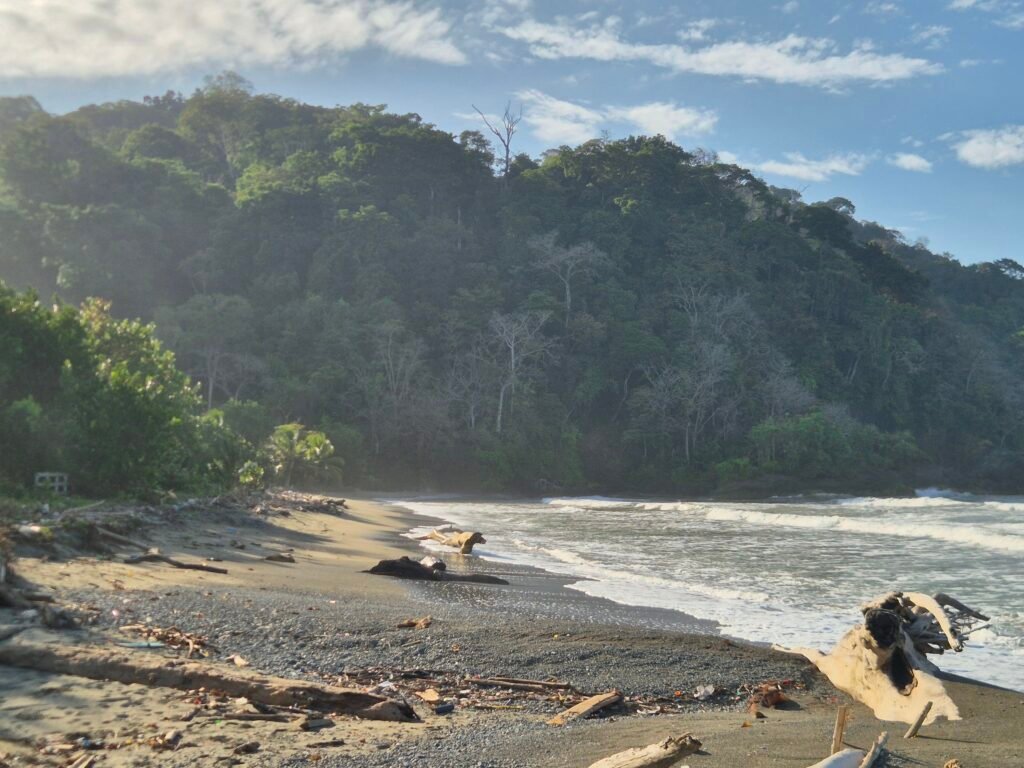
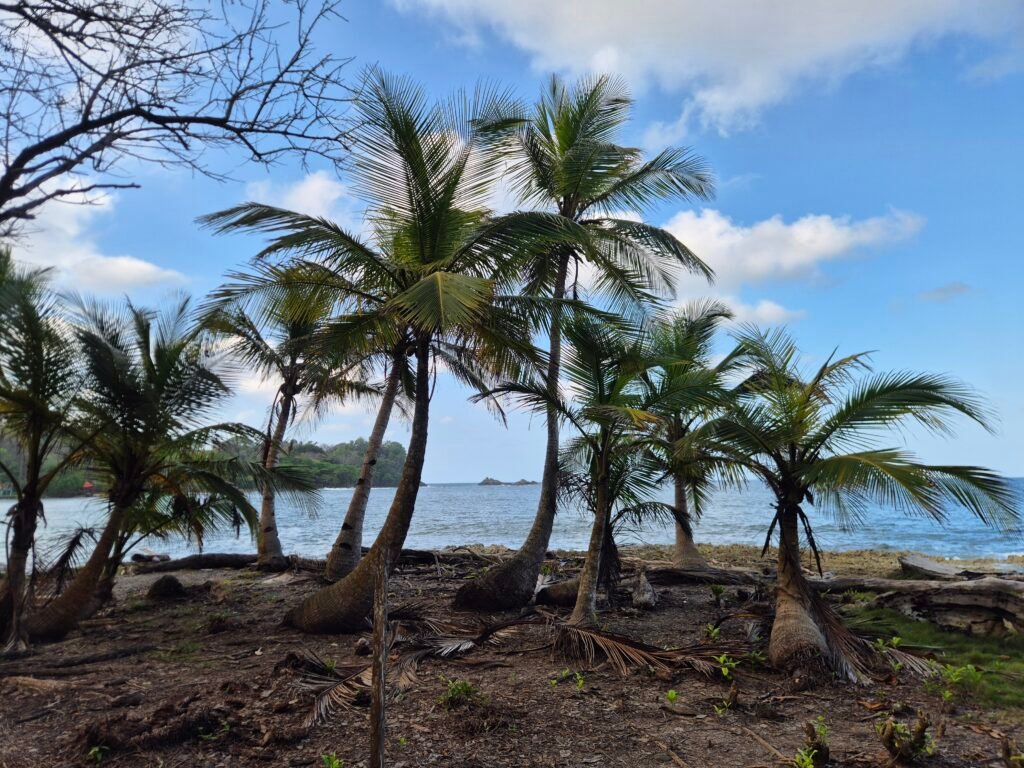
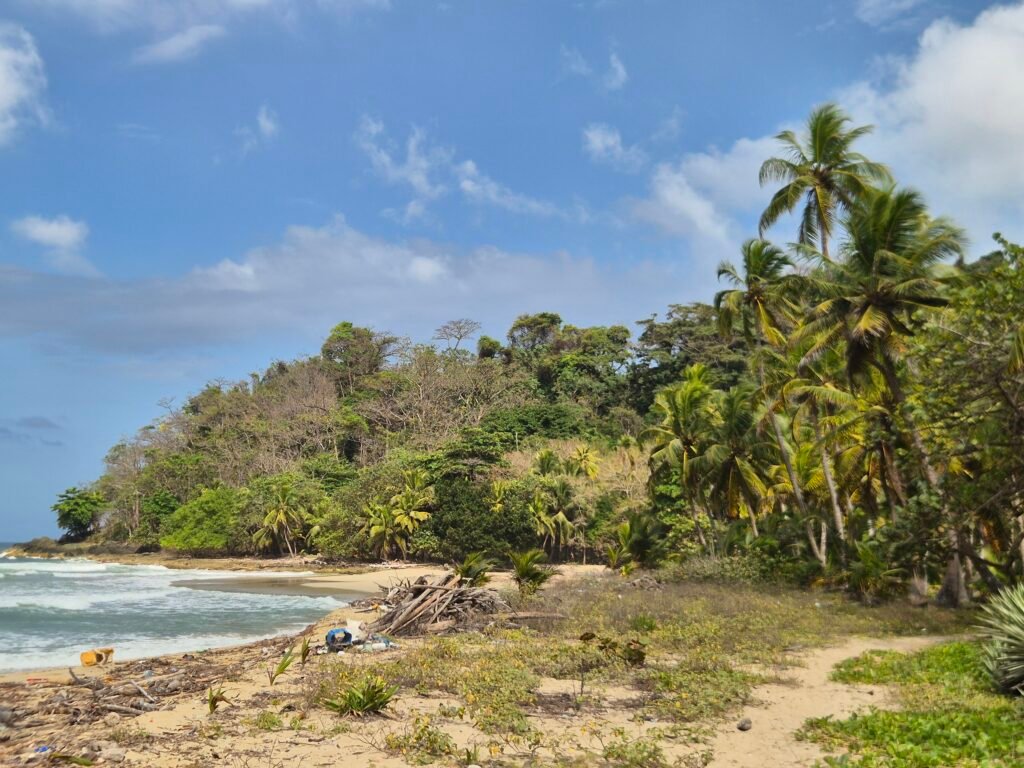
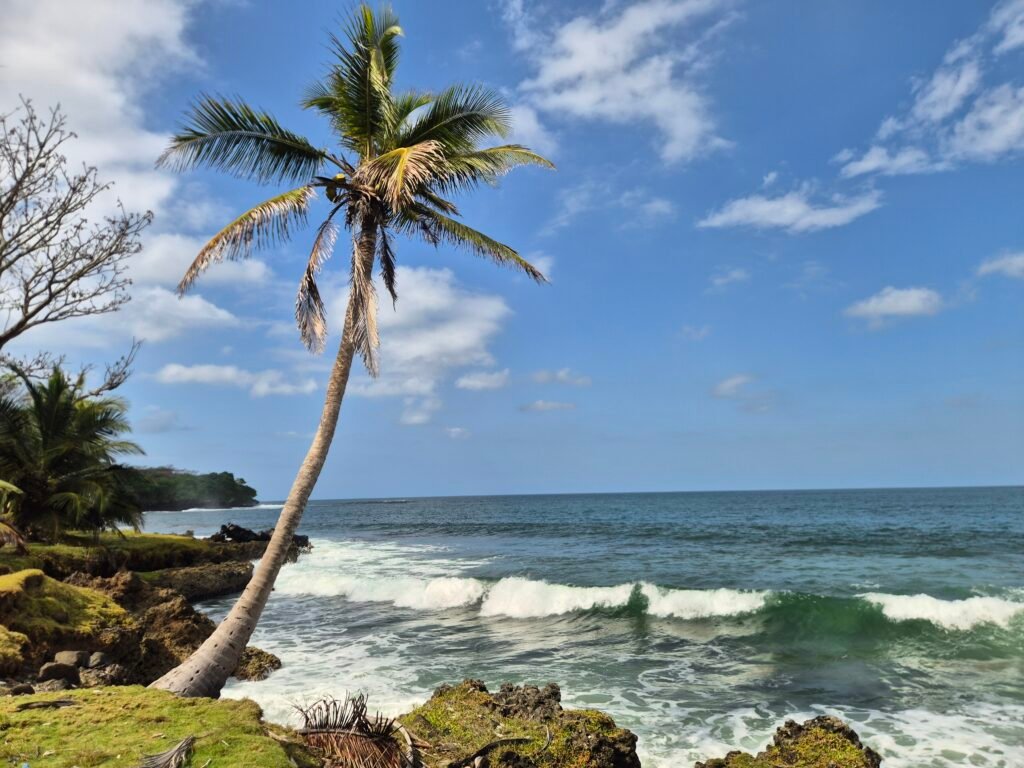
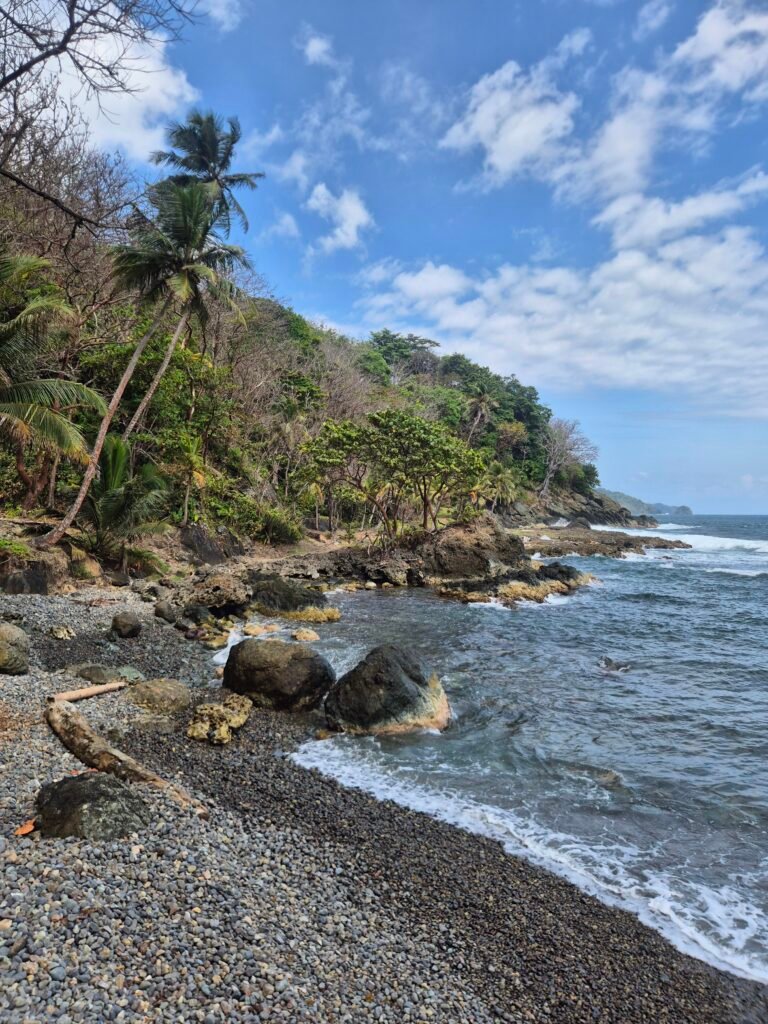
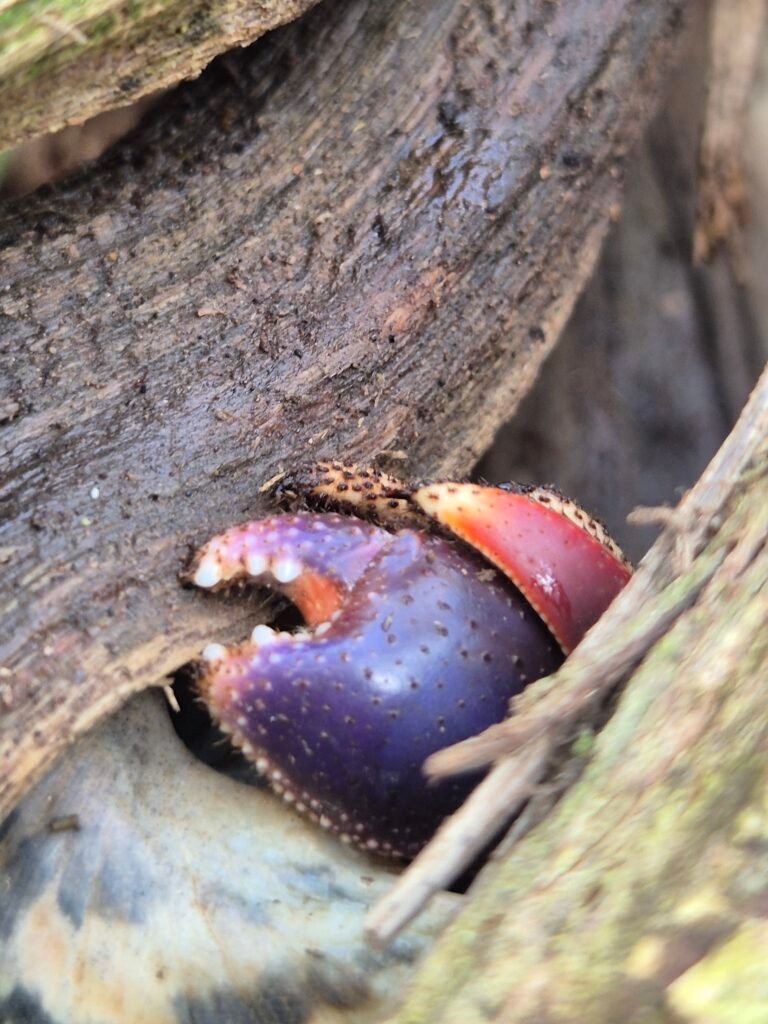
Despite a bit of washed-up trash, the coast is magnificent. Hiking in a setting like this, with this feeling of freedom, is unreal. We also come across several groups of monkeys: capuchins, howlers, titis…
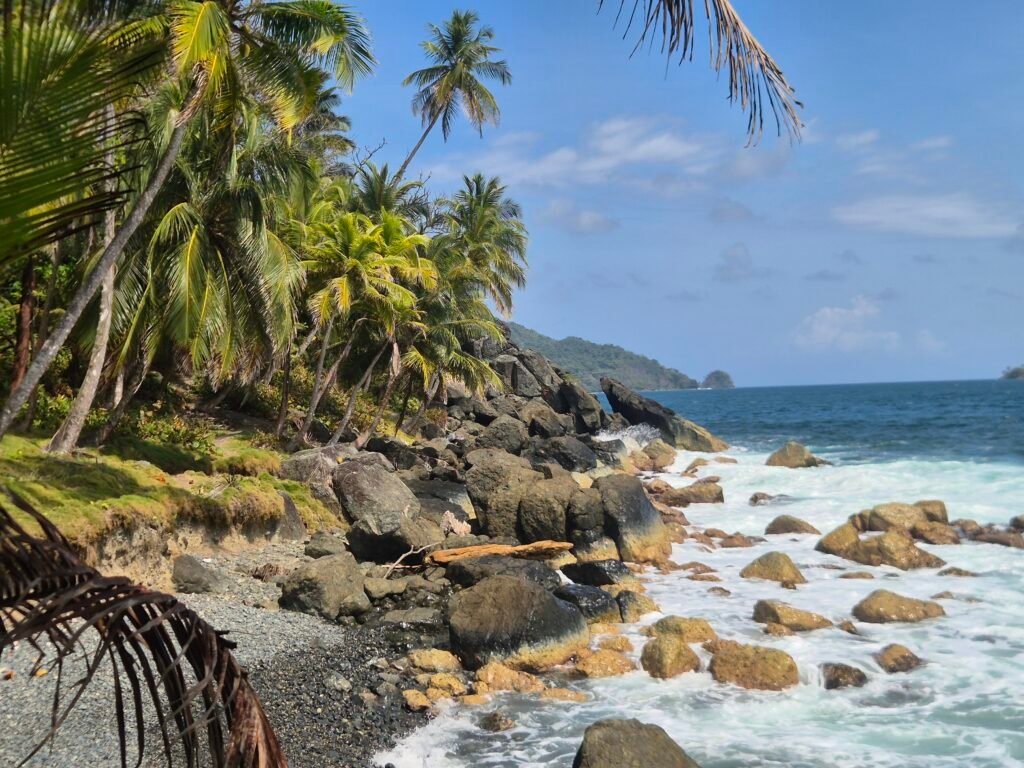
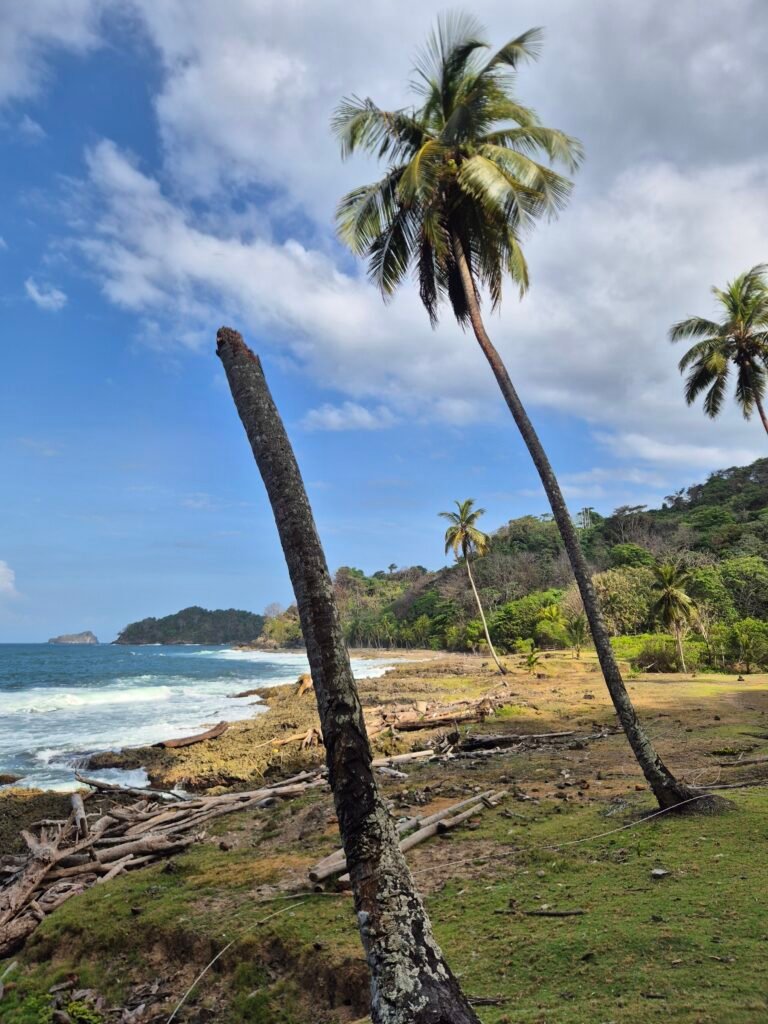
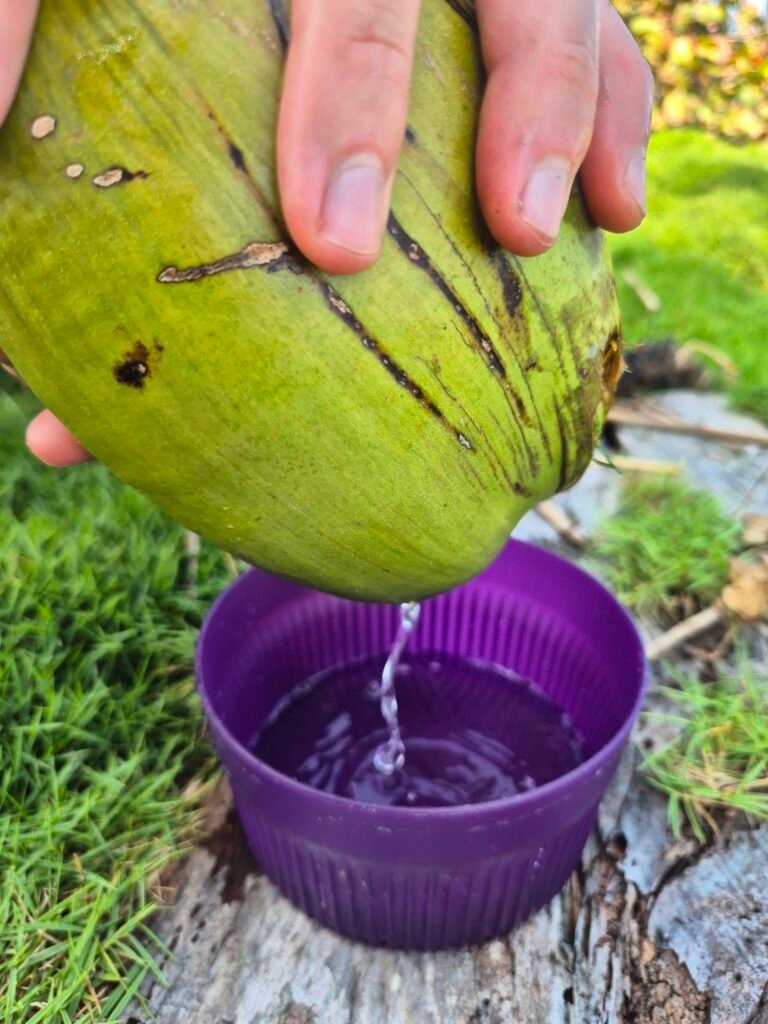
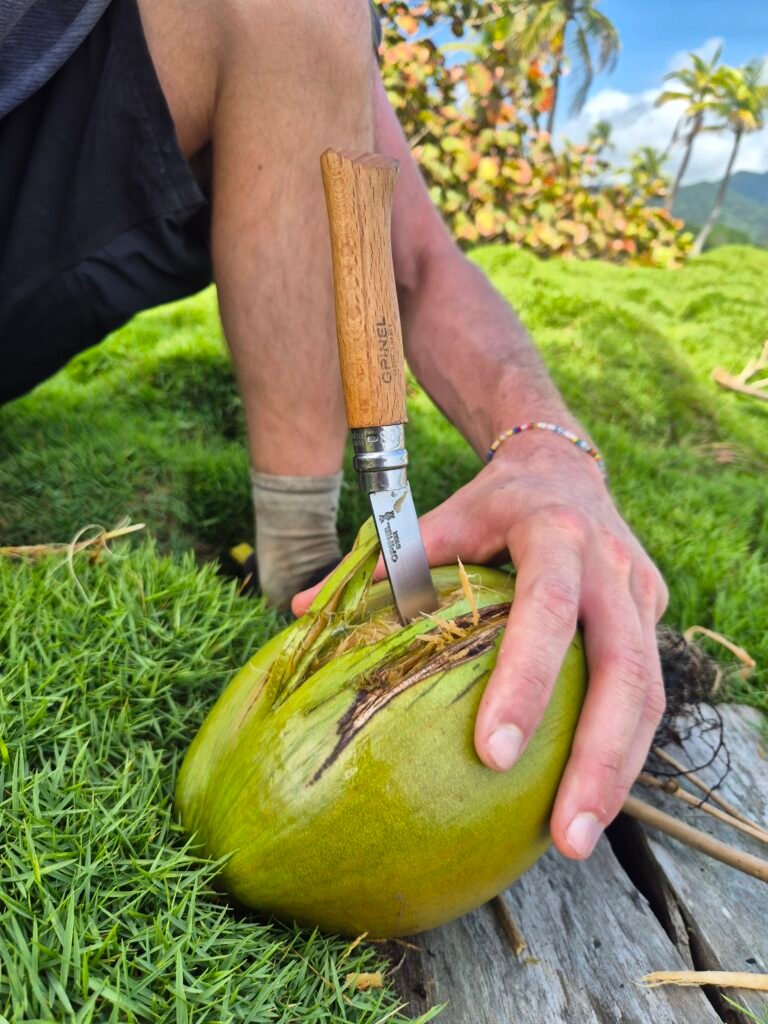
When we find a nice coconut on the ground, we do our best to open it for a little snack. It’s not that easy, and it takes us a long time before the water finally flows freely. How could we have waited so long to enjoy this? We spend the rest of the day on the lookout for coconuts on the ground.
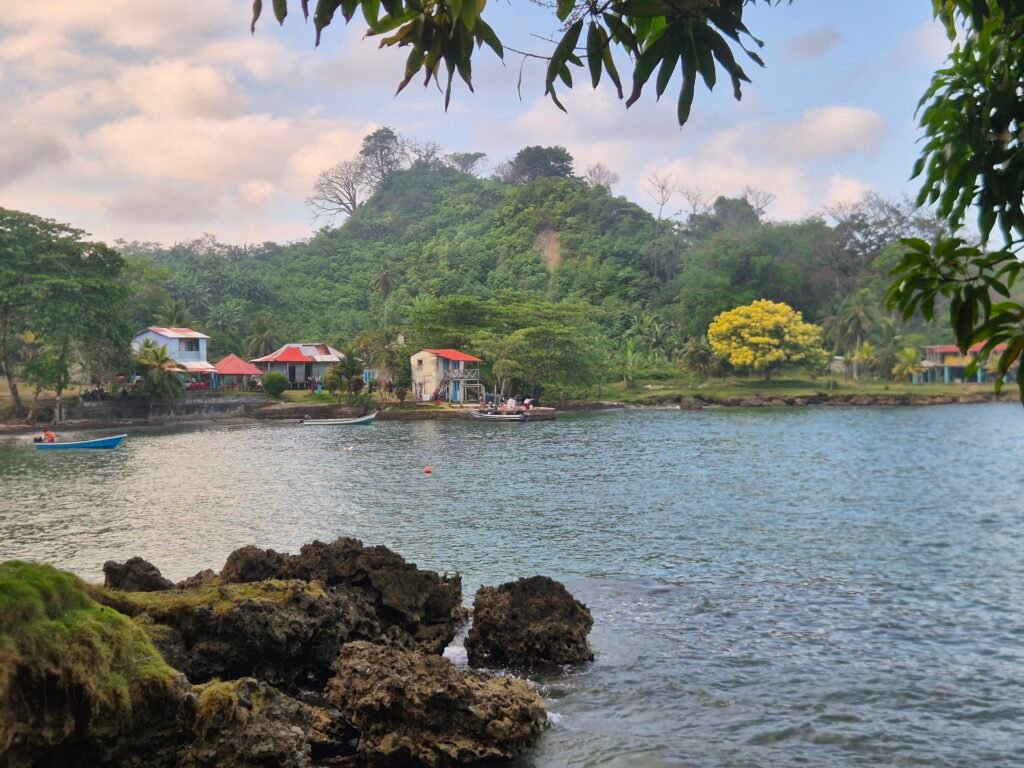
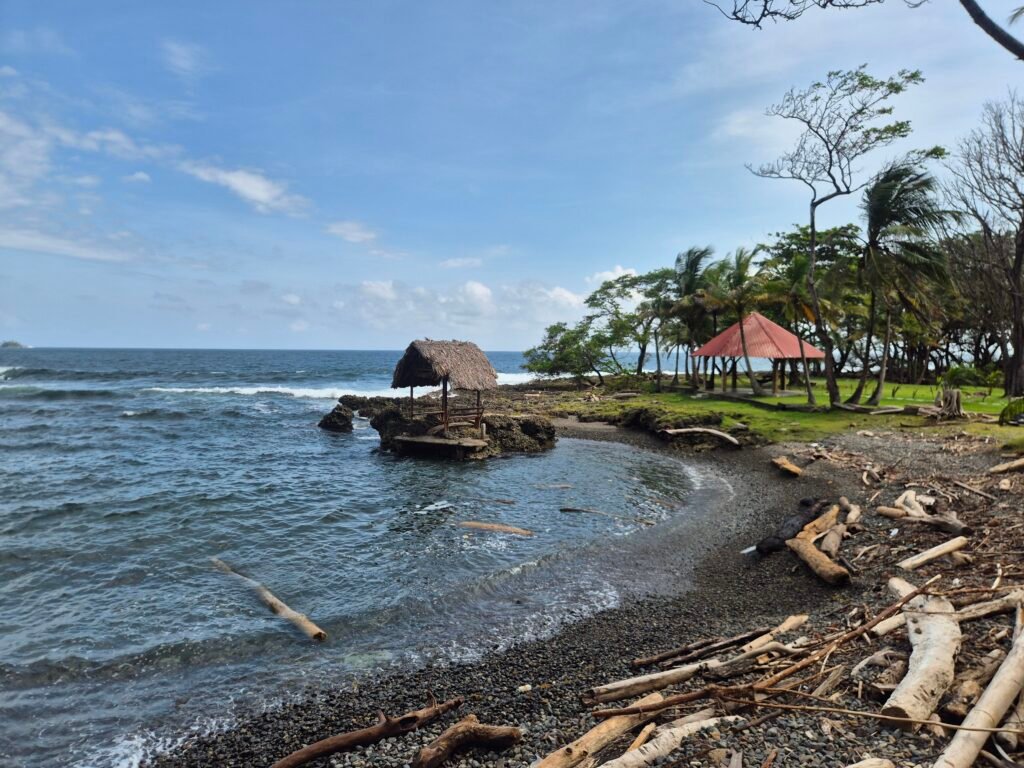
We finally reach Aguacate Bay and its handful of hotels and restaurants. We doubt many people come through here, but the little bay has its charm.
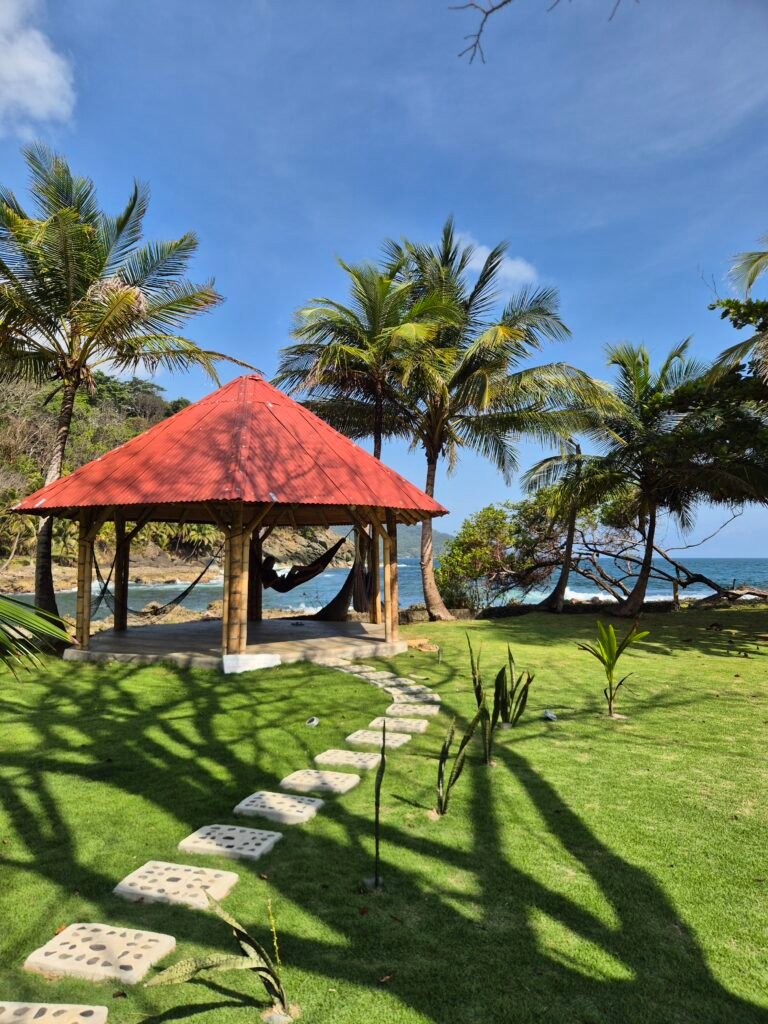
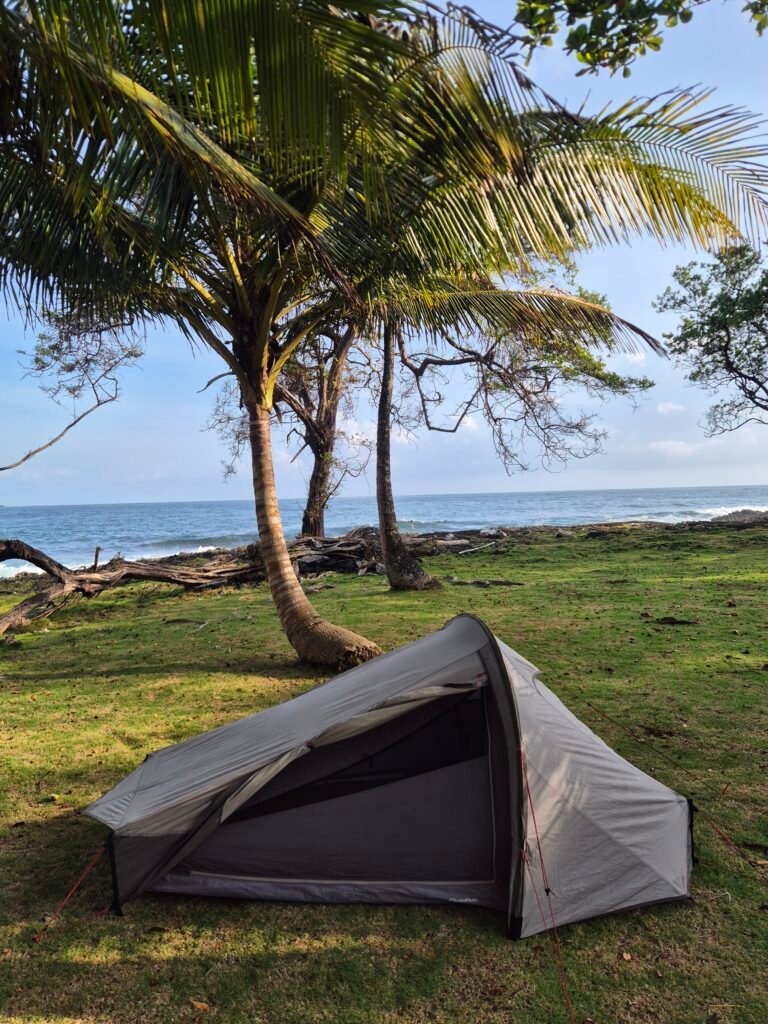
A few more minutes to reach another cove and the beautiful bamboo guesthouse Casa Wago. For COP 20,000 per person, we can pitch our tent in the garden and use the facilities, and for COP 10,000 per person, have breakfast.
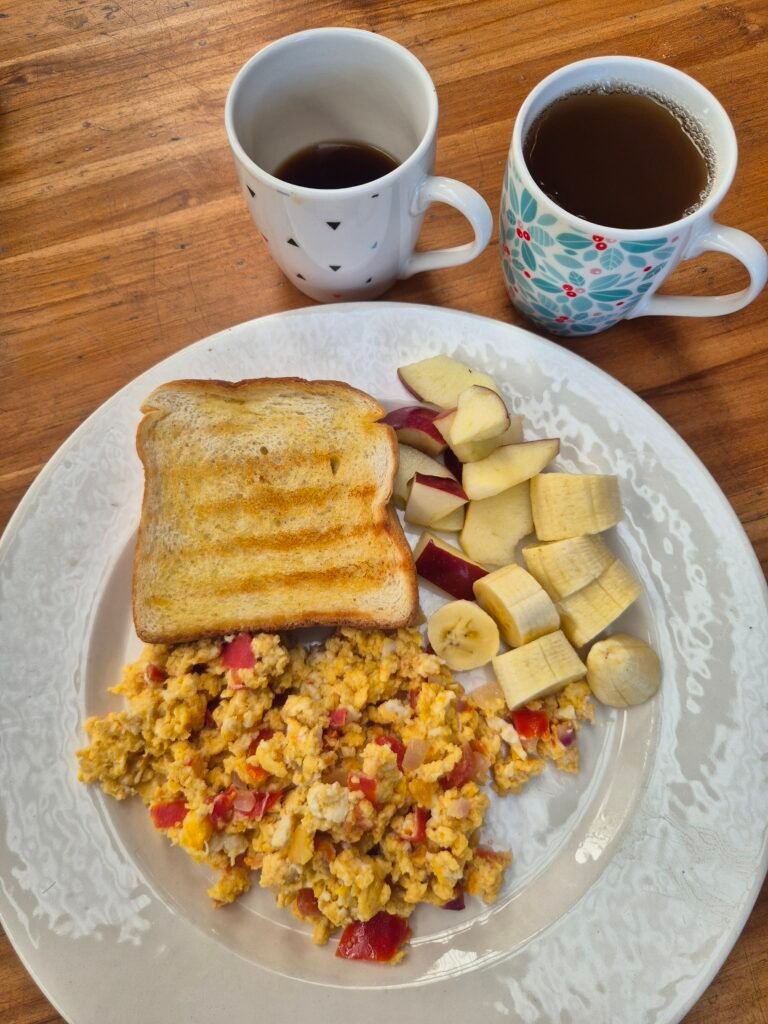
The family running the place gives us a warm welcome, too. After we turn down dinner (around COP 35,000-40,000), they kindly offer us a simpler meal, like their own, for only COP 20,000. After an exhausting day, we gladly give up our dry bread and canned tuna sandwich for this little luxury, and in the end, it’s a really good meal.
It turns out to be one of the most peaceful nights of the trip, lulled by the sound of the waves.
Day 2: Bahía Aguacate to Sapzurro
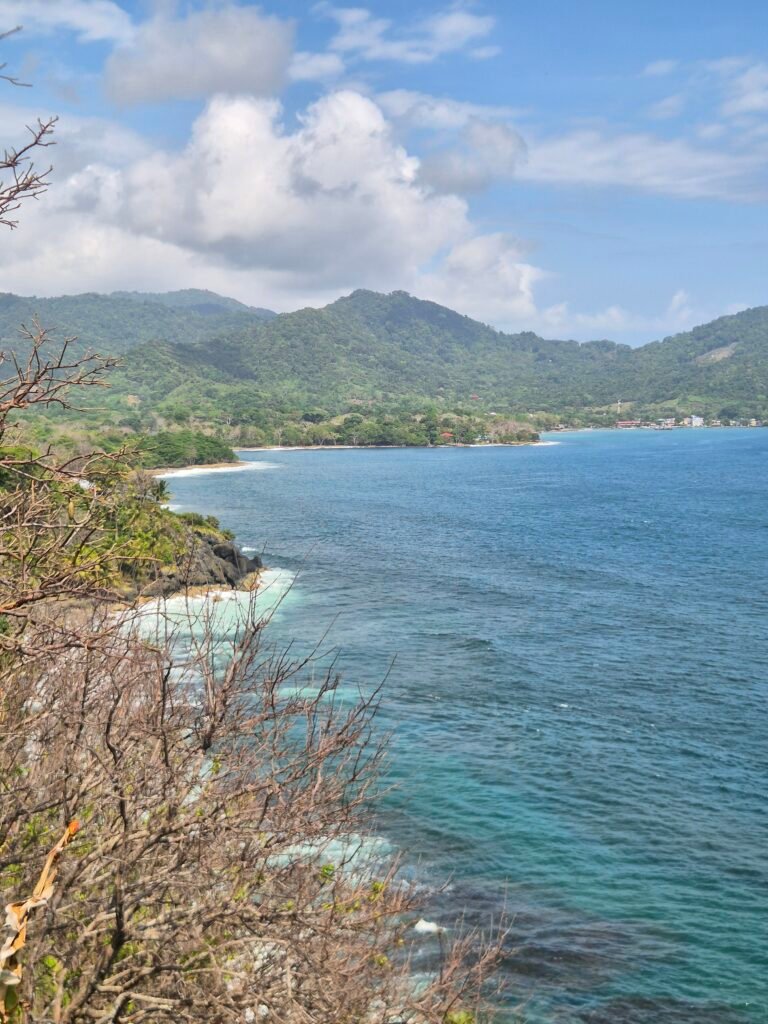
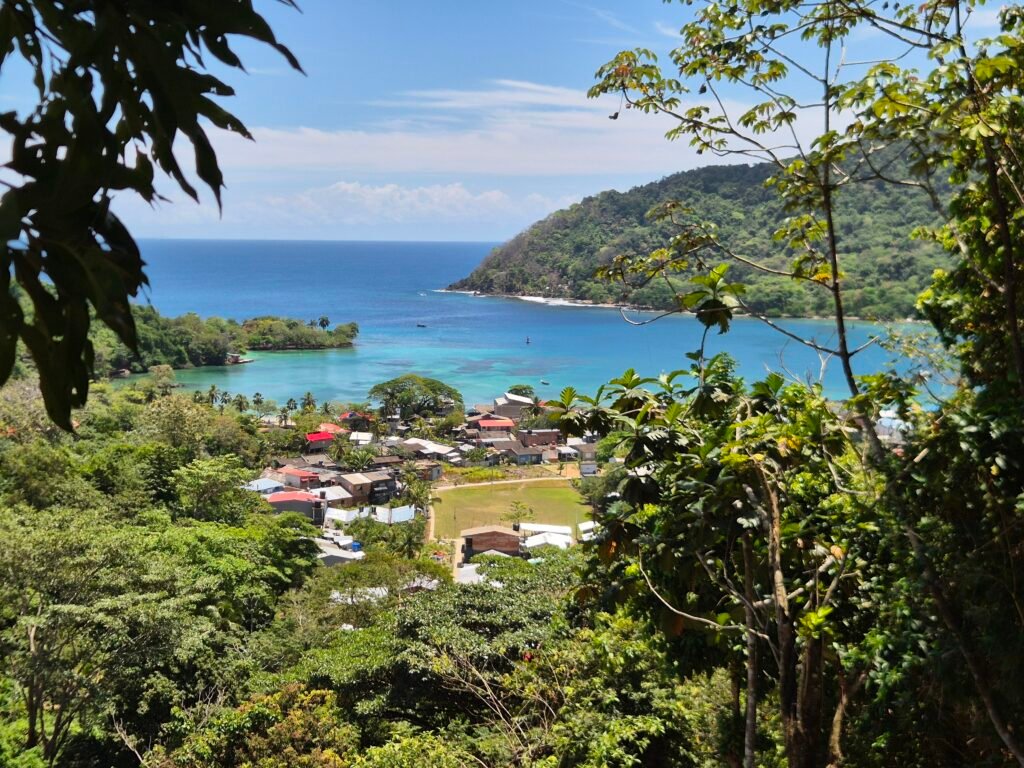
This morning, we set off again. After a short climb, we enjoy beautiful views over the whole of Capurganá Bay.
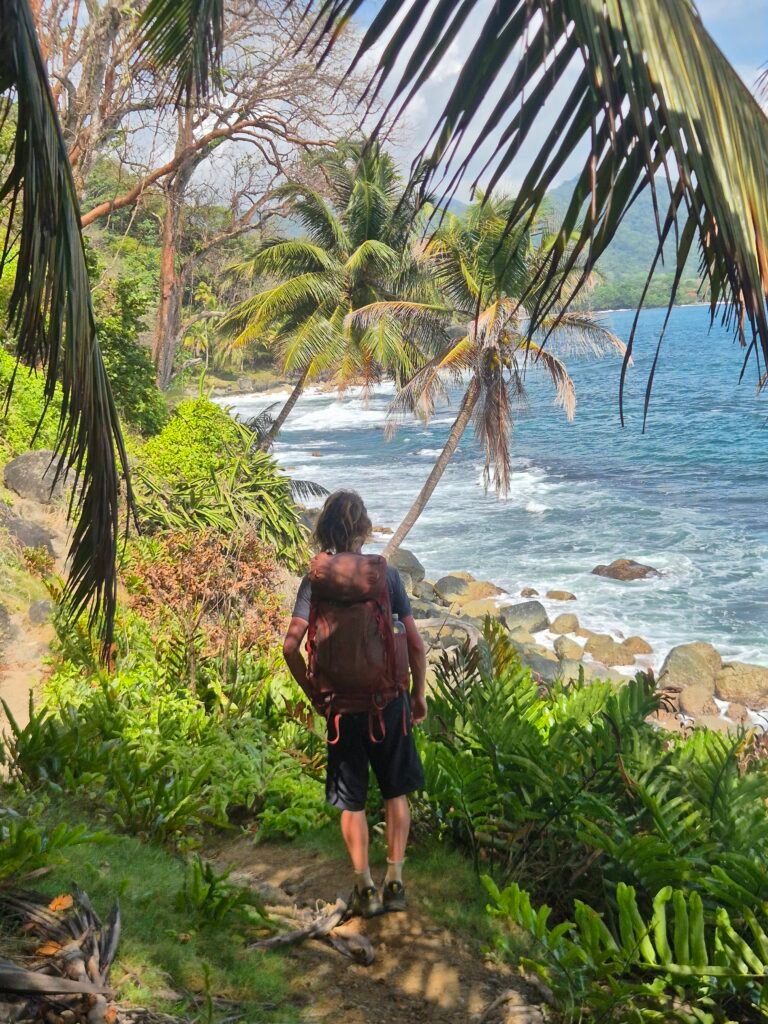
We walk along the bay, among the coconut palms. The way into the village of Capurganá is pleasant and very green. The center, on the other hand, is livelier and less nature-focused. We’d heard a lot of bad things about Capurganá, but it doesn’t seem unpleasant to us, quite the opposite. There are plenty of shops, too: finally, a chance to buy bread and fresh food!
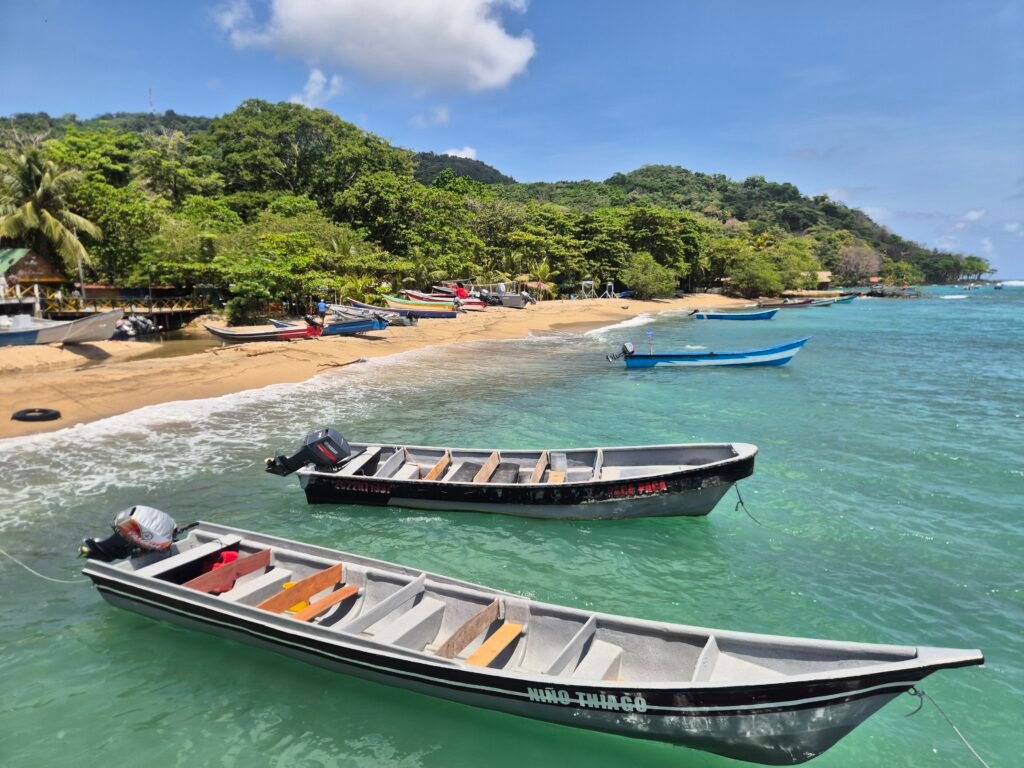
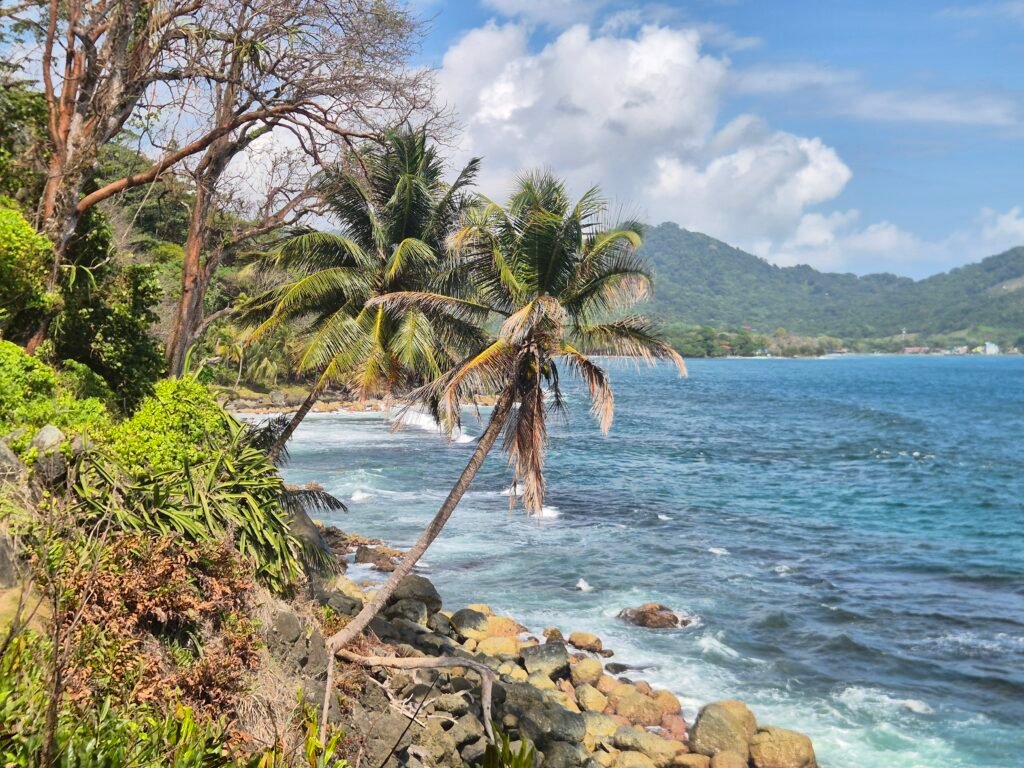
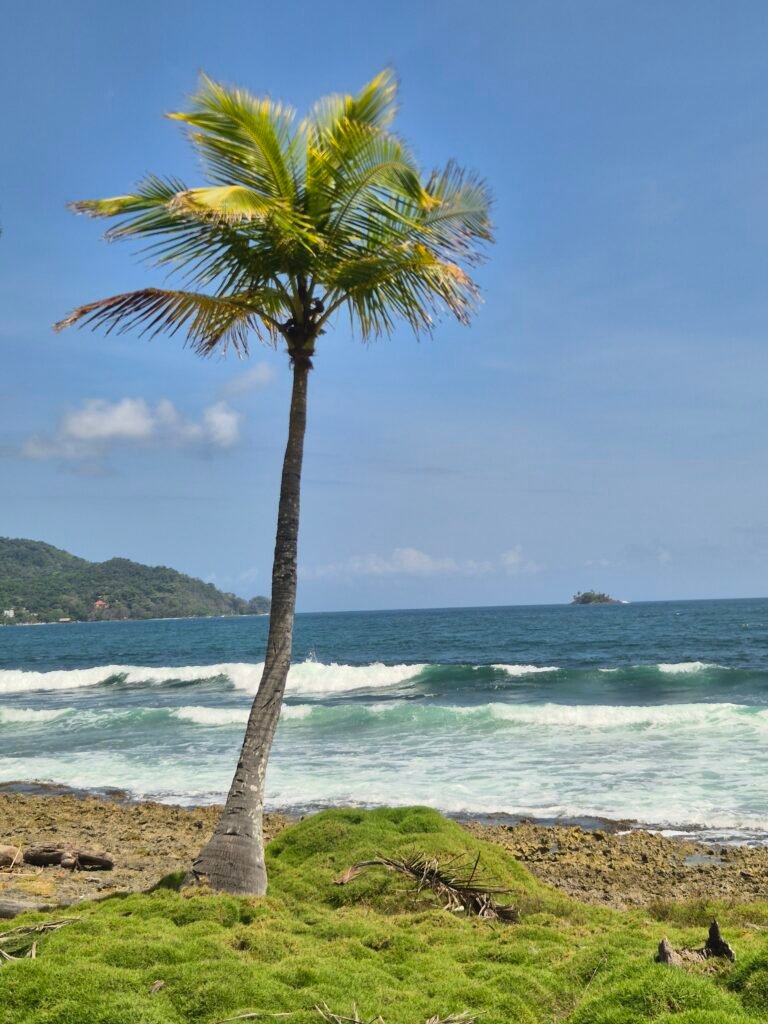
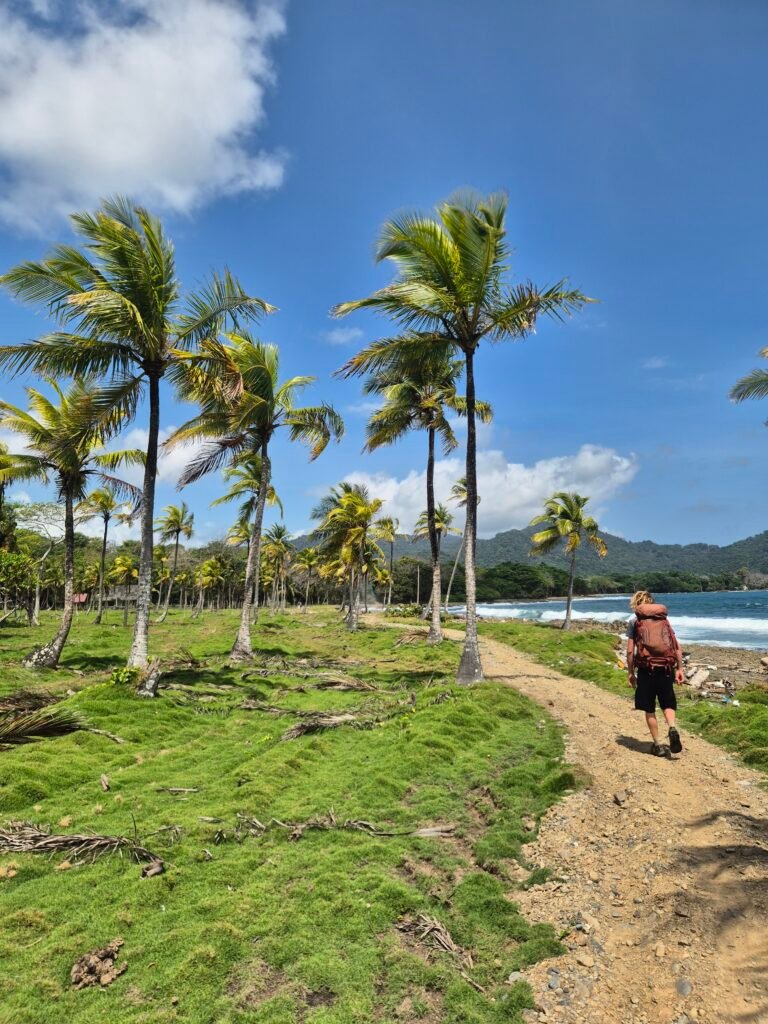
An eco-trail in perfect condition leads to Sapzurro, the last village in Colombia. There’s a COP 5,000 per person fee for trail maintenance. It’s shady, right in the jungle, with superb views of both bays from the top.
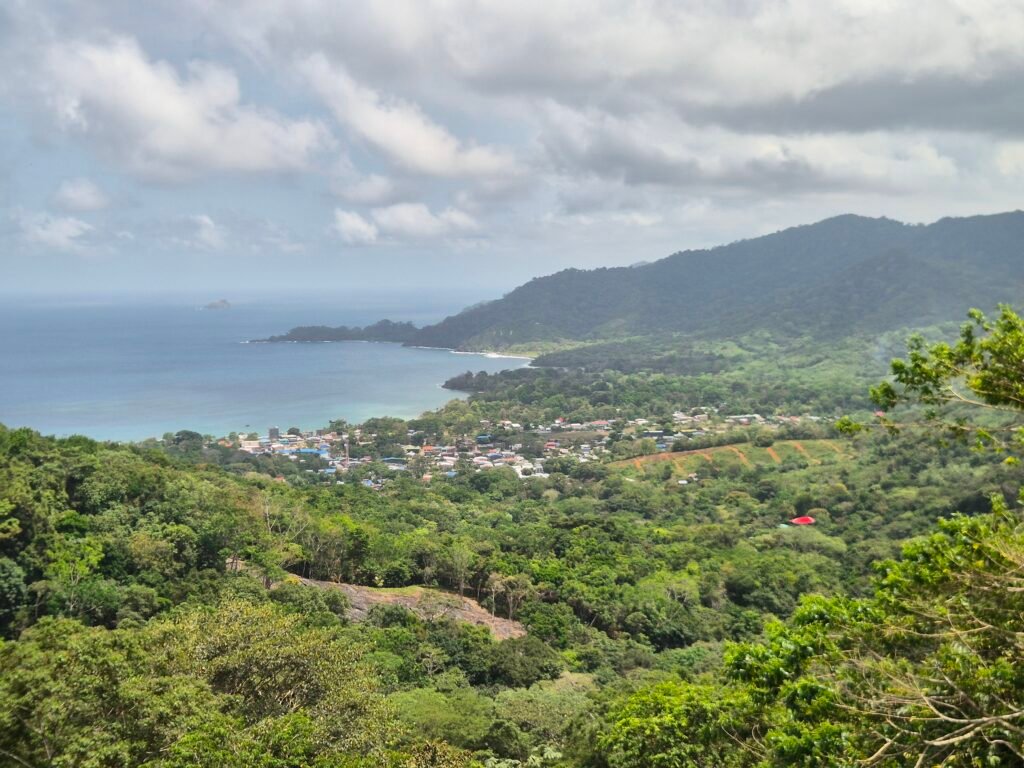
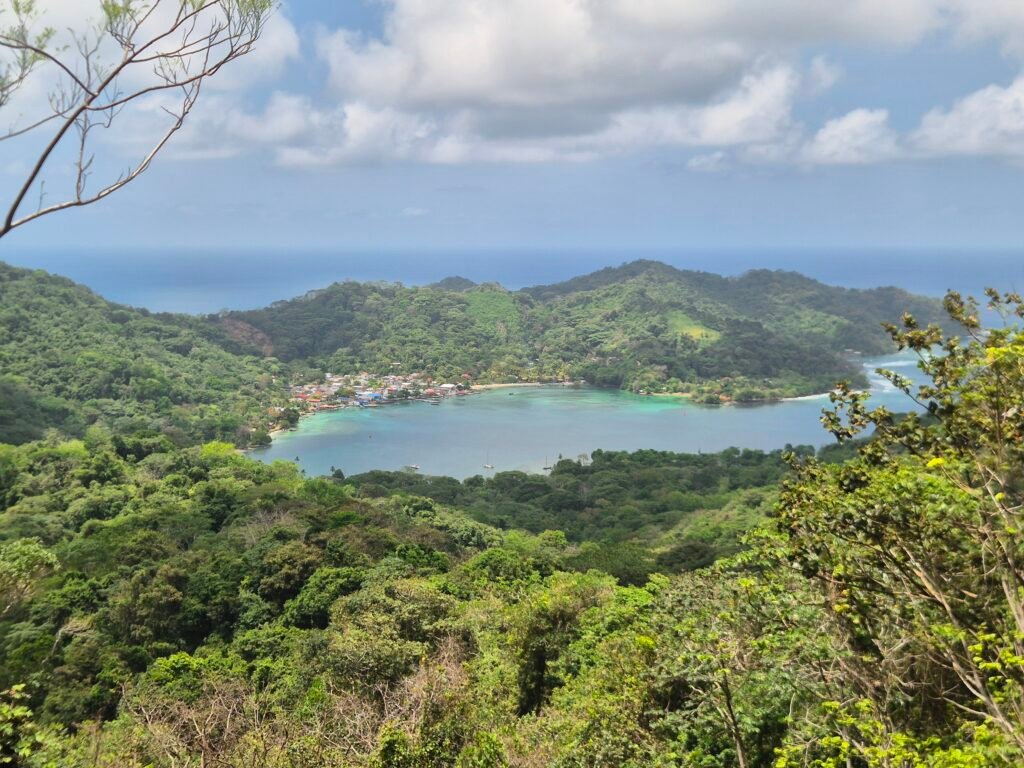
All that’s left is to head down the other side and enjoy the magnificent Sapzurro Bay.
Sapzurro
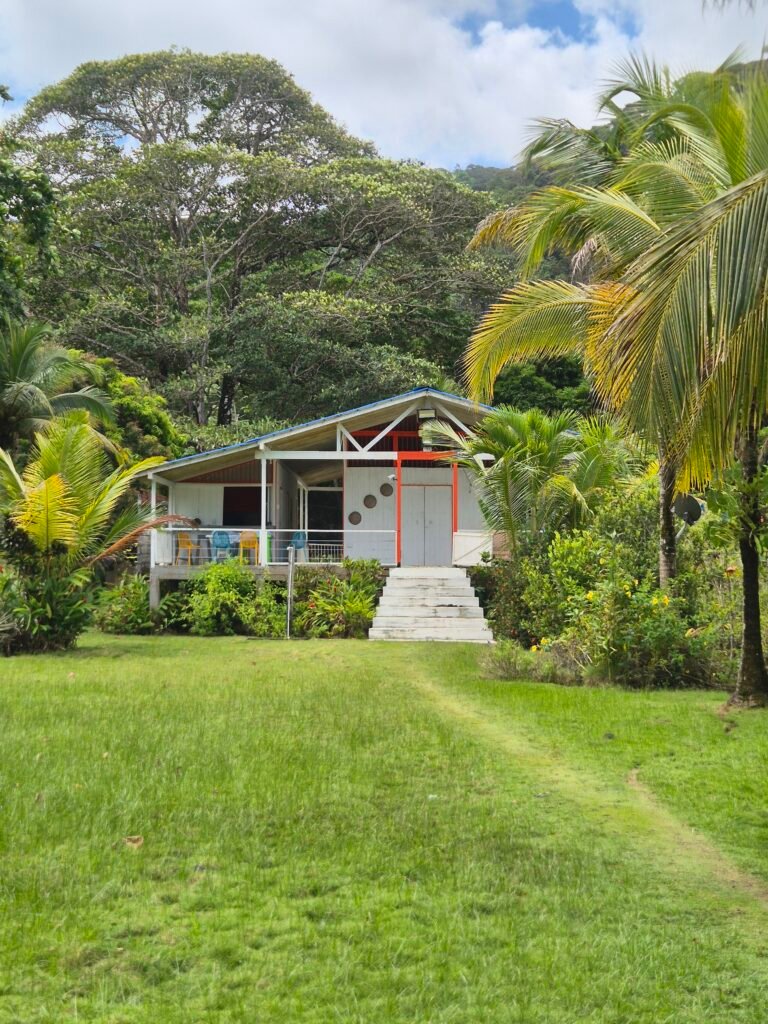
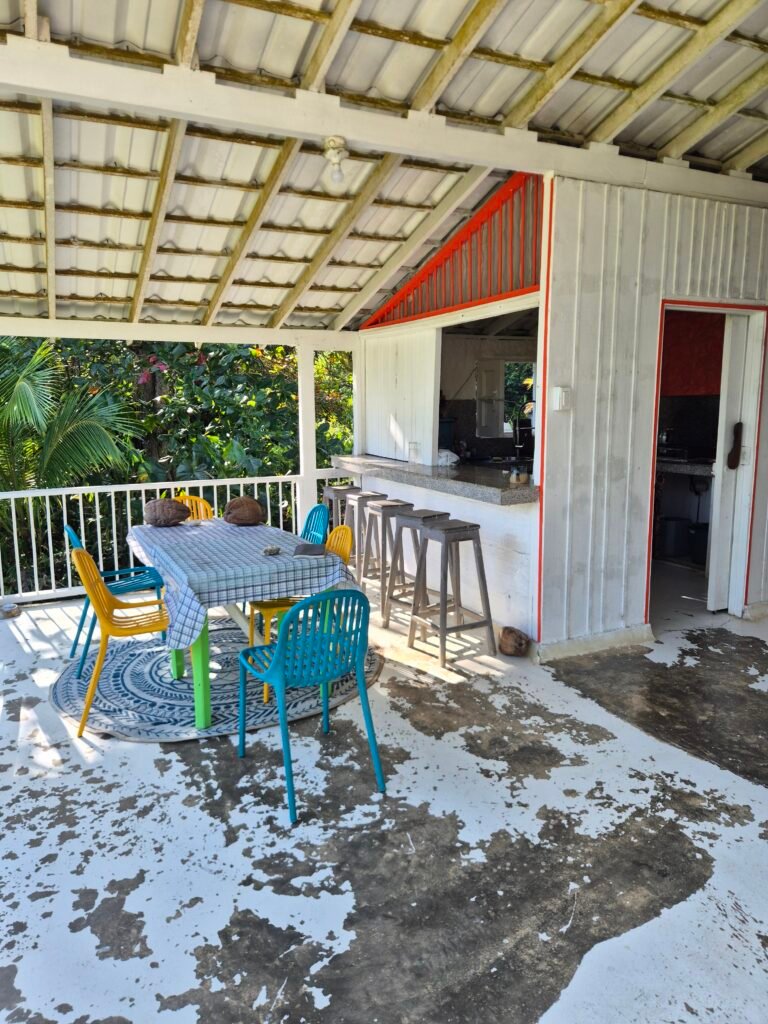
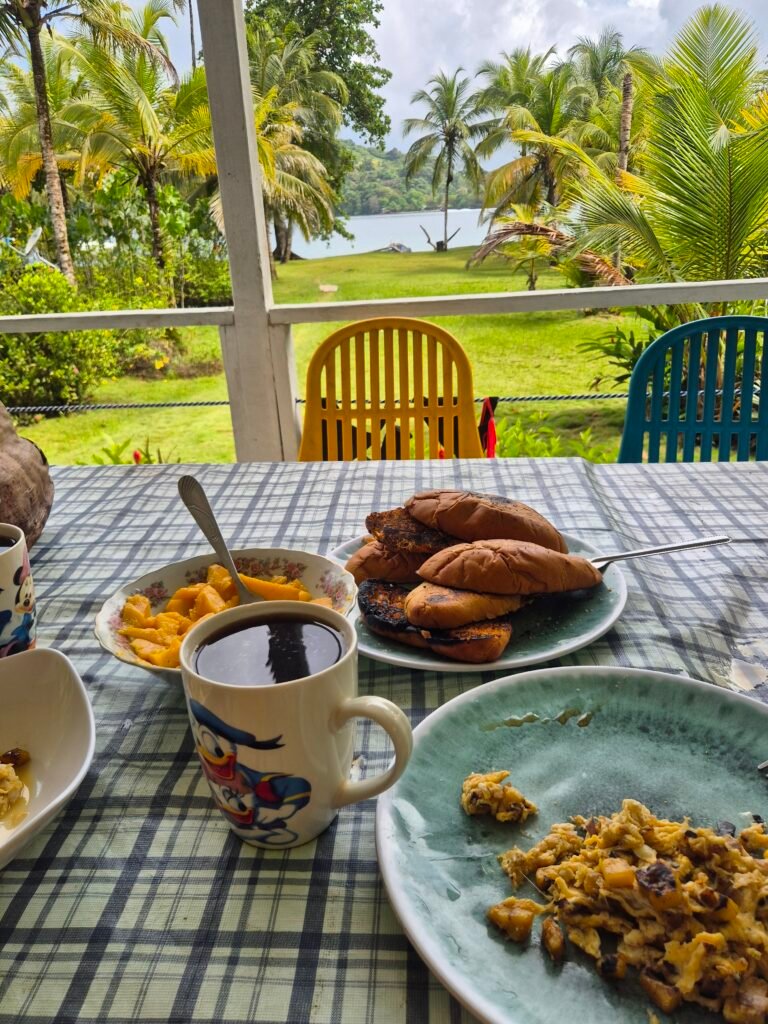
We spend 3 nights in Sapzurro, a magnificent bay on the border with Panama. Not without some effort, we found a decently priced place with a kitchen near the Café del Mar restaurant/hotel (same owner). We pay COP 50,000 per person per night, which is still reasonable for the region.
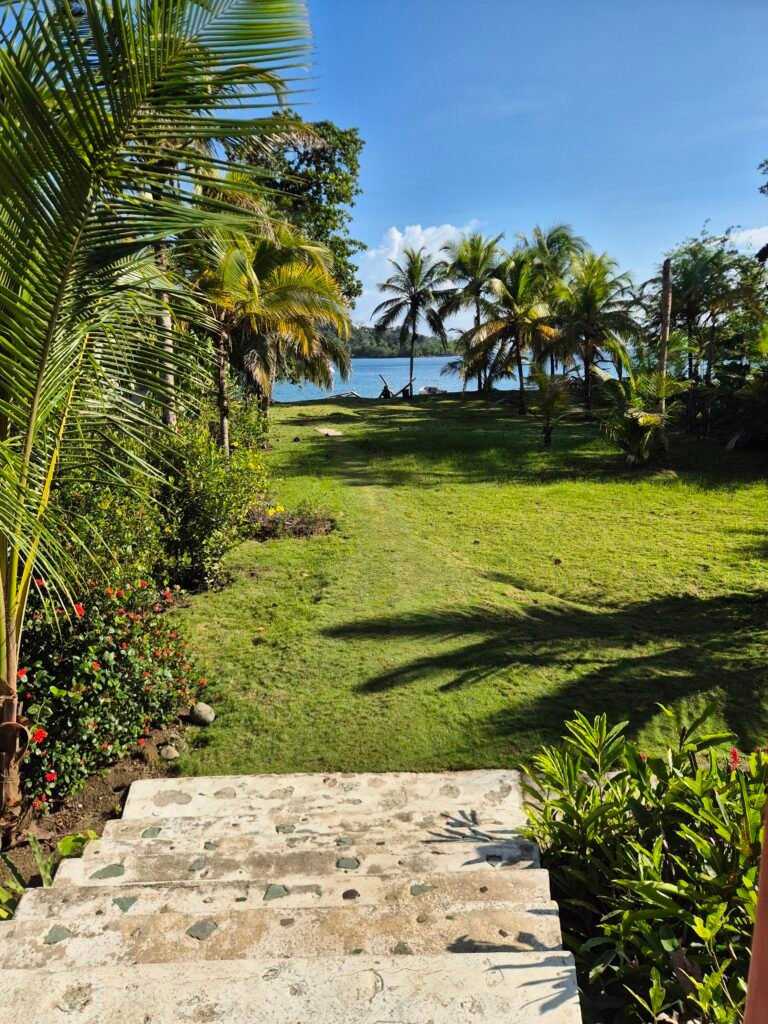
Our place looks right out over the bay; it’s quiet and green.
Since it’s already full for our last night, we go camping at La Posada, still for COP 30,000 per person (no kitchen).
The village isn’t very big, and it doesn’t take long to see it all. Still, there are a few restaurants and some basic little tiendas (corner shops). Fresh food is where the choice is especially limited.
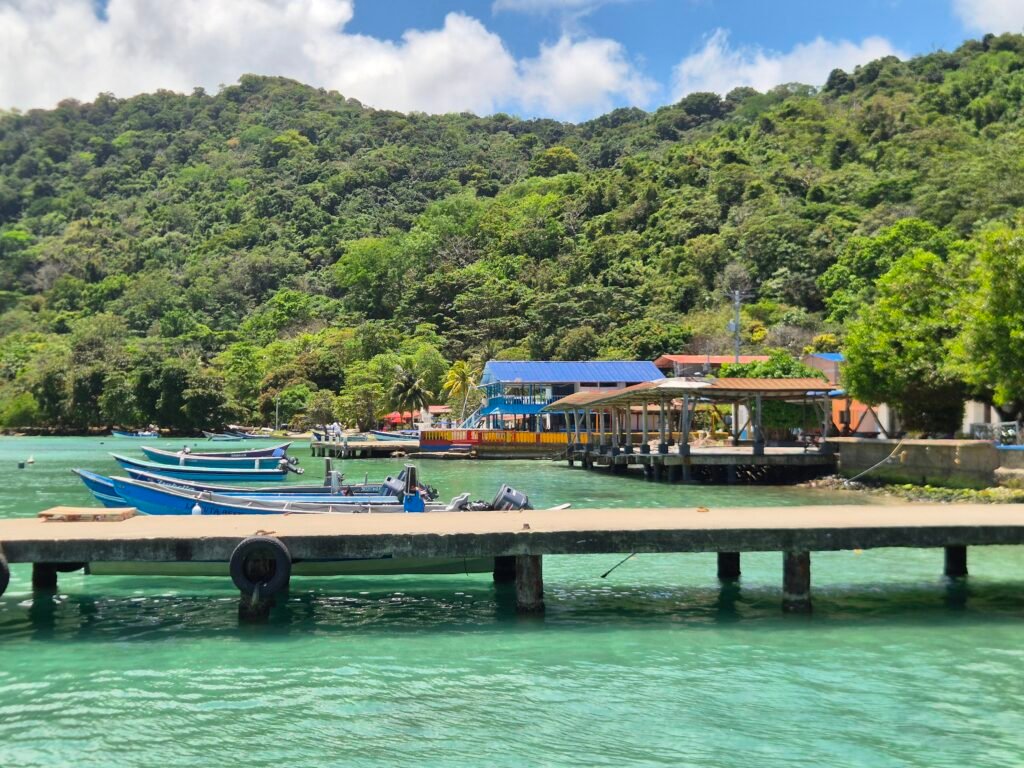
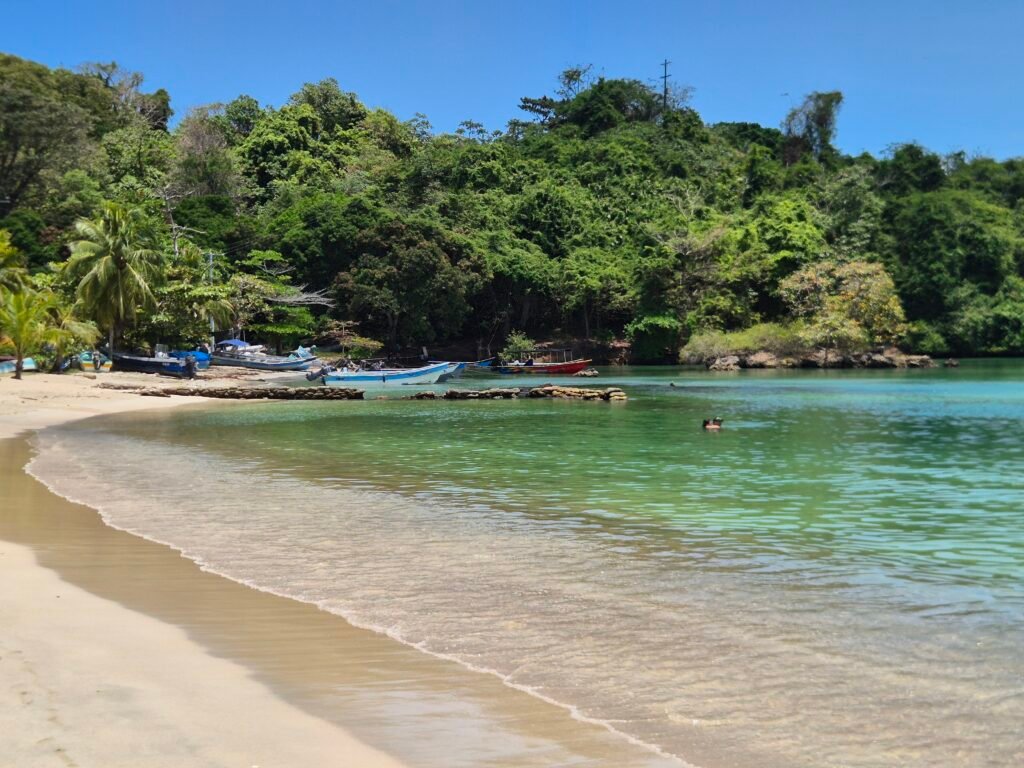
Sapzurro beach is very pretty, clean and well kept, with a few shady spots under the handful of coconut palms.
La Diana waterfall
Nothing special, just a short walk to a small waterfall, where the trail from Capurganá comes in. Here, the lush jungle is probably more of a draw than the little waterfall itself. We also run into a beautiful red coati that doesn’t seem to pay us much attention!
Playa La Diana
We spend most of our time here, near where we’re staying. A long, narrow, peaceful beach, coconut palms, a nice lawn and a view over the whole bay.
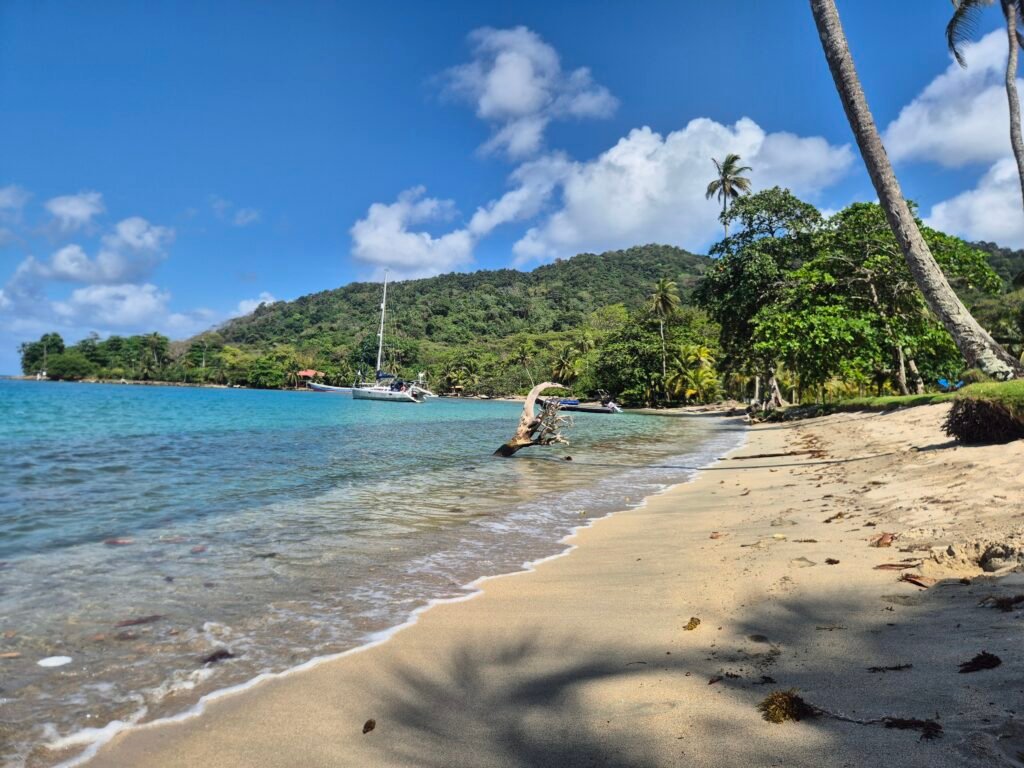
Playa La Miel
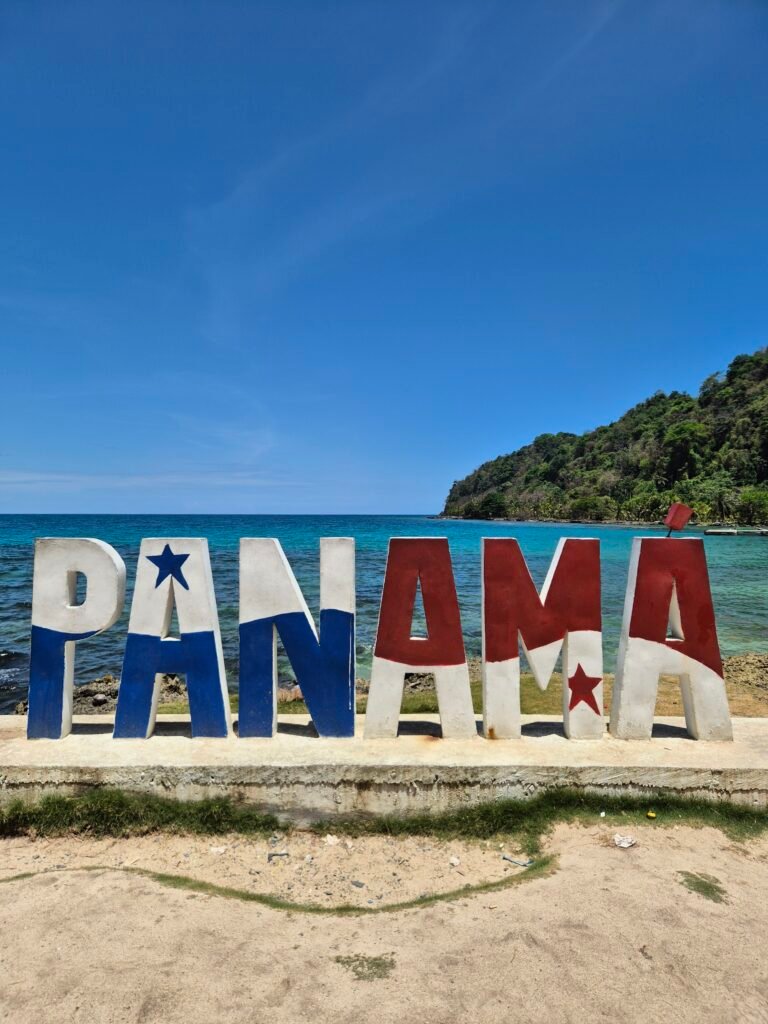
This is Sapzurro’s best-known walk, a round trip… to Panama!
For a while now (and with the drop in migration?), you don’t even need a passport: you can cross the border freely (as long as you come back, of course!). The trail starts at the end of the village, climbs a bit and comes back down to the village of La Miel.
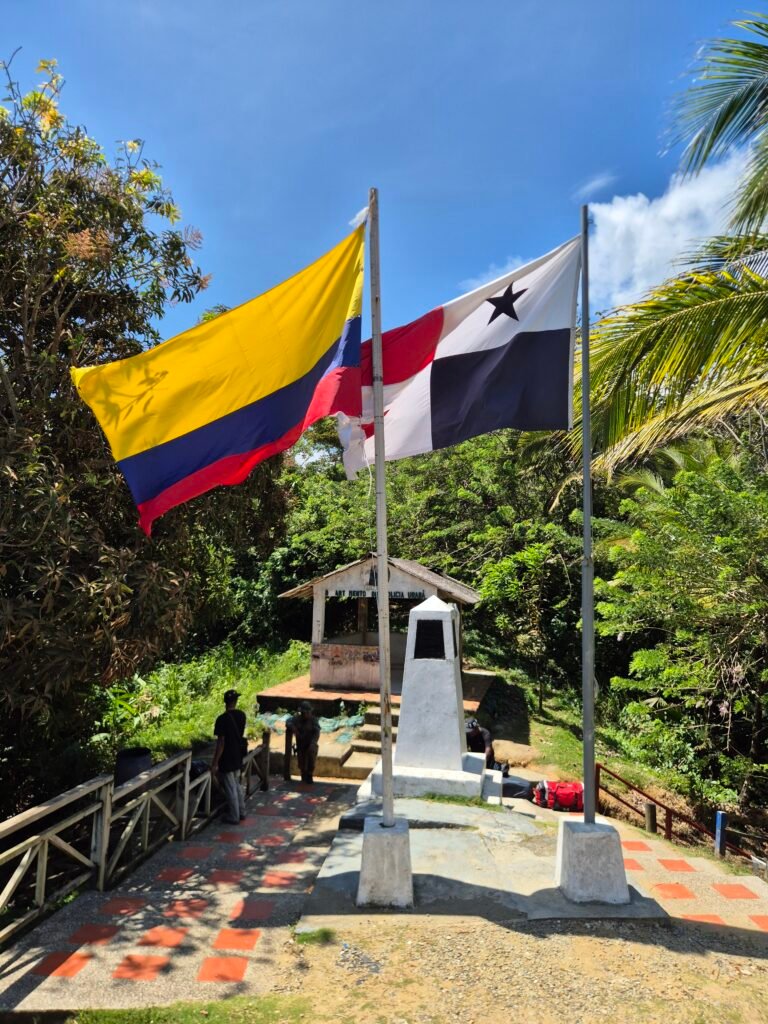
At the pass, the flags of the 2 countries fly in front of the now-empty border post. We’re also on the border between 2 continents: South America and Central America!
The views of both bays are lovely.
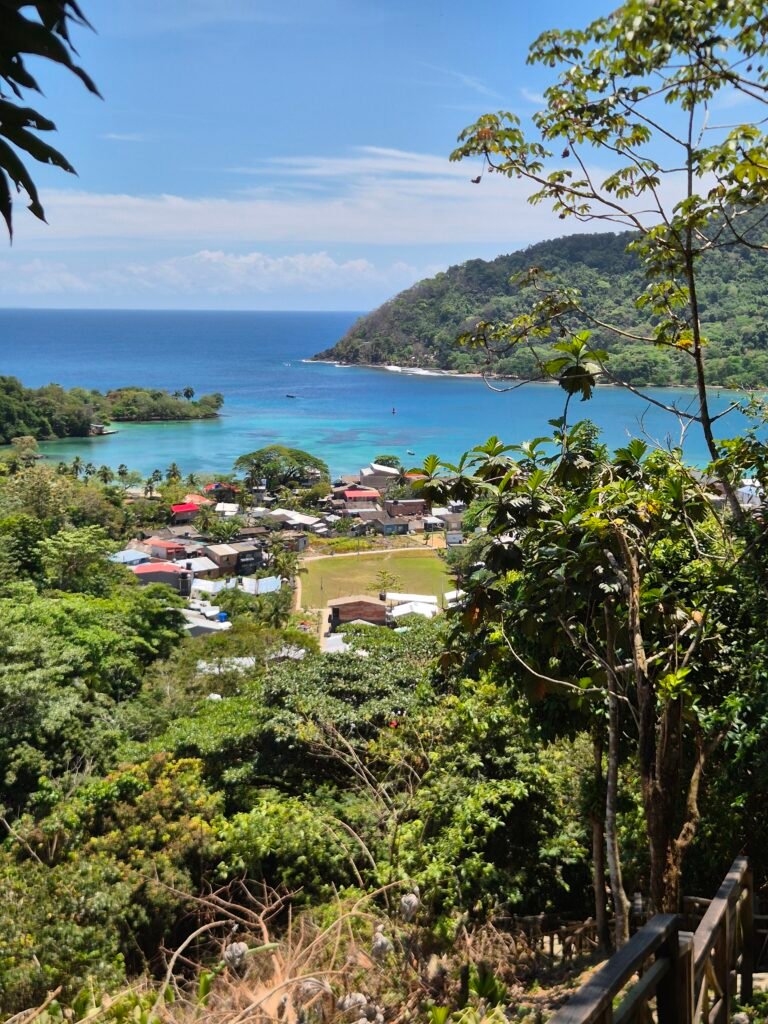
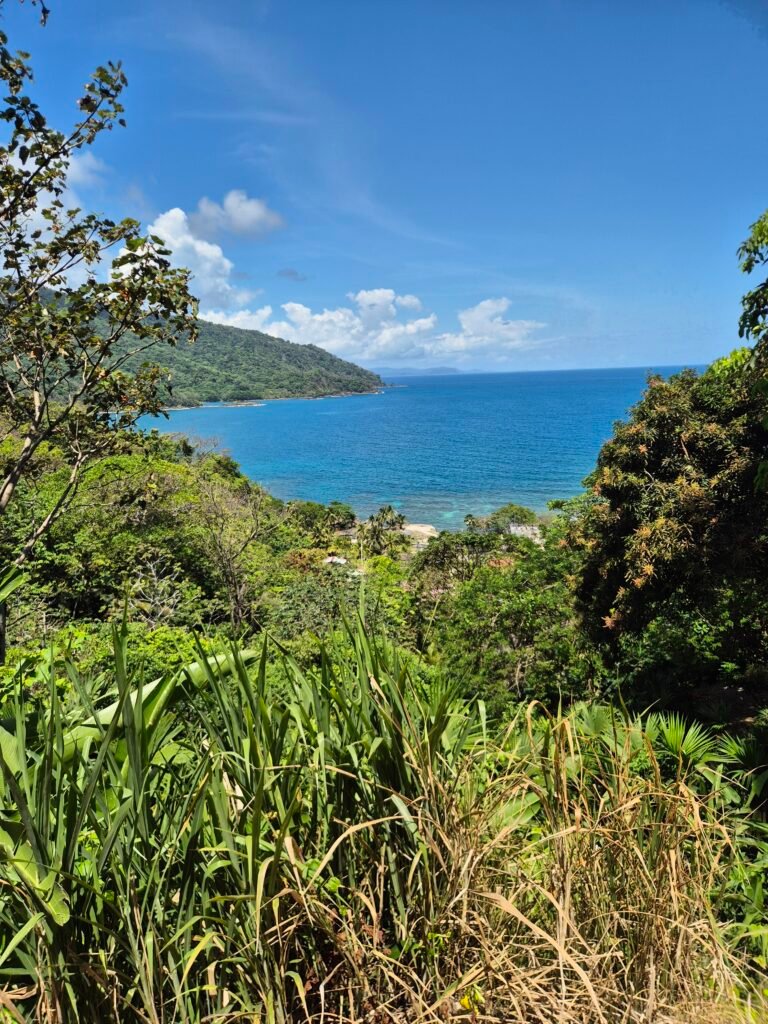
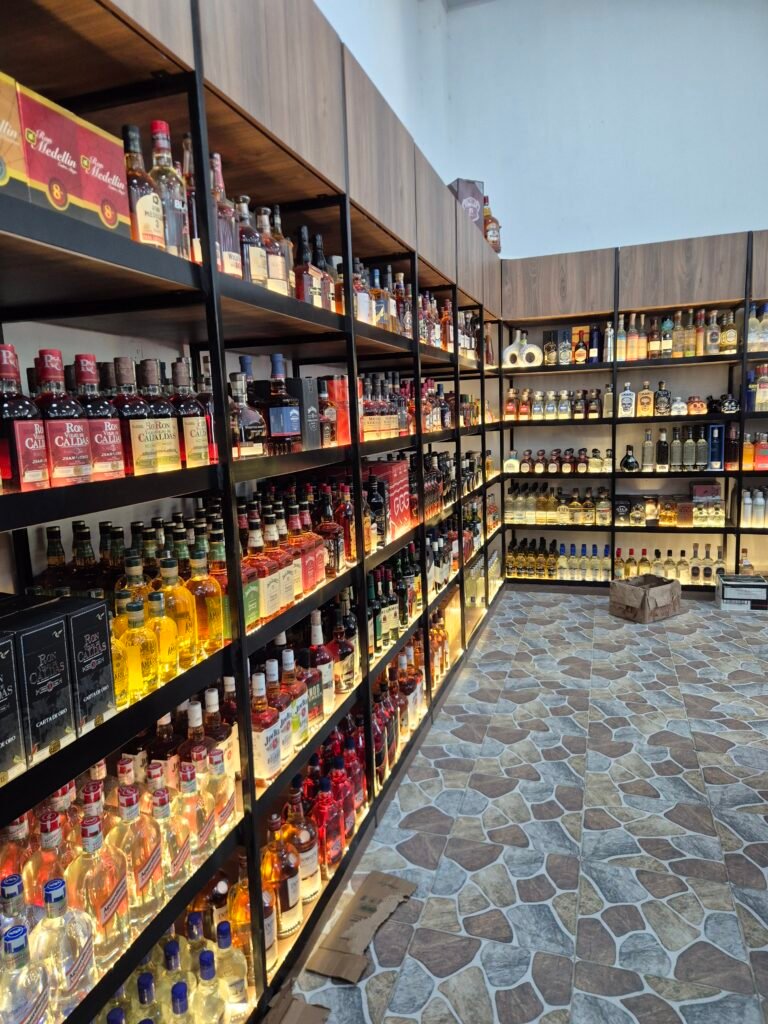
Entry to La Miel costs COP 4,000 per person. Changing continents doesn’t mean you can’t rip off tourists! There isn’t much to see apart from the beach and… a duty-free shop! It’s the main attraction: Colombians all come here to stock up on alcohol. We take the opportunity to buy a bottle of Ron Viejo de Caldas, an amber rum from the coffee region that people have recommended to us. In the end, once you add the village entry fee, we’re not sure it’s such a great deal.
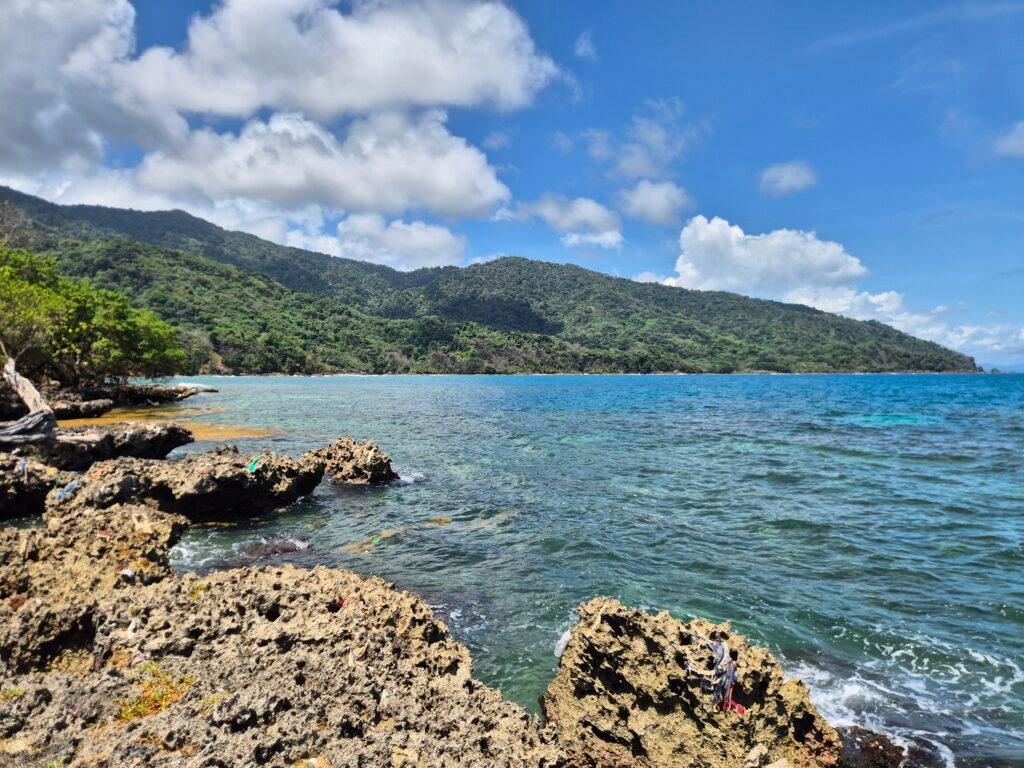
The bay itself is pretty, but the beach is covered in sargassum, which doesn’t make you want to swim… We’d rather head back to Sapzurro after our little walk.
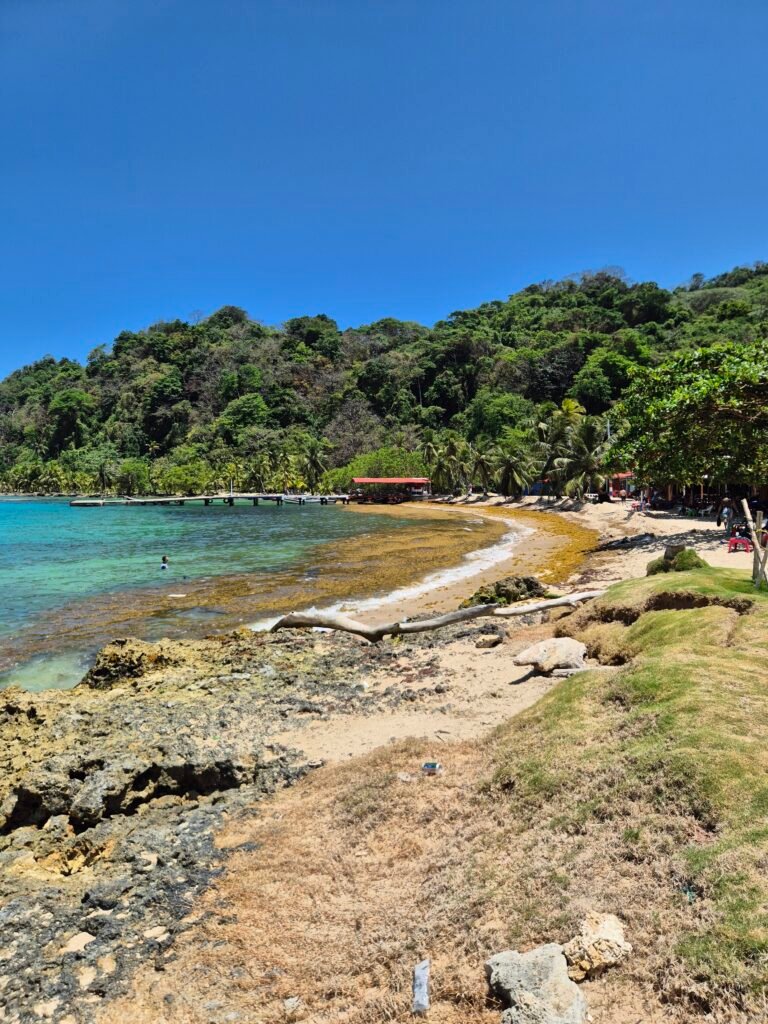
Cabo Tiburón
Continuing north past Sapzurro beach, you’ll find a beautiful little beach (Ica) with shade and gorgeous crystal-clear water. It’s not the best place to enjoy the sound of the waves, though, with the little bar right behind it blasting music.
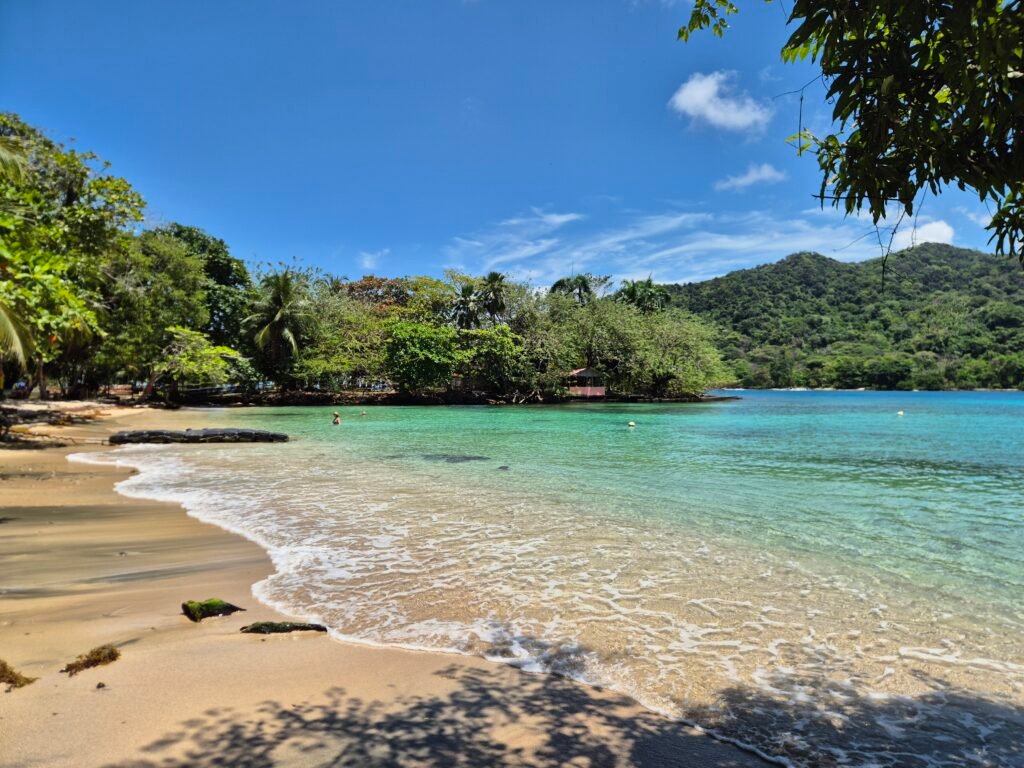
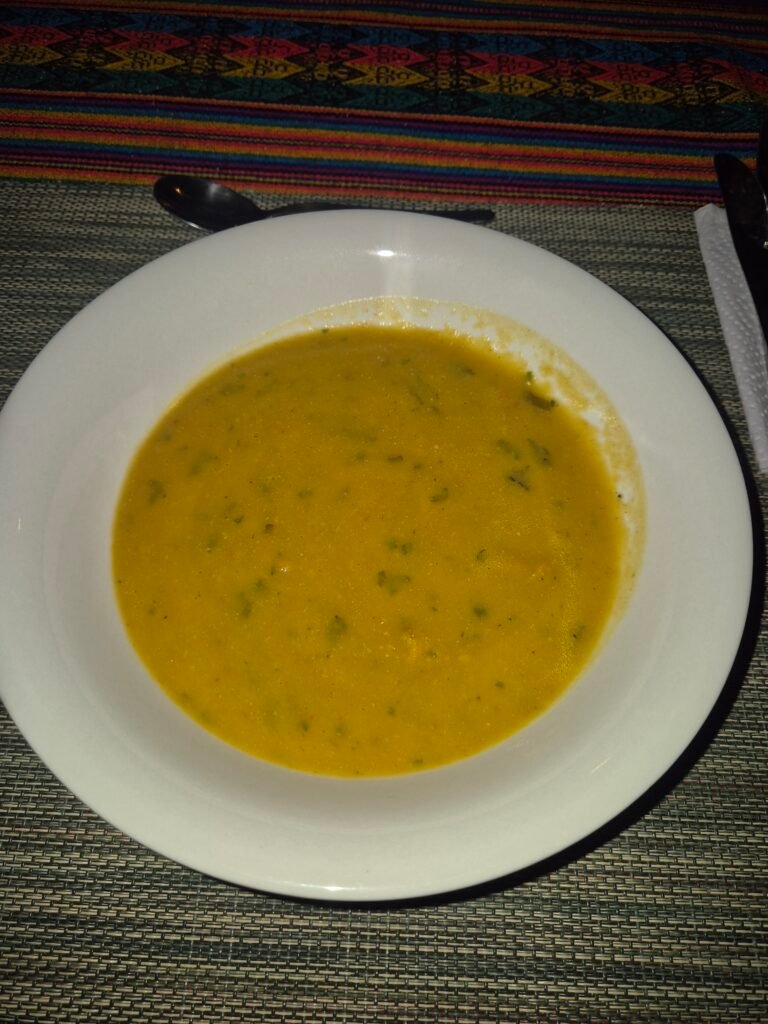
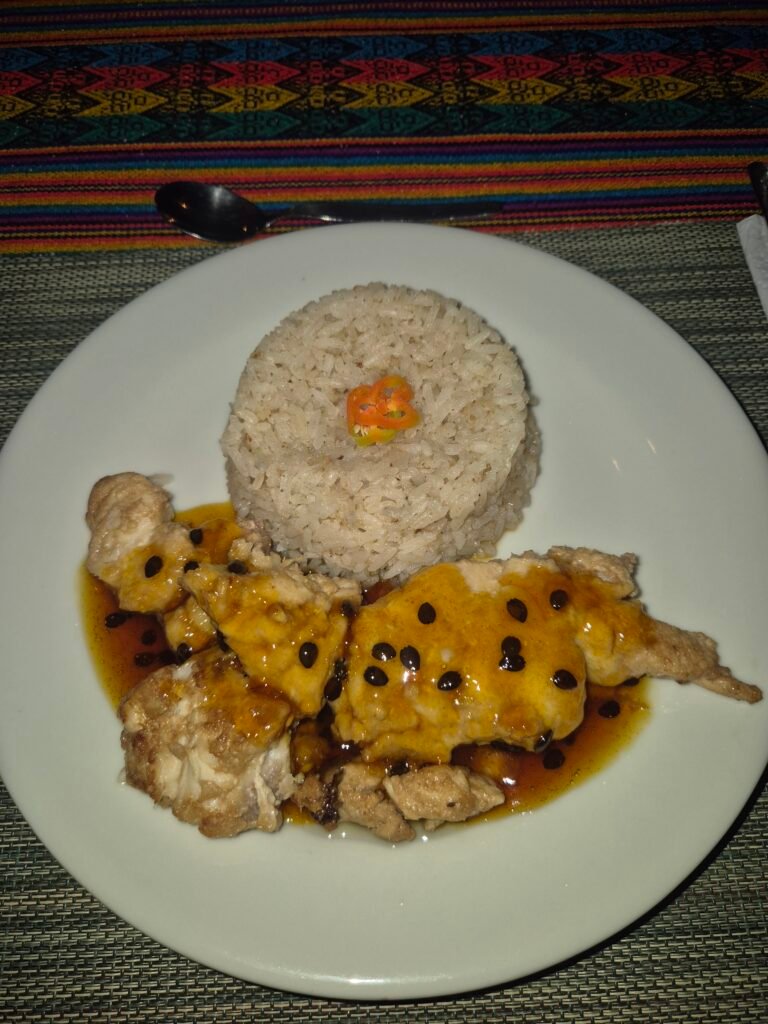
There seem to be some very nice homes around here, with beautiful gardens and little cabins… For our last evening, we eat at the restaurant of the Paraíso Cangrejales hotel. You have to book (and order) in advance. The very Peruvian menu offers set meals for COP 50,000 with a starter, main course, dessert and drink. We both go for fish, with passion fruit (maracuyá) sauce or piña (pineapple) sauce, served with rice and patacones (fried plantain patties).
For starters, a cream of vegetable soup, with a big jug of maracuyá juice, and a comforting slice of cake to round it all off. We highly recommend this place.
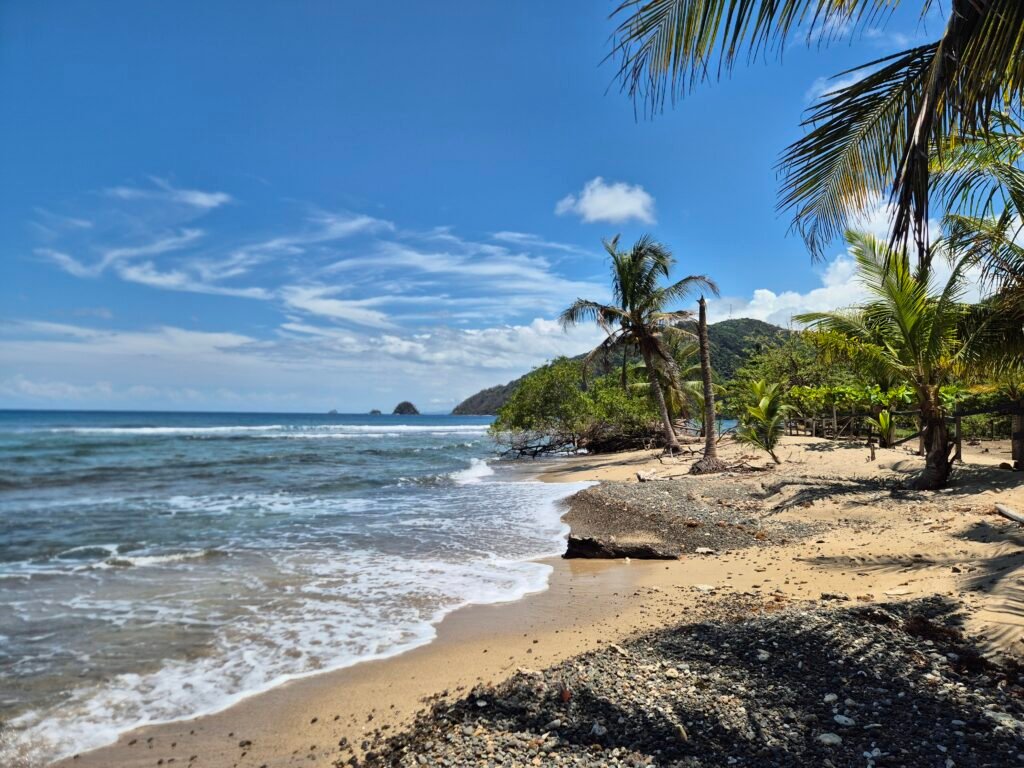
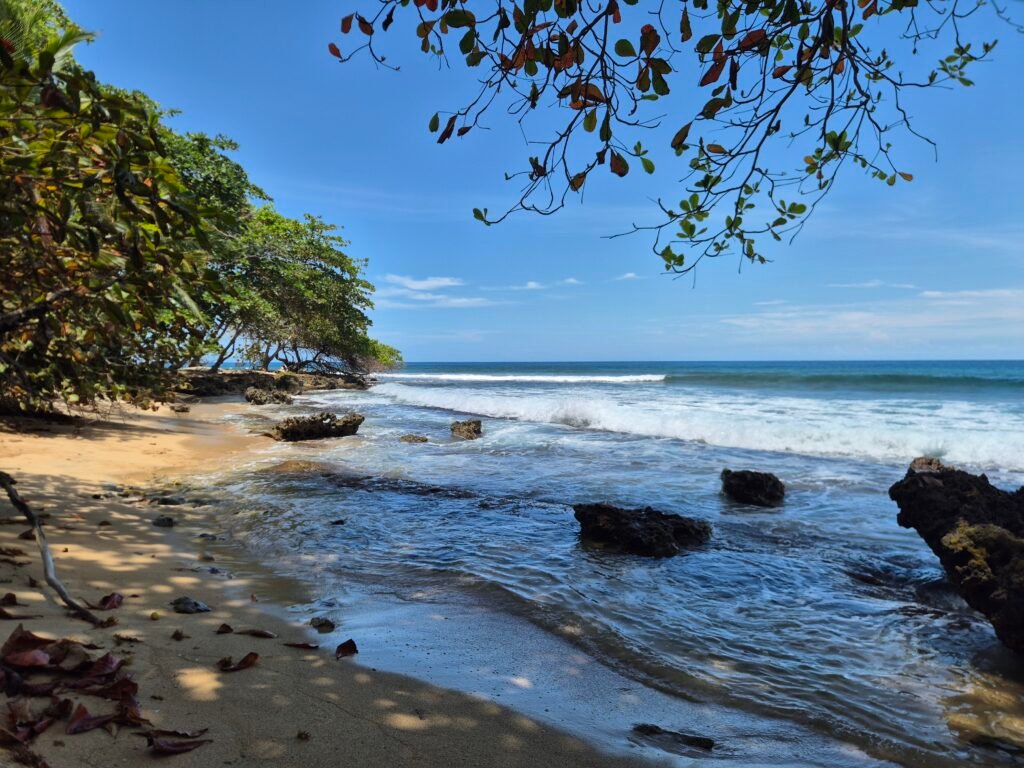
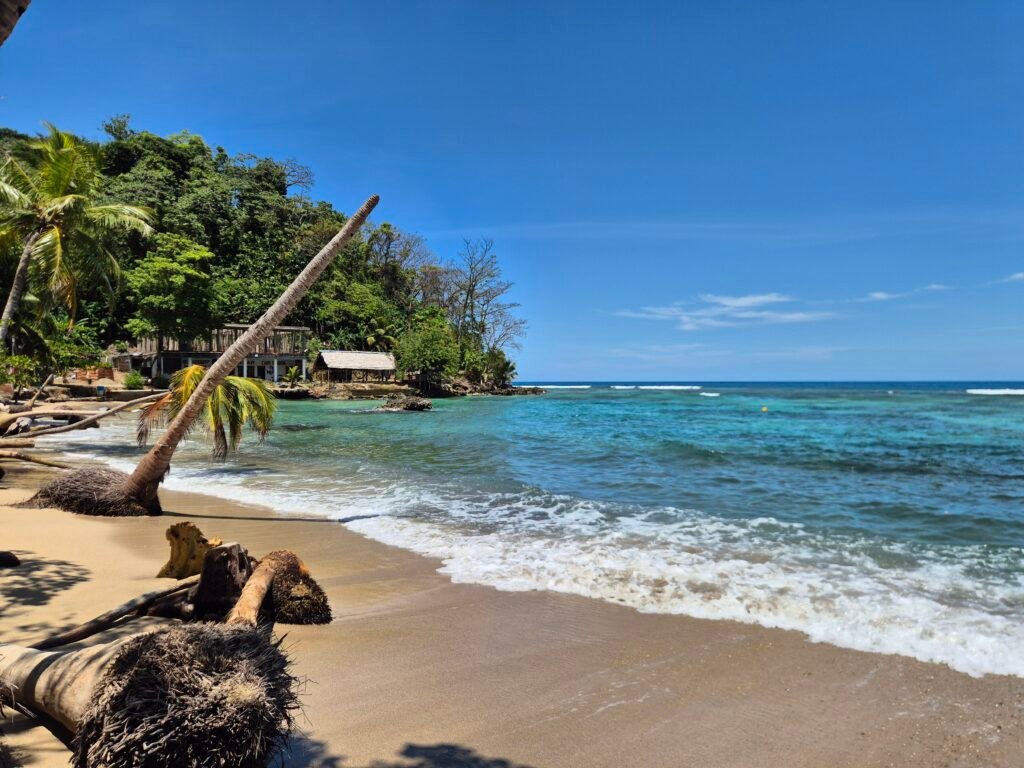
Continuing toward Cabo Tiburón (Shark Cape), we come across pretty beaches and viewpoints, with no one in sight.
Wrap-up
We arrived in the Chocó with no particular expectations, other than discovering a little-known region, off the beaten path, that long had a less-than-flattering reputation.
We leave feeling like we’ve found a little piece of paradise. Nature that’s still wild, deserted beaches as far as the eye can see, a lush jungle and wildlife everywhere. And, in every cove, that rare feeling of having reached the end of the world.
For us, it almost was: one of the last pages of sixteen months of travel, a few miles from Panama. Of the whole trip, it’s probably the memory we’ll treasure most. Because it’s here, between the jungle and the ocean, that our greatest adventure began: the one for three.
