
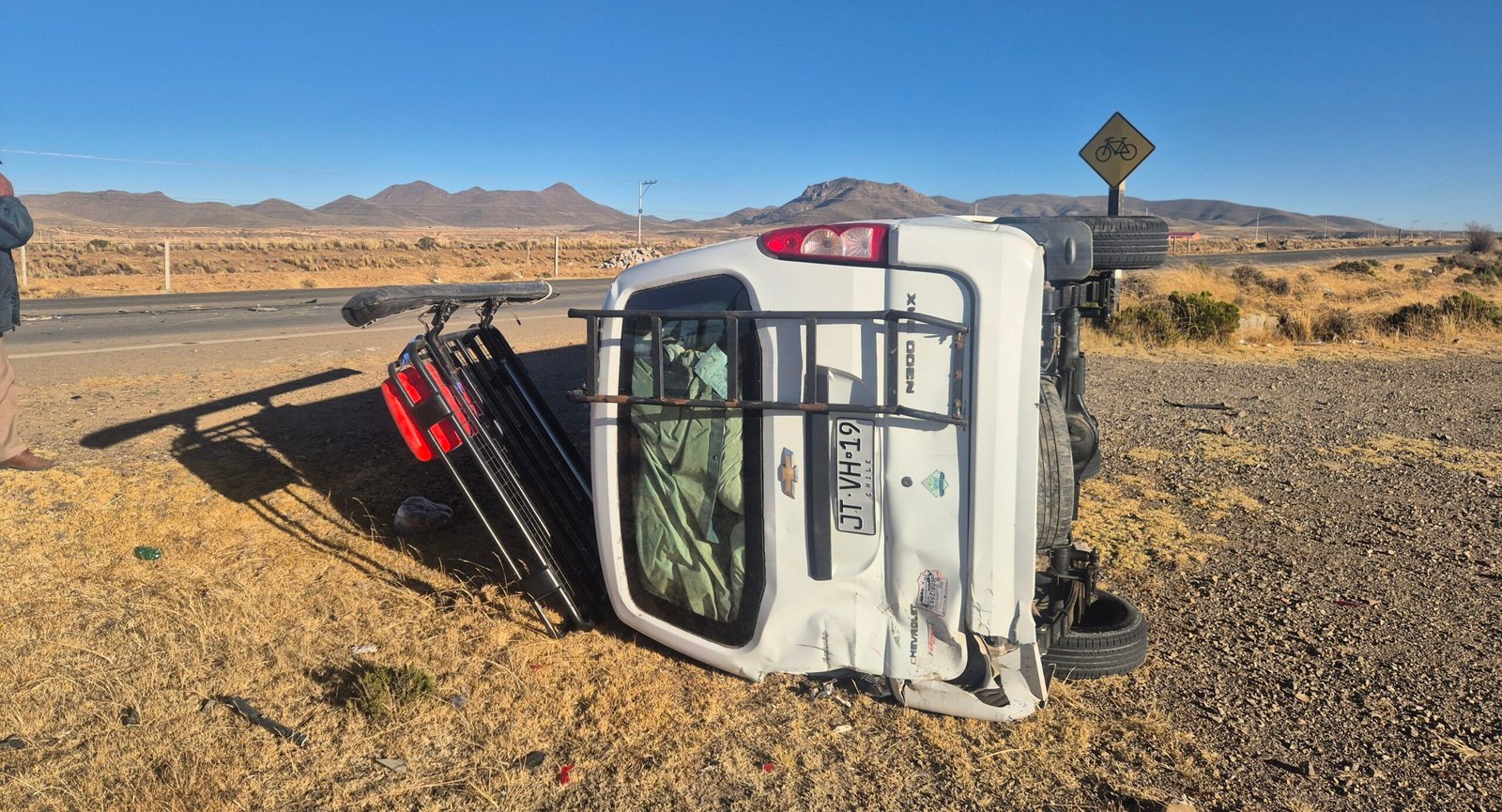
As we write these lines, 6 months have already gone by. And yet it’s still hard to find the words. On July 8, 2025, at 8 a.m., as we were planning to leave Bolivia for Peru, an out-of-control vehicle slammed into us at the entrance to a village. Barely a week after getting the van back in Sud Lípez, when we thought we’d never see it again, here was another heavy blow. This time, the van wouldn’t recover. And neither would we, not really.
Some posts are easier to write than others…
The accident
That morning, a local wakes us up early. The spot where we parked the night before, after dark, is close to a school. He asks if we could move a bit farther away, so we hit the road. It’s not even 7 a.m. yet.
We’re planning to reach the border that same day and cross into Peru, our next destination. Camille’s passport is about to drop below 6 months of validity (the legal minimum to enter most countries). We only have 2 days left; otherwise, we’ll be stuck here while she gets a new passport.
We’ll definitely need to stop for gas: we still have a couple hundred miles to go to the border, on the northern side of Lake Titicaca. This is Bolivia, so the gas stations along the road are either empty or won’t serve foreign vehicles. We finally get off at Patacamaya, where we had already managed to fill up a few months earlier on our way to Sajama National Park. Lines at the gas stations can be several hours long, and John would rather stop first for a bathroom break. Just before the entrance to the village, we spot a dirt track by the side of the road, slow down and turn left.
Then, suddenly, chaos. A few hundredths of a second, blurry, suspended in time. It takes us a moment to come to our senses and realize what just happened. The vehicle is lying on its side, off the road, and we’re hanging from our seat belts. It all happened very fast, too fast.
We crawl out through a broken window. A few locals are already gathering around. One of them brings back the bag that was on John’s lap: it was flung to the other side of the road. Farther on, the other vehicle has stopped, its bumper smashed in. The driver is safe too.
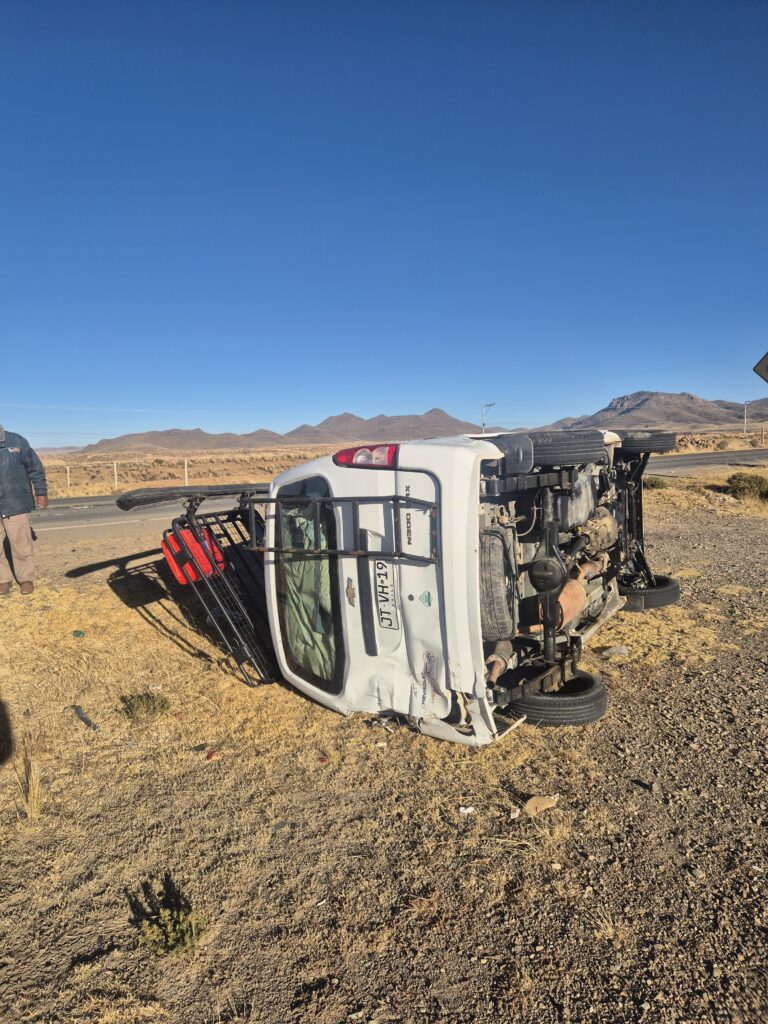
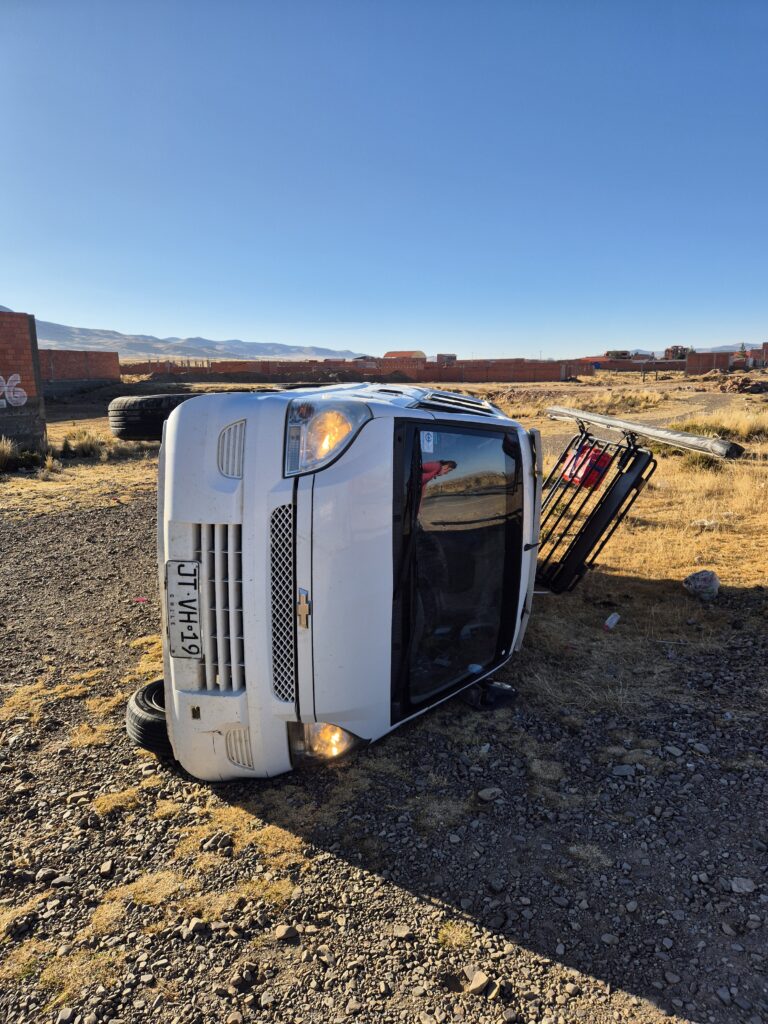
A few minutes later, the local police arrive, followed by the La Paz traffic police. We couldn’t say how many hours we stayed there, by the side of the road. Time doesn’t flow the same way anymore.
Again and again, they ask us what happened. They also take photos of the scene. The other driver talks with them a lot. In this situation, on his home turf, in a language we barely master, we’re afraid it might work against us.
On our side, 2 very different feelings: dejection for John, anger for Camille. We try to remember what happened, and doubts creep in. Did we put the turn signal on, early enough? Was he already passing us when we turned? Did we brake suddenly? We’re not sure of anything anymore; everything is a blur.
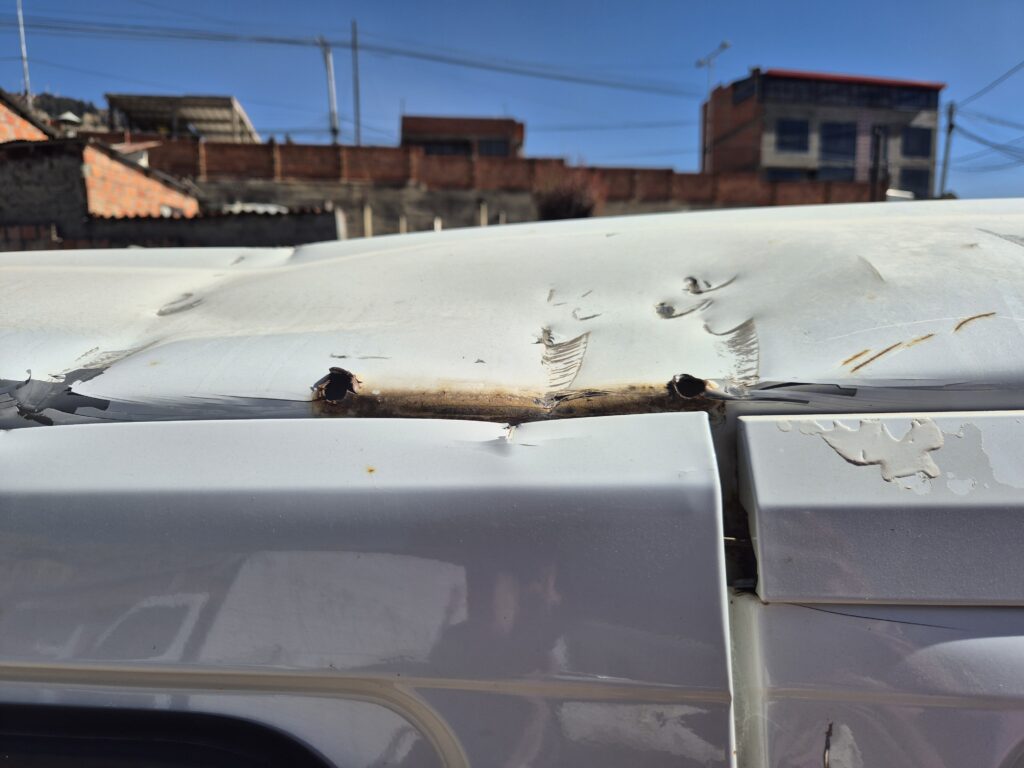
One of the officers notices the crushed side mirrors on the van. He suspects the vehicle rolled over, which the other driver flatly denies. It all happened in a flash, much too fast, and we hesitate. After thinking long and hard, a few images come back to us, and there’s no longer any doubt. The vehicle rolled at least twice, and we ended up several yards off the road.
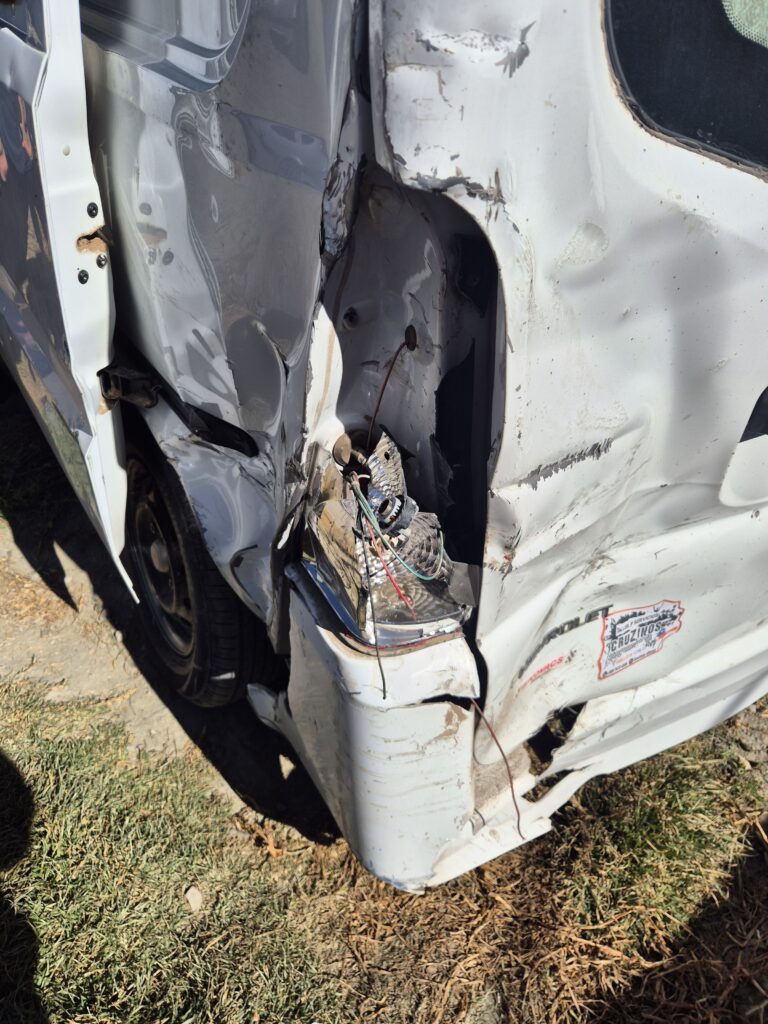
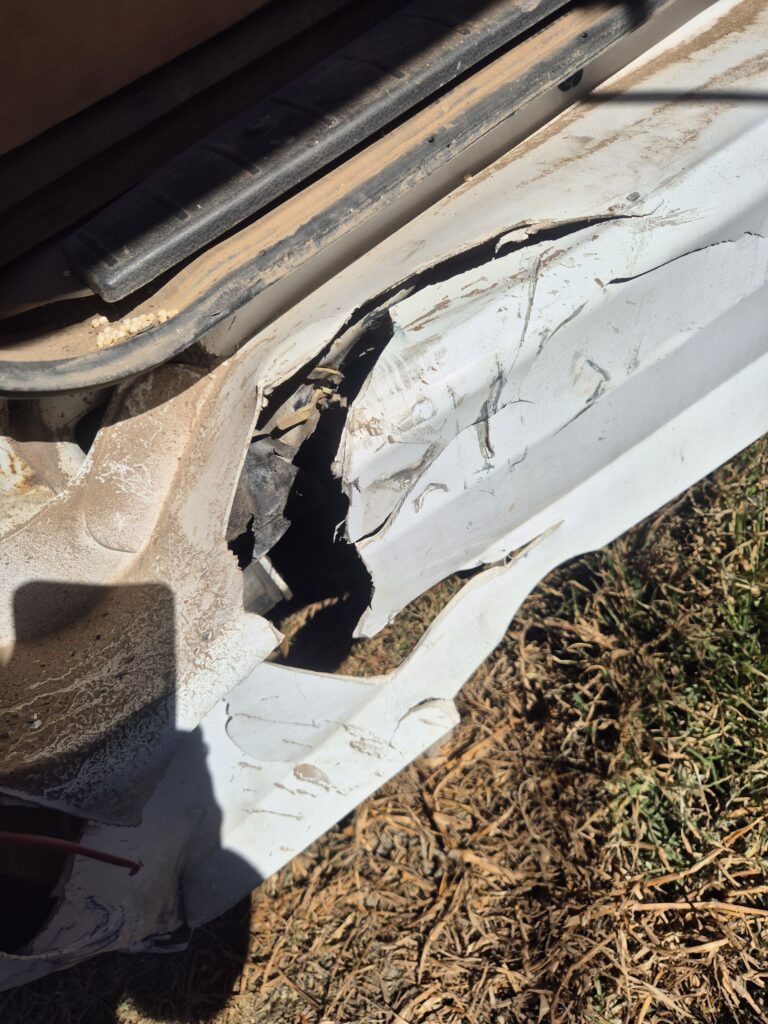
The police tow truck will take the 2 wrecked vehicles back up to La Paz. They order us to ride in the second one, next to the other driver. It’s a long, endless ride, in uncomfortably close quarters.
At the station, they go through the usual routine: alcohol test, drug test, separate statements from each driver… In short, standard procedure. They also call the embassy. Over the phone, the embassy says that with no one injured and no offense committed, it’s a dispute to be settled between private parties, a private matter, and there’s no need for them to come. That’s fair enough, and we can still get back in touch with them if needed.
Then comes the reconstruction of the scene. The police chief sets out a road board and 2 little toy cars to explain his reading of the facts. According to him, we shouldn’t have turned at that spot, onto a dirt track, without proper signage. We should have kept going into the village, made a U-turn at a traffic circle and then turned right onto the track without having to cross the road. In a country like this one, where road signs are rare and dirt tracks are everywhere, it’s a strange rule.
He asks the other driver how fast he was going. 20-25 mph, he says. At that speed, the police chief says it’s impossible to cause that much damage and make a vehicle roll over like ours did. Besides, at that speed and at a safe following distance, he should have been able to stop in time. We were only about a hundred yards from the village and just a few yards from a 30 km/h (20 mph) sign. He gives him a stern talking-to: it could have been a child.
So he rules that the blame is shared and assigns us 40% of the responsibility, versus 60% for the other driver. What does that mean? Either we reach an agreement, or the case goes to court, and we’ll have to wait here until it’s settled and pay for a lawyer. Speaking of which, the lawyer for the driver, or rather for the transport company, has just arrived and asks to speak with the officers privately. We can smell a rat. To think we just lost our home and we still have to spend the day clearing our name with the authorities…
The lawyer suggests settling things out of court. We know the vehicle can’t be repaired in this state. We won’t win no matter what happens, and we have everything to lose by pushing on; all we want is to put an end to the legal side of things. We agree to sign an agreement stating that each party will personally cover the damage to their own vehicle, and we insist that the towing be paid by their side. Yes, everything costs money in Bolivia: the towing, the alcohol and drug tests… And since we were found partly responsible, we also have to pay a fine of between 1,000 and 4,000 BOB. They set it at the minimum, and even lower it because we don’t have enough cash on us.
Finally, at the end of this endless day, the 2 parties sign an agreement that closes the legal case for good. It’s a relief.
What now?
Only 1 day after getting back on the road, when we never thought we’d get the van back from Sud Lípez… It’s a cruel feeling, as if fate had it in for us, a new loss to grieve within a single week.
Everyone will point out that what matters is that we’re safe, despite the violence of the impact. That’s true. But in the moment, and for many days after, it was hard to see it that way. For us, losing the vehicle meant the end of a journey. It was our vehicle, our home, our dream. We’ll spend a long time weighing what to do next.
Go home? After something like this, it would feel like failure, and we’d regret it for a long time.
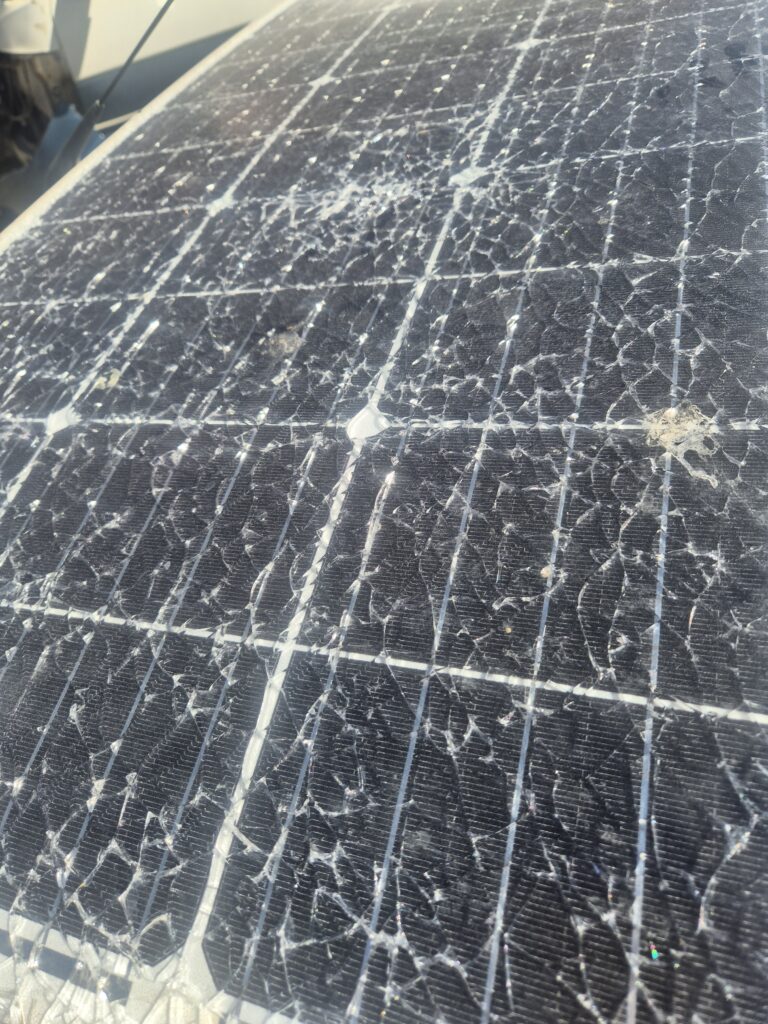
Repair the vehicle? A mechanic quotes us 15,000 BOB, “only” €1,000 at the exchange rate at the time. Knowing that the bill always goes up over time, and that he’s deliberately lowballing the final amount… We’d also have to find a new solar panel, rebuild the interior, the roof rack… And an accident like that leaves its mark, it weakens the frame, the engine… How long before something gives out again? No, it’s not viable.
Buy another vehicle? That’s a big, unplanned expense, and from now on, this experience will weigh on us: what if it happened again? Are we ready to risk that much money? Plus, we’d have to go back down to Chile (and Santiago) or find a vehicle with foreign plates (France, US…).
Continue the original route? That’s not what we had planned, and it’s not what we want, not what drives us. How do you get off the beaten path without your own wheels in a country as touristy as Peru, or Ecuador, which we already know so well? And what would we do with all our stuff? We weren’t prepared for a backpacking trip.
In the end, we sell the wreck to a garage a few weeks later. 10,000 BOB (€500), “better than nothing.” Since the other driver still hasn’t paid for the towing, we have to negotiate at length with the police to get permission to take the vehicle out of the impound lot. And we still have to pay for every day the vehicle sat there: 1,000 BOB! On top of that, the gas can has disappeared, the fridge has been stolen… And probably plenty of other things inside.
It’s a hard blow after the ordeal in Sud Lípez. Hope, despair, hope again, and endless distress… A downward spiral. We really believed it this time; we thought it was a misadventure we’d laugh about later… Getting over it will take time, and nothing will ever be the same. It’s no longer the trip we imagined, the one we spent years preparing for, the reason we left everything behind. Of course, it’s just a trip. It was just a vehicle. It’s a selfish dream in a wounded world, and we were naive enough to believe in it.
