
Ecuador
October 2025 to January 2026
- 90days in the country
- 669 mileson foot
- $5,172spent for the two of us
Our route
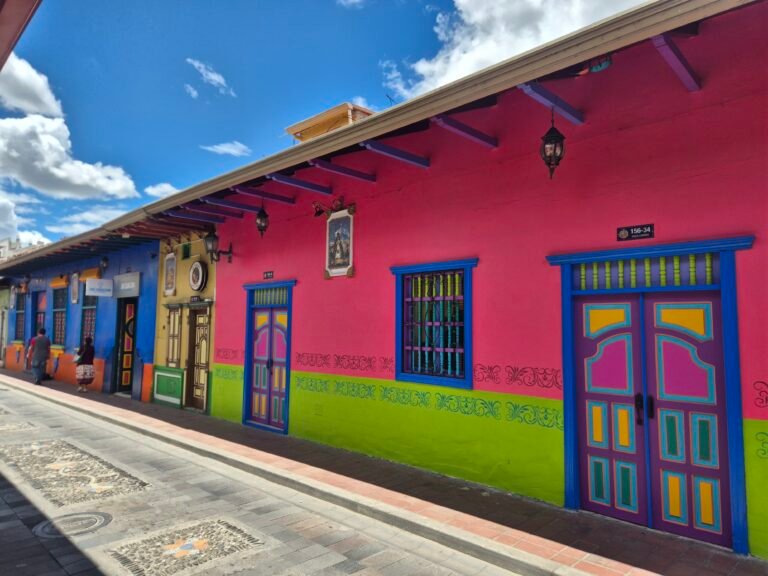 1Southern Ecuador: Loja, Vilcabamba and SaraguroGoodbye Peru, hello again Ecuador, a country we already know well from traveling and living there a few years ago. From Piura, we take a bus straight…
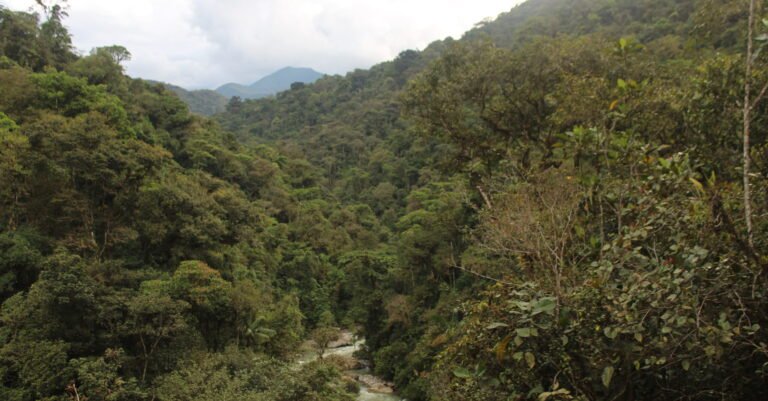 2The Two Faces of PodocarpusSouth of Ecuador (and of Loja) lies the huge Podocarpus National Park, often overlooked by visitors who rarely venture this far south, unless…
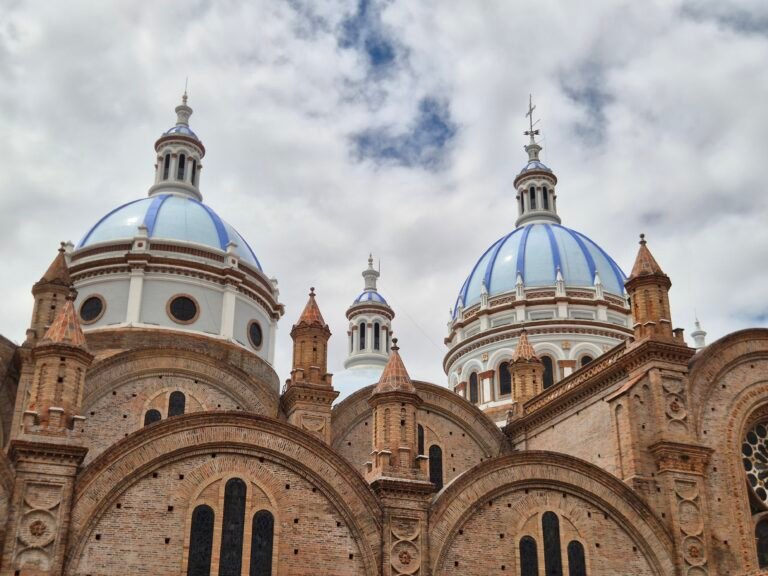 3Cuenca the BeautifulA moment we’d been looking forward to: going back to Cuenca, the most beautiful city in the country. We both know it well; John lived there a few years ago and Camille…
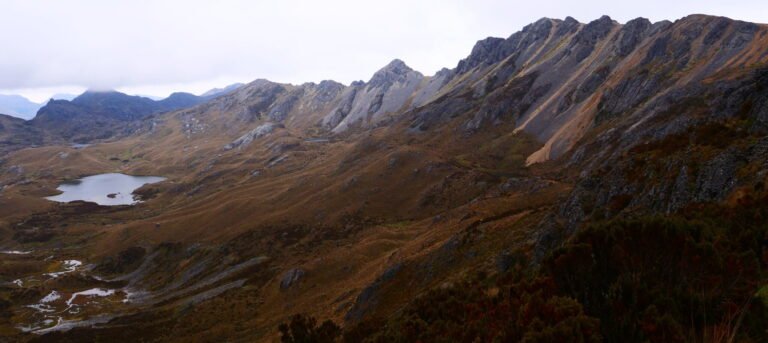 4El Cajas, Back to Our RootsCuenca means a must-stop at El Cajas National Park, right on the city’s doorstep. For John more than anyone, it was a stop he’d been waiting for since the start of…
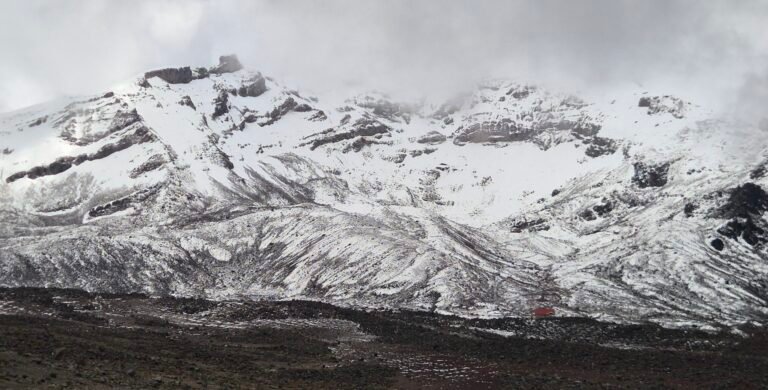 5Chimborazo and Salinas de GuarandaAfter a good week and a half in Cuenca, we reluctantly leave the city to start heading north to Quito along the famous Avenue of the Volcanoes. First…
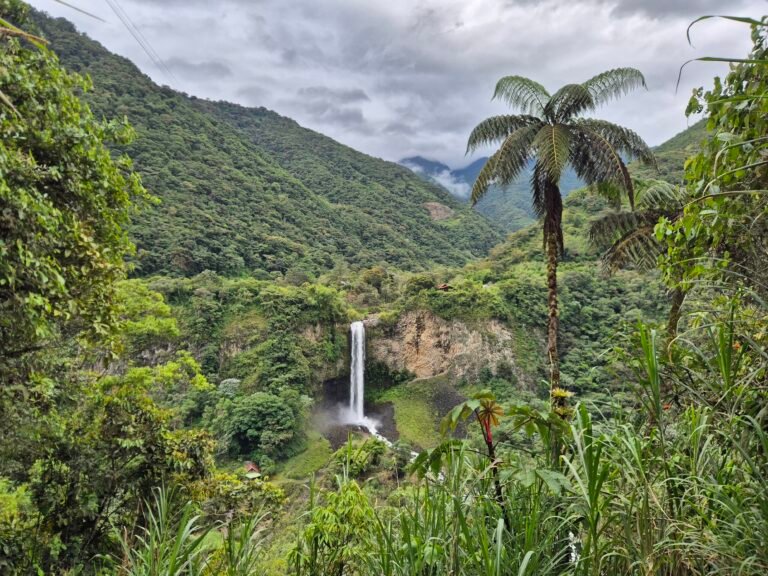 6Baños, Between Jungle and MountainsFrom Riobamba, we head down to Baños de Agua Santa, known for its hot springs and waterfalls, but also as Ecuador’s capital of extreme sports. Located at the…
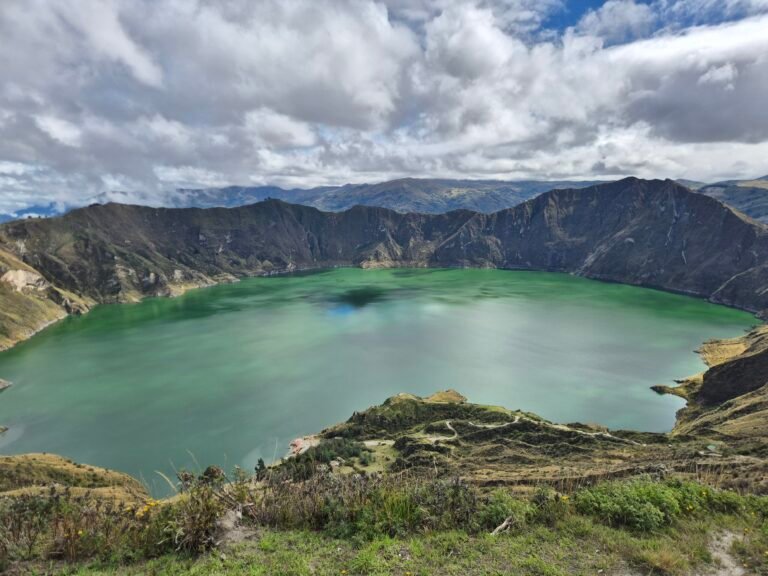 7The Quilotoa LoopAfter a few days of (sort of) relaxing in Baños, it’s time to head back up into the Andes for Ecuador’s best-known trek, the Quilotoa Loop. We…
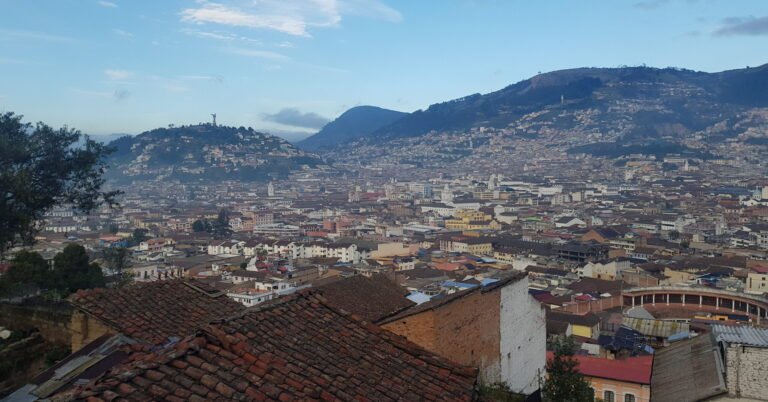 8Quito, Capital of VolcanoesAfter Quilotoa, we head straight up to Quito, our base for the next few weeks, before and after our trip to the Galápagos. The capital, rather…
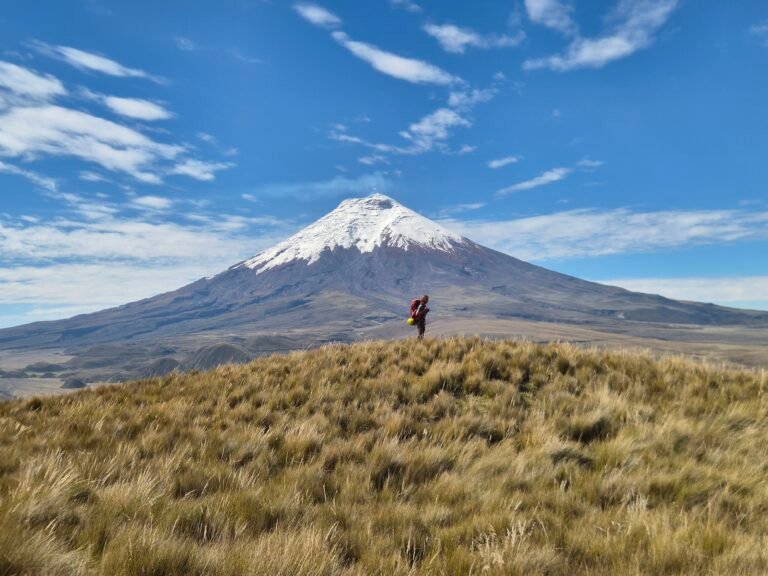 9The Ruta del CóndorOur Galápagos vacation is just around the corner. We’re taking on what may be the last big challenge of our trip: the Ruta del Cóndor, a 4-to-5-day trek through…
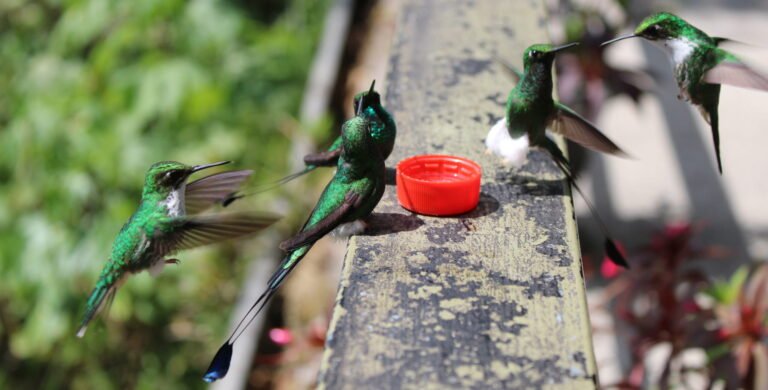 10Mindo, the Cloud ForestThe Galápagos are coming up fast. We decide to head down to Mindo for the remaining few days to start our vacation a bit earlier than planned, after a…
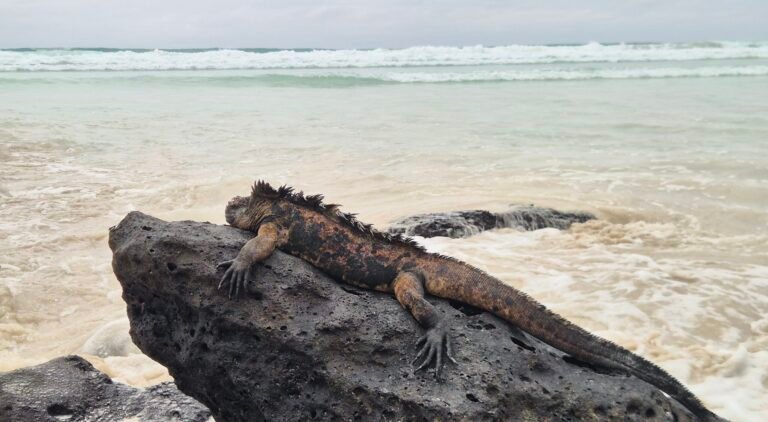 11Galápagos, Vacation at Last!This had been planned for a long time. After several stays in Ecuador, we couldn’t let the opportunity slip by once again. Even though it means a big…
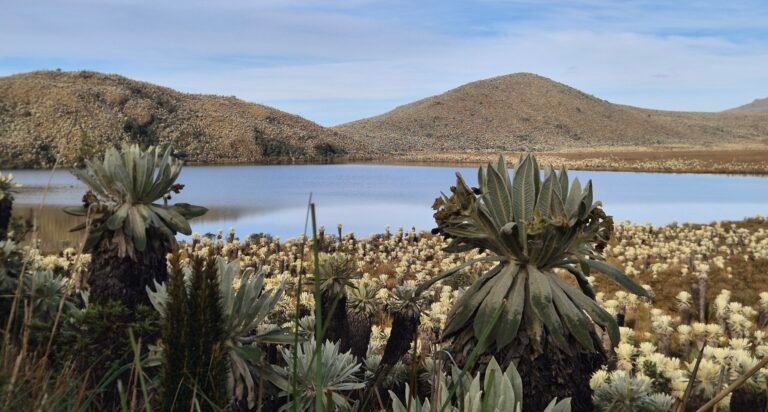 12Northern Ecuador: Otavalo, Cayambe, El ÁngelWe have about ten days left to reach Colombia before our 90 legal days run out. We leave our home base in Quito to explore the north, in the…
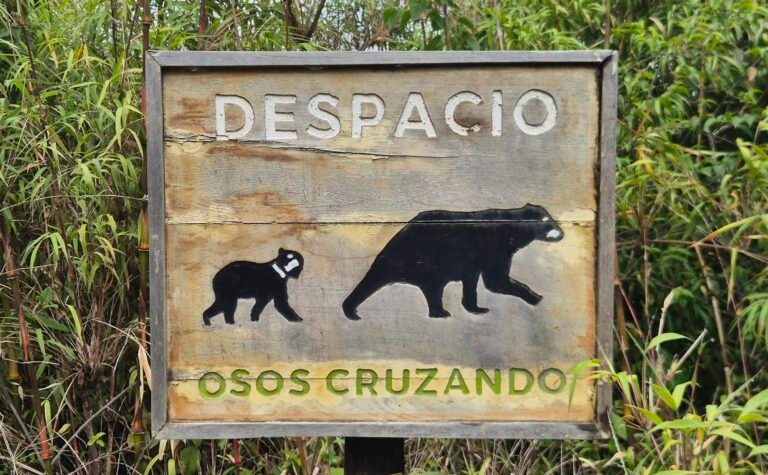 13Chasing the Spectacled BearThe Andes are home to a legendary yet shy and little-known animal: the Andean bear, or spectacled bear, known locally as oso de anteojos (Tremarctos ornatus). In…
Our highlights
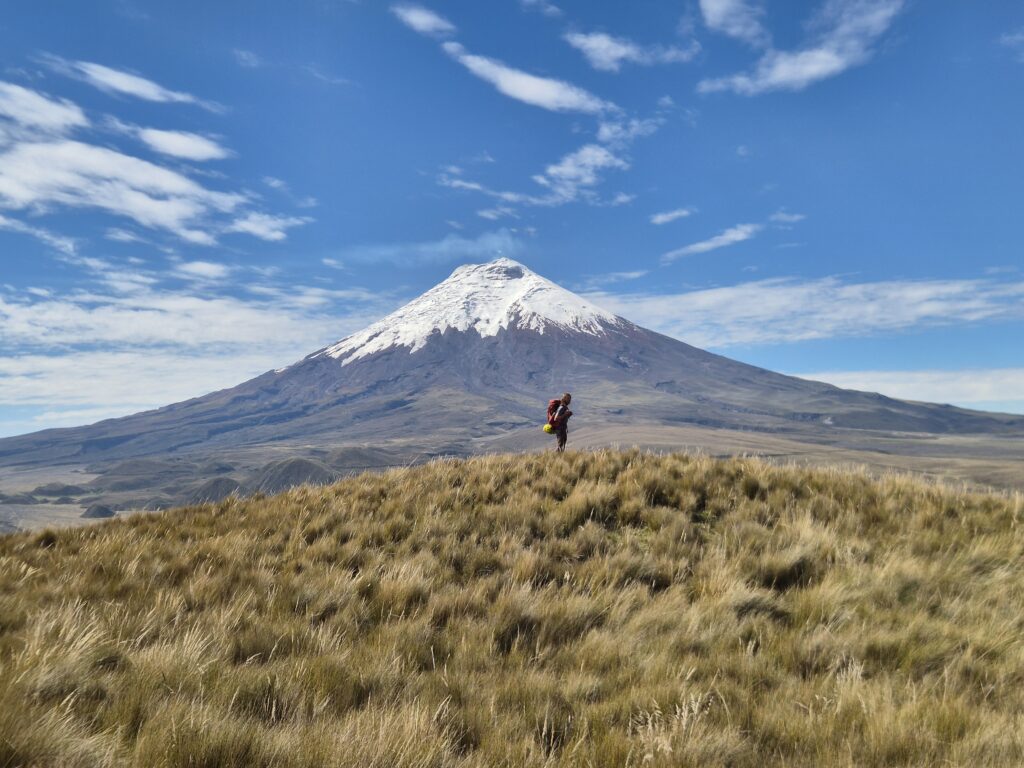
The Ruta del Cóndor
Maybe the last big challenge of the trip: a rough, wild four-to-five-day traverse between Antisana and Cotopaxi, often on a trail that barely exists. The Ecuadorian Andes in a nutshell, with their glacier-capped domes and an indescribable feeling of freedom.
Read the post →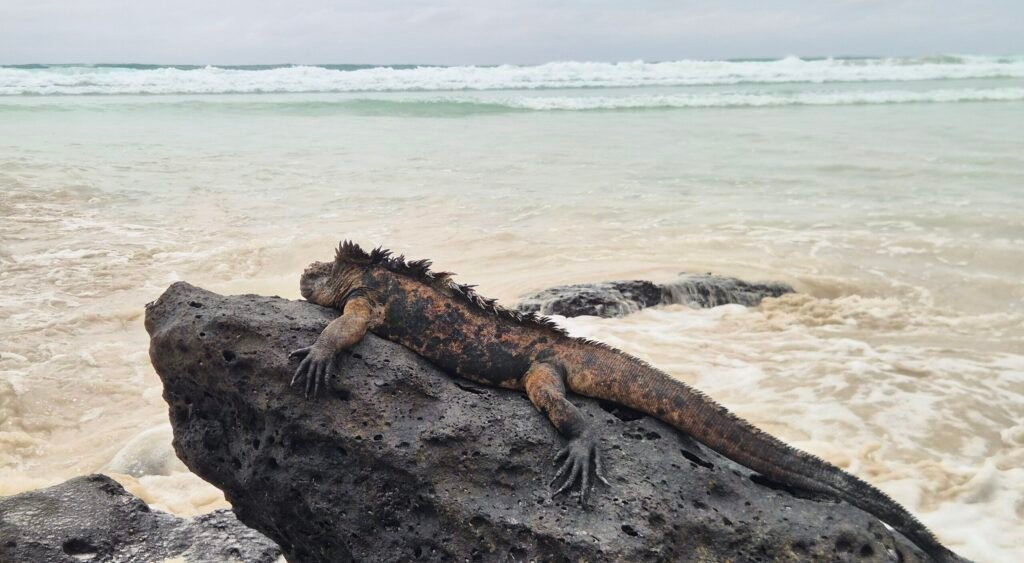
Galápagos, Vacation at Last!
An old dream, one of the first boxes we ticked before leaving. Swimming with sea turtles and iguanas, watching sea lions chase each other between beach towels, running into giant tortoises on the road… Few places can boast that kind of magic!
Read the post →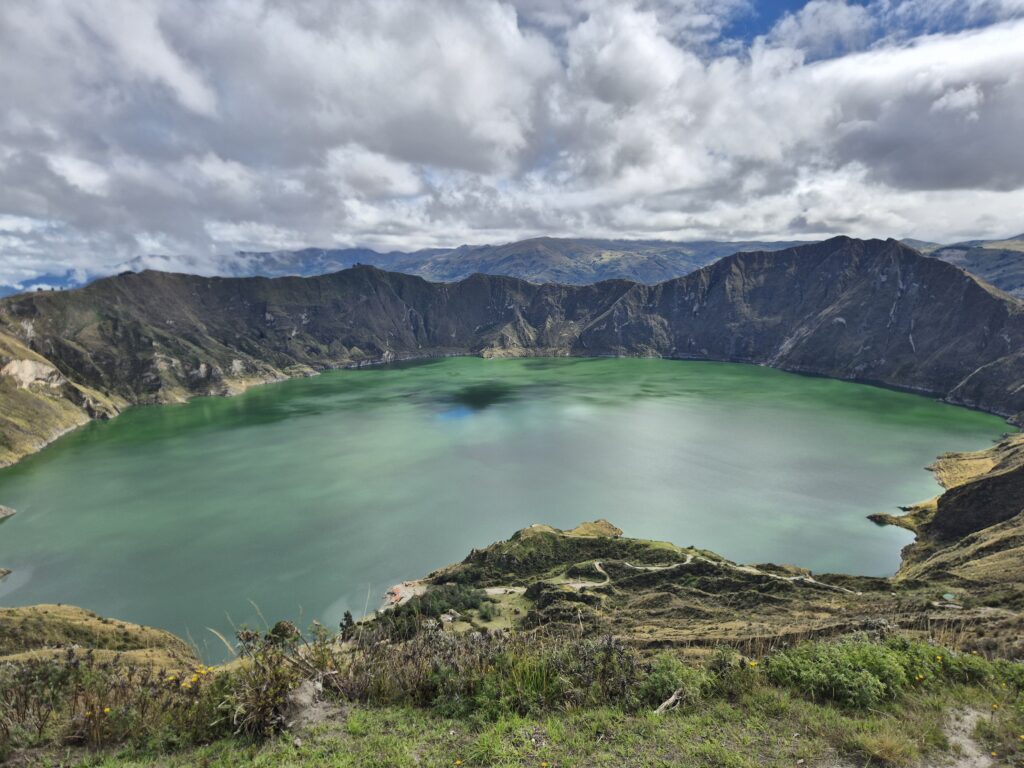
The Quilotoa Loop
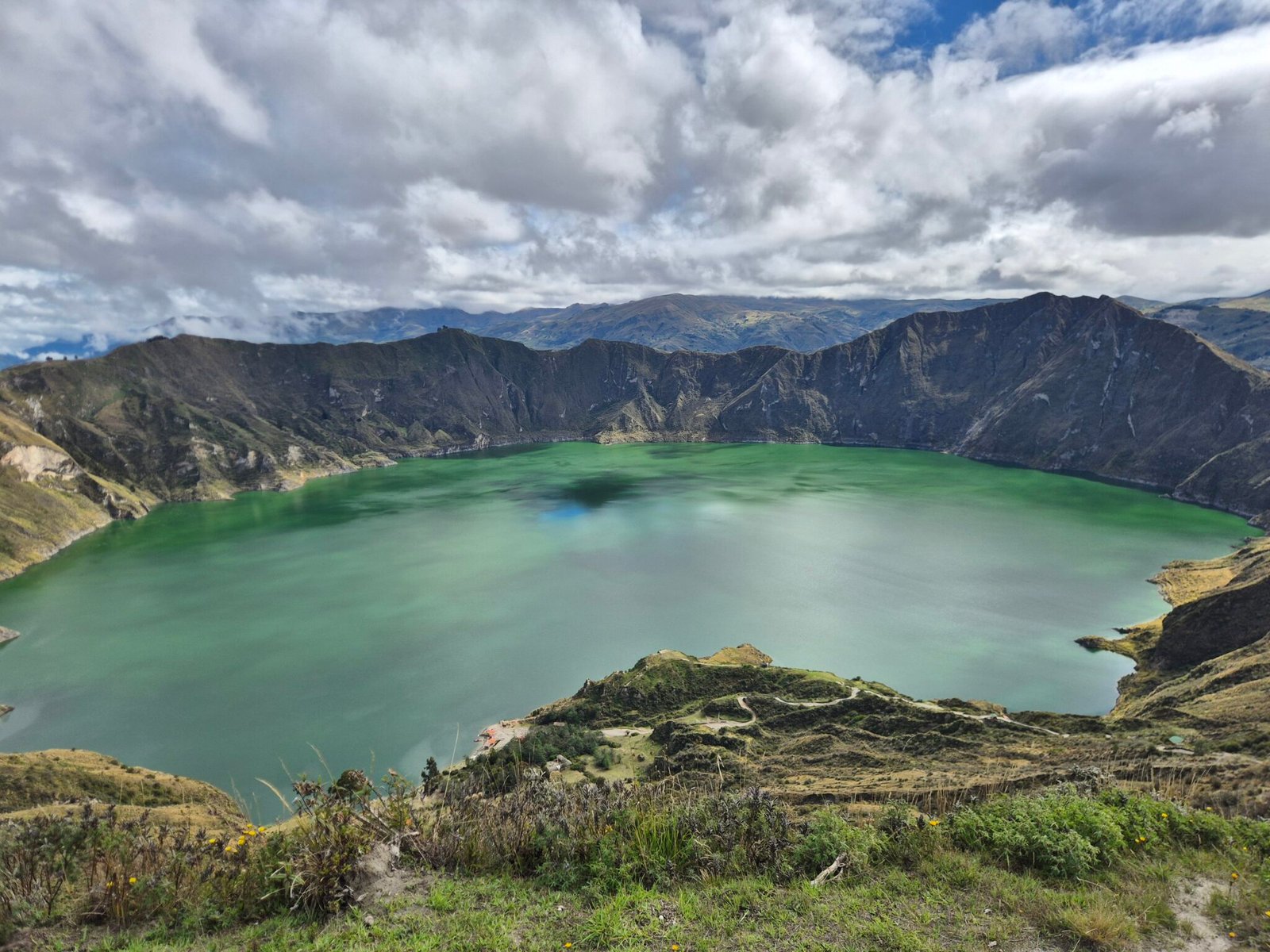
The country’s best-known trek, and for good reason! Lush green scenery, plateaus carved by time, and that crater lake whose colors shift from green to blue over the course of the day. Even on his sixth visit, John was just as amazed.
Read the post →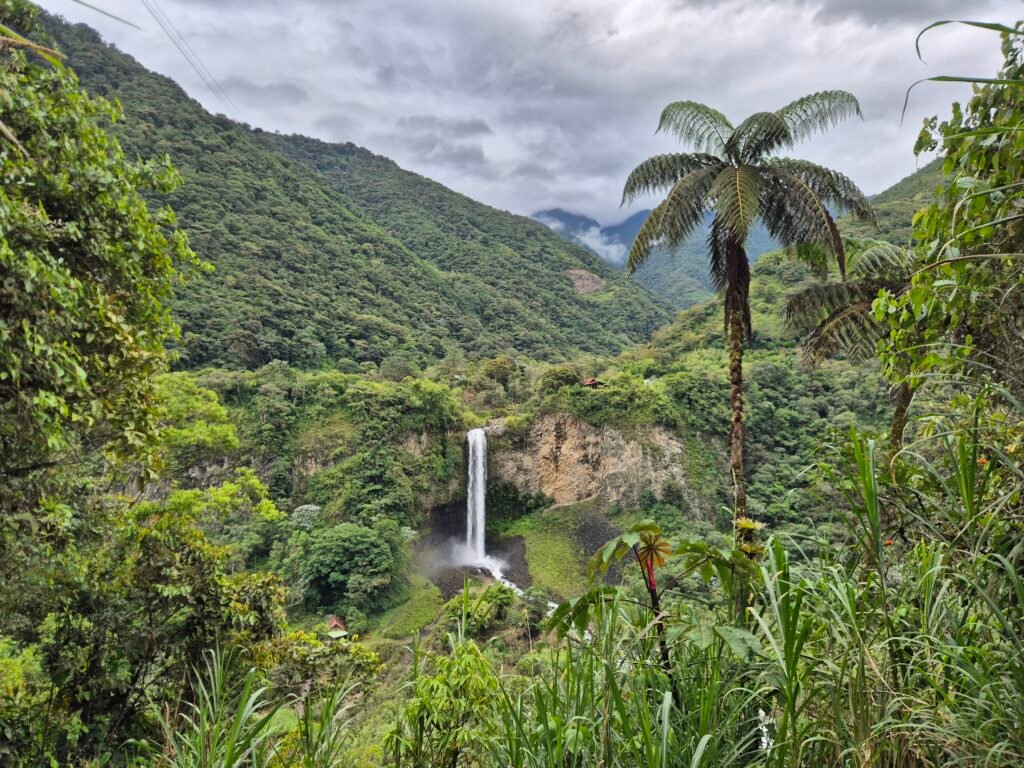
Baños, Between Jungle and Mountains
On the edge between the Andes and the Amazon, at the foot of Tungurahua, Baños has something for everyone: extreme sports, hiking, waterfalls, hot springs, partying or relaxing… or all of the above!
Read the post →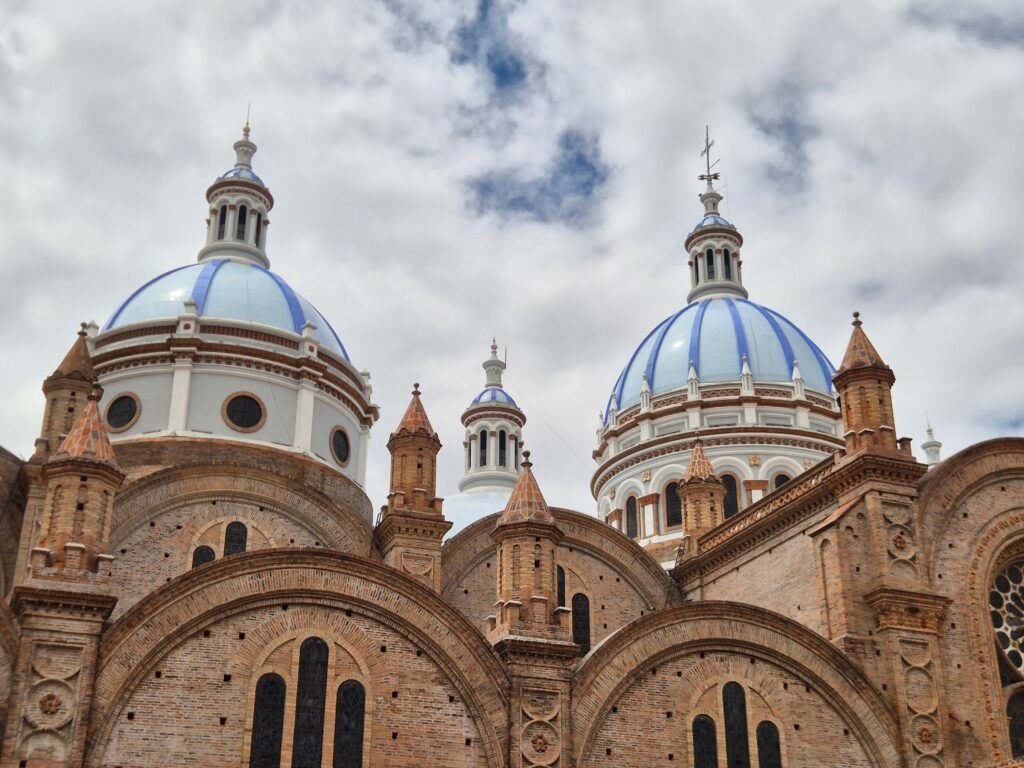
Cuenca and El Cajas
One of the most beautiful cities on the continent, where John lived for a few years: courtyards, a cathedral, cafés and hot springs. And on its doorstep, El Cajas, the páramo at its finest, where John discovered hiking. No trail markers, mist and rain every day… This park can’t be summed up; you have to experience it.
Read the post →Practical info
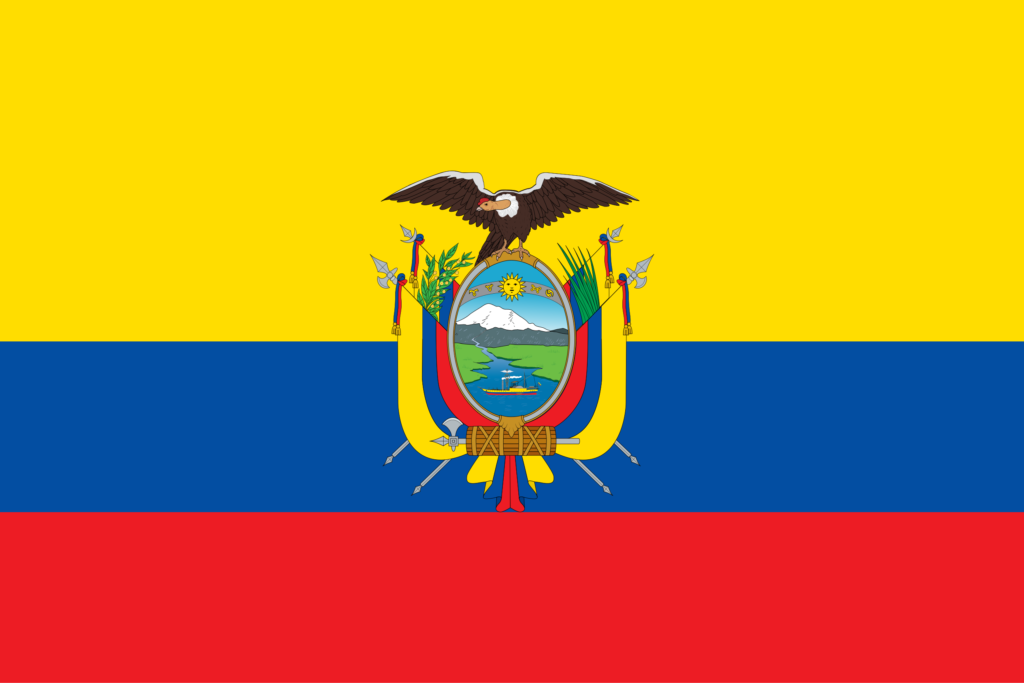
- Capital
- Quito
- Language
- Spanish
- Currency
- US dollar ($)
- Length of stay
- 90 days, non-renewable
- Time zone
- UTC−5 (same as US Eastern Standard Time)
- Calling code
- +593
- Area
- 109,470 sq mi
Buses
Like in the other Andean countries, the bus network is very well developed in Ecuador. There isn’t much difference in comfort or price between the various companies, and fares are among the lowest on the continent.
Outside holidays (or weekends), you can simply show up at the terminal an hour before (or even less, depending on the destination and how often buses run) and get pointed to the right company.
Water
Tap water is safe to drink in Cuenca; it comes from El Cajas National Park. In theory, it’s also safe in Quito and quite often in the Andes. John always drank it when he lived there.
On the coast and in the Amazon, though, always filter it!
The water is sometimes chlorinated (like in Baños), and you can still taste it after filtering.
National parks and reserves
Ecuador is one of the few countries in South America where most national parks and reserves are free (except for the Galápagos). You just need to register at the park entrance. Sometimes there are huts, and you can usually camp (often for free).
Seasons
Because of where it sits, Ecuador is a very wet country all year round. For hiking, expect rain and above all mud most of the year. Many national parks are largely made up of humedales, or wetlands (peat bogs, marshes…), whatever the season.
Seasons vary by region (Andes, Amazon, Galápagos). While the best months for the Andes (and the coast) are around June, July and August, that period is also very windy.
The dry and wet seasons in the Galápagos each have their own appeal and their own wildlife.
Finally, the Amazon is usually less rainy around the turn of the year.
Safety
It’s sad to say, but the sense of insecurity has been growing in the country for a few years now. Back in the day, only Guayaquil (or maybe Esmeraldas, or the Colombian border) was considered risky; now the whole Ecuadorian coast is said to be best avoided. In practice, common sense and a few precautions are usually enough to stay out of trouble, but it’s not unusual to hear gunshots or to read in the local news that someone was killed the day before a few streets from your hotel (Guayaquil, Manta, Salinas…).
As for the Andes, we didn’t notice much change; they still feel relatively safe to us. Outside the big cities, there’s not much to worry about. In Quito, police are everywhere (in the center, at least), and security guards are posted at every bus stop… As for Cuenca, it’s still one of the safest cities in the country.
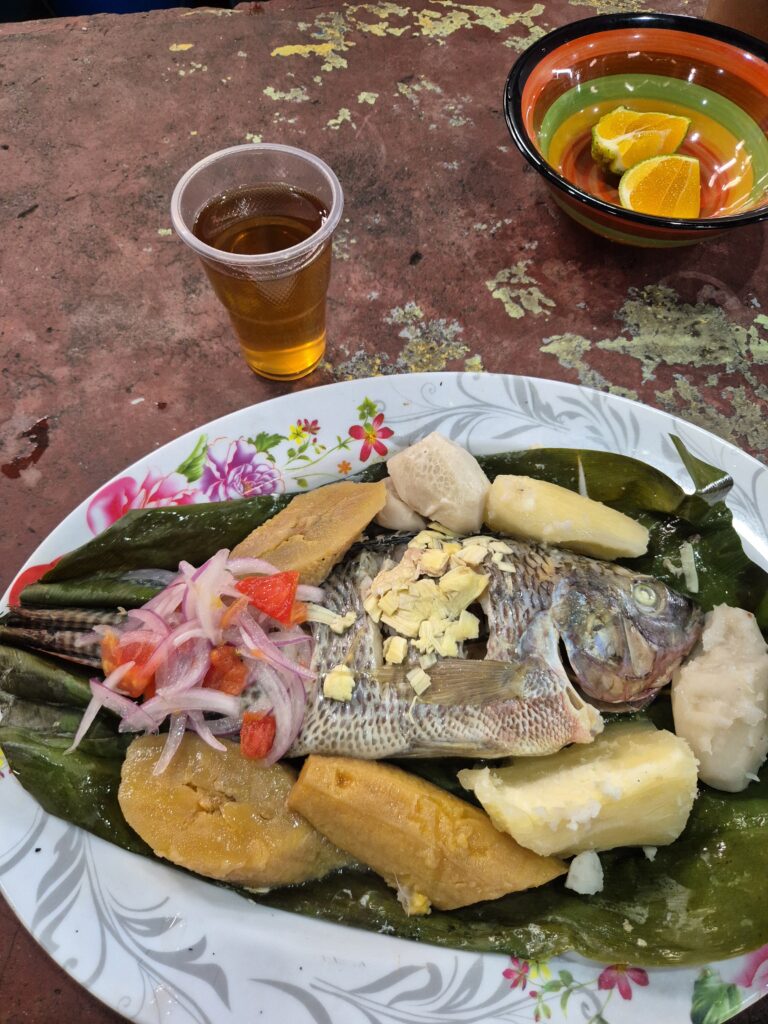
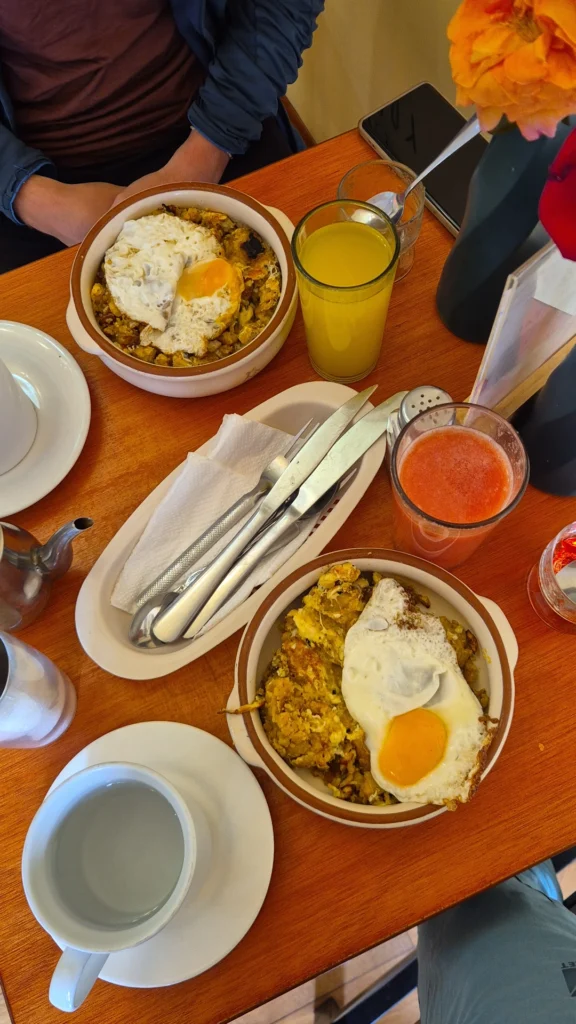
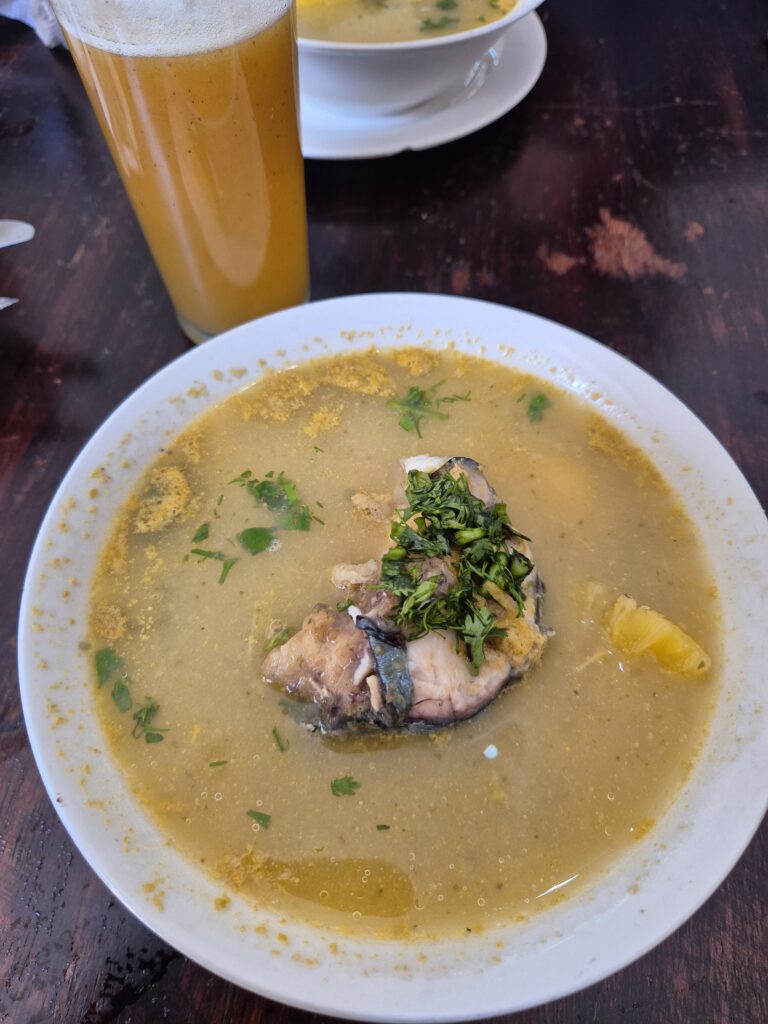
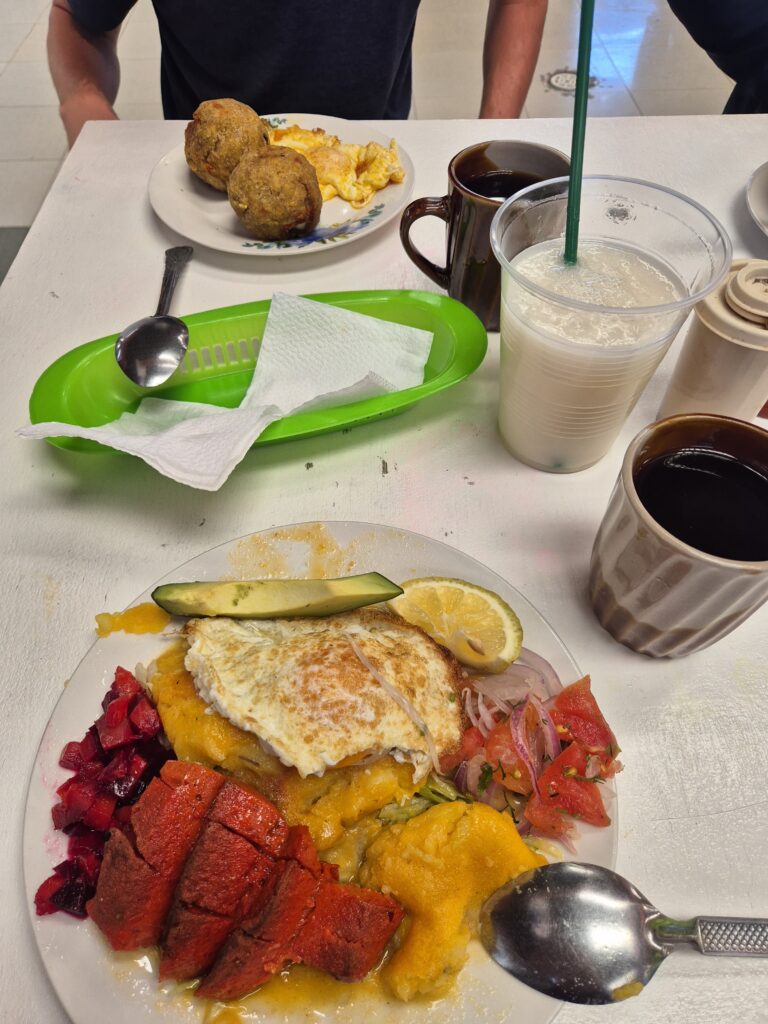
What to eat
Ecuadorian food in a nutshell
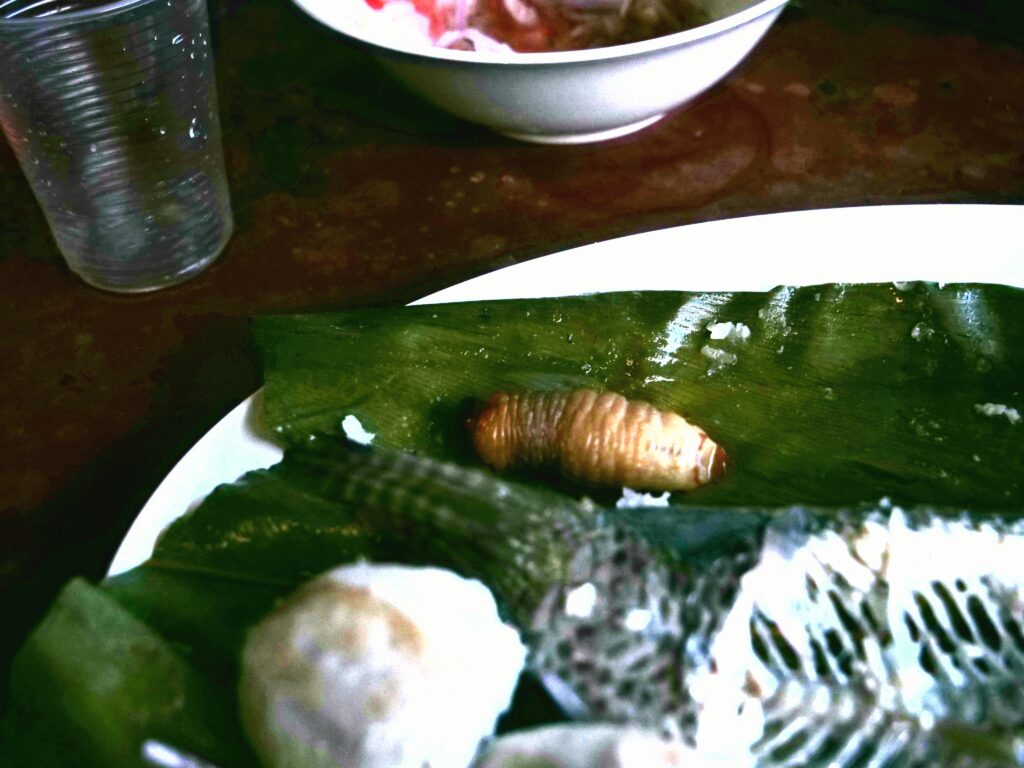
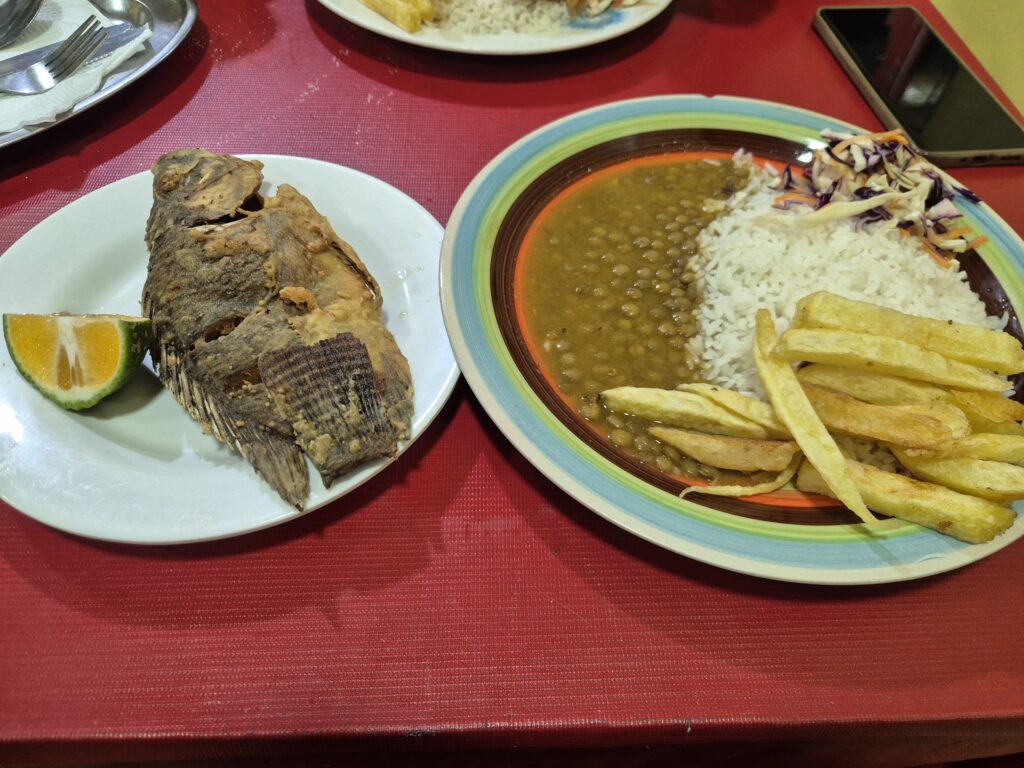
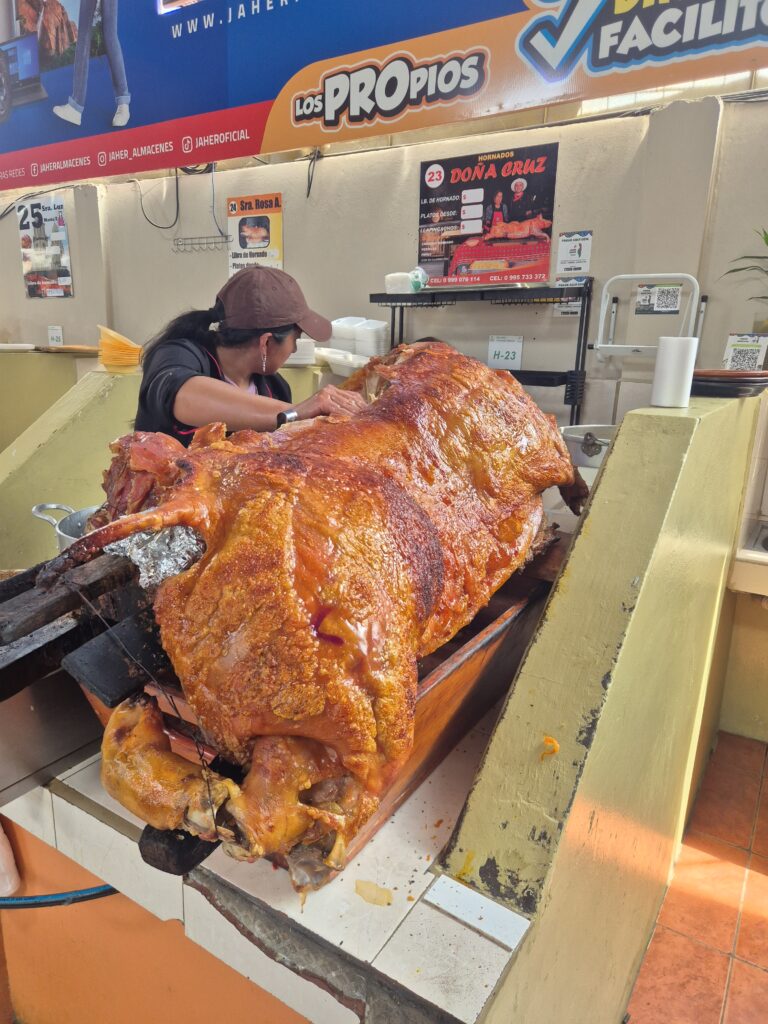
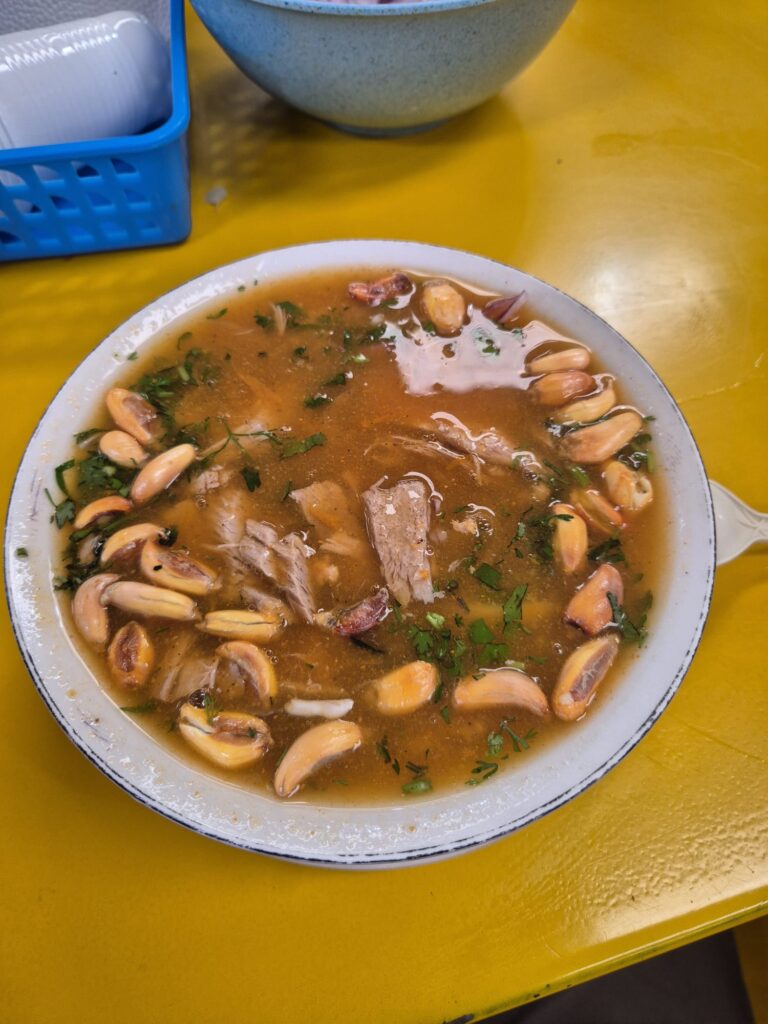
As in the other Andean countries, the almuerzo (set lunch) comes with a soup, a seco (a main dish: 1/4 protein, 1/4 salad and 1/2 plain white rice with no seasoning at all) and usually a good fruit juice. The soups are always good and varied, but watch out for caldos (broths), sometimes made from feet, heads or offal! It’s the cheapest and most filling way to eat at lunchtime (around $3 on average). In the evening, it’s called merienda, but it’s not as common.
A spicy sauce called ají often comes with meals in traditional or local restaurants. Made from tree tomato, it’s more flavorful than hot, but the chef’s mood always has the final say.
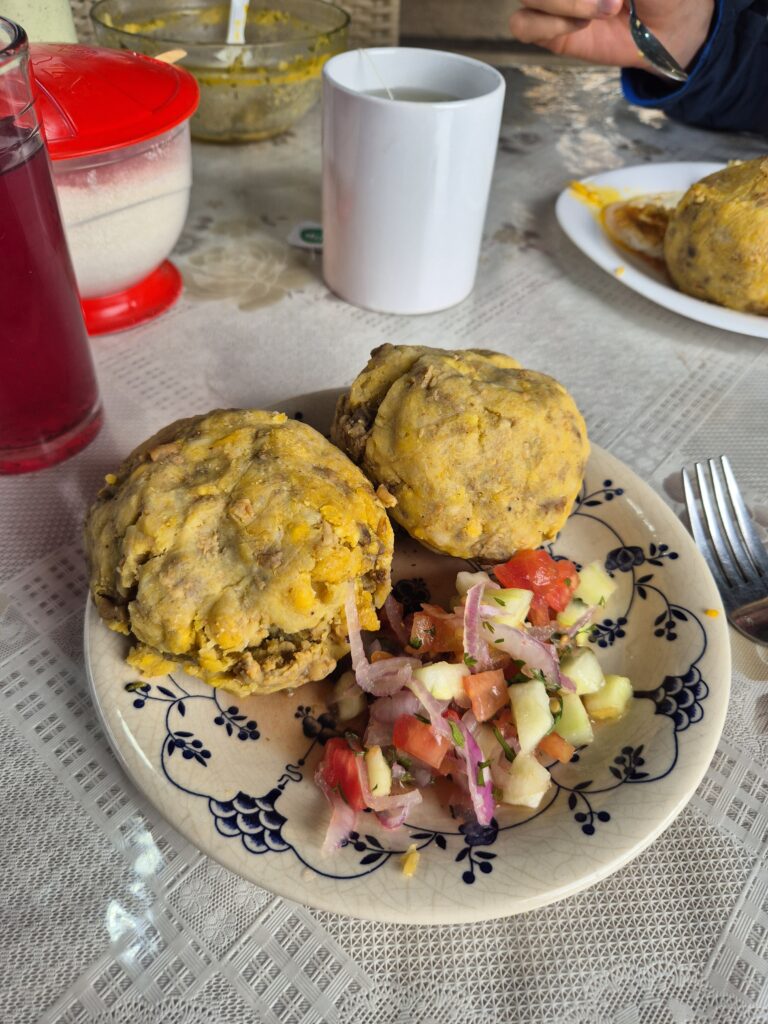
Green plantains are used a lot (soups, bolones, tigrillo, patacones, chifles…), as are ripe yellow ones, called maduro, and to great effect.
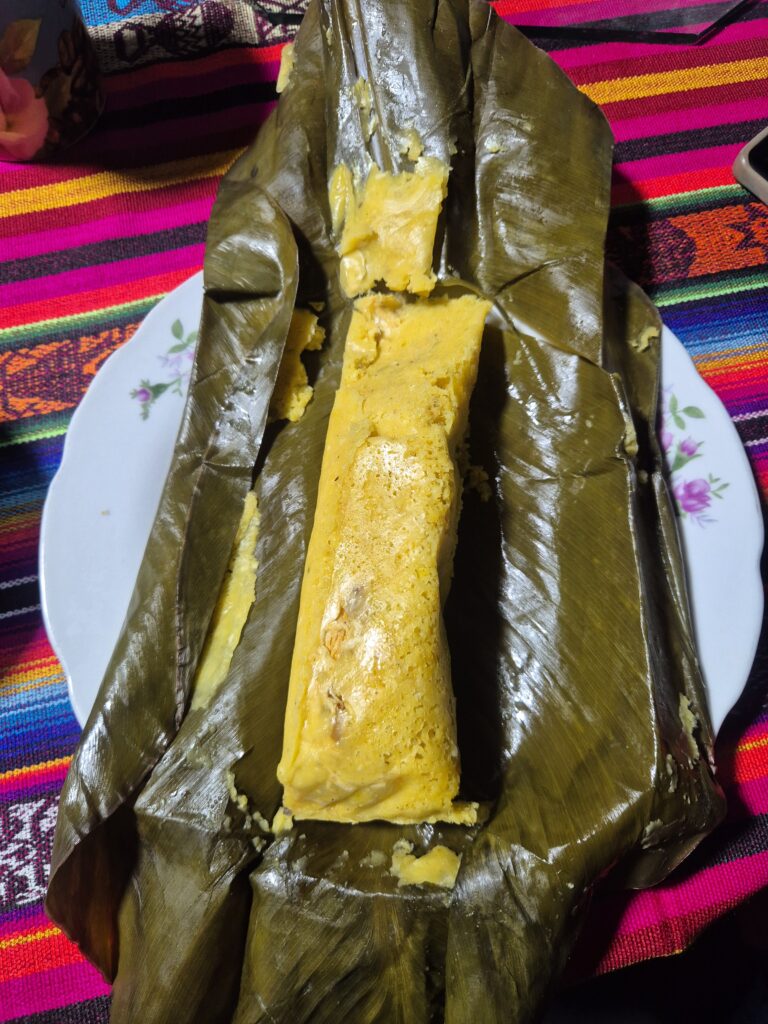
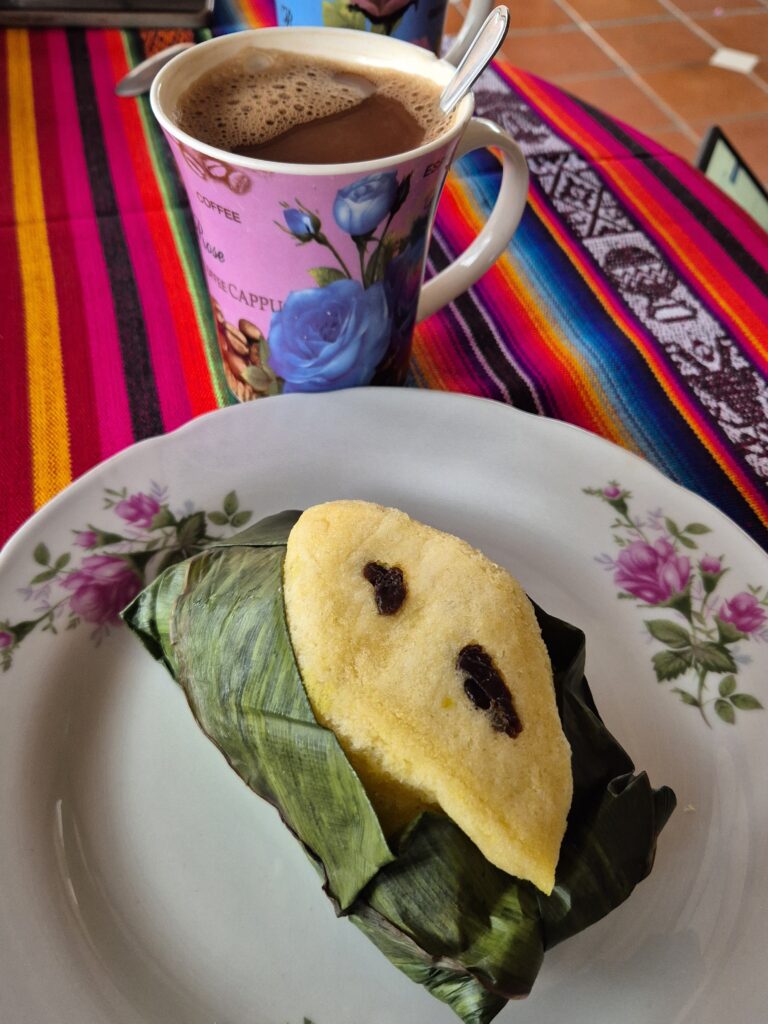
We’ve always had a soft spot for snacks like humitas and tamales, Andean classics, but also quimbolito, a delicious steamed cake. You’ll also find tostadas (grilled cheese sandwiches), wheat or corn tortillas (mostly in the south) or
As for street food, the names are fun (salchipapa, papipollo…), but there’s not much to sink your teeth into, mostly fried chicken like everywhere else. Pinchos are meat skewers sold on the street in the evening.
For drinks, you have to try tamarindo (as a juice), morocho (a hot corn drink) or colada morada (a purple fruit drink).
Budget
Spending by category (not including the Galápagos)
- Lodging$91038%$6.59 per person per day
- Groceries$47420%$3.43 per person per day
- Activities$31913%$2.31 per person per day
- Transportation$30013%$2.18 per person per day
- Restaurants$28012%$2.03 per person per day
- Coffee, drinks$813%$0.59 per person per day
- Other$231%laundry $19, currency exchange fees $3.89, other $0.56
Galápagos
- Lodging$60622%$13.77 per person per day
- Flights$57020%$12.96 per person per day
- Activities$57020%$12.96 per person per day
- Transportation$2348%$5.33 per person per day
- Groceries$2348%$5.33 per person per day
- Coffee, drinks$672%$1.51 per person per day
- Restaurants$622%$1.41 per person per day
- Other$44116%fees and taxes $440, other $1
Cost of living
All amounts are in US dollars, Ecuador’s currency.
Ecuador is a good middle ground for budget travel in Latin America. The US dollar makes it a bit more expensive than Peru and, of course, Bolivia, and it’s sometimes hard to find a room for two under $20 outside the big cities and tourist areas, but you can easily travel on a budget. Buses are very cheap (around $1.50 per hour on average), and national parks and reserves are free.
The Galápagos are another story, though, with a much higher cost of living, not to mention all the entry fees.
Wrap-up
Ecuador will always be a country close to our hearts, the one where we met. Still, in all objectivity, we think it’s one of the most beautiful countries in Latin America. So many landscapes, so much wildlife and plant life (Galápagos, Mindo, the Amazon…), so many volcanoes packed into such a small country!
Even after traveling there for several years, we keep finding new regions to explore. For us, it’s a land of adventure and freedom, and on a budget too (free national parks).
But what struck us most this time was how welcoming and kind Ecuadorians are; their reputation rarely does them justice.
89 nights
Tops
- Free national parks
- Cheap gas and transportation
- Friendly locals
- Páramos
- Rich wildlife and plant life
- Far less touristy than other countries
Flops
- Politics and rising insecurity
- New restrictions on access to some parks (Sangay, Cayambe…) and overcautious rangers
What we missed
- Esmeraldas Province
- Laguna Amarilla (Sangay National Park)